



 18.94°C Kathmandu

Tue, Oct 13, 2026
Culture & Lifestyle
Mental Wellbeing: What if ‘Thik cha’ isn’t the whole story?
In a society where we often say we are fine even when we are struggling, making space for honest conversations can be a meaningful first step towards better mental health.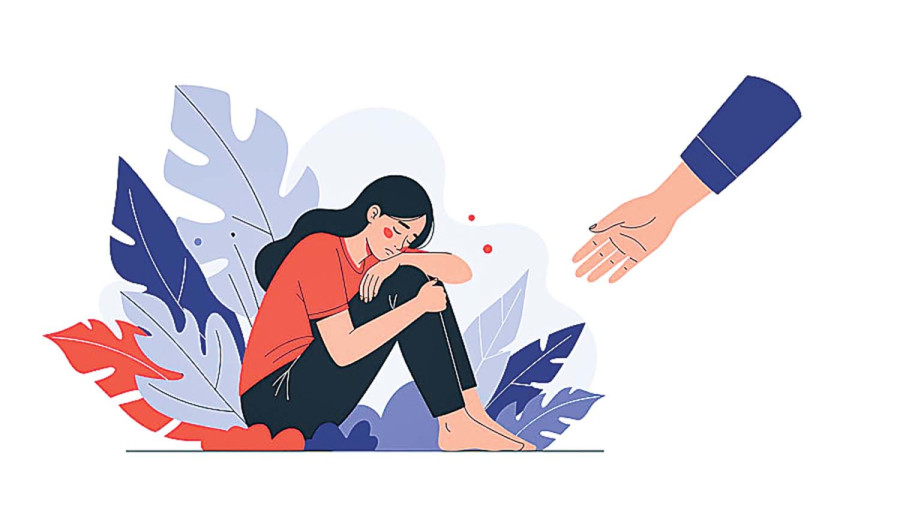
bookmark
Dristy Moktan
Published at : October 13, 2026
Updated at : October 13, 2026 07:54
The world recently observed World Mental Health Day on October 10.
This year, the World Health Organization emphasised the theme “Lived Experiences Heard: Real Voices, Real Change,” reminding us of the importance of listening to people and acknowledging their lived experiences.
But it leaves us with an important question: What happens when the day is over?
Mental health is not something we experience just once a year. It shapes how we think, feel, connect with others, and navigate the world around us. Shouldn’t our commitment to mental health extend beyond a single day of recognition?
Perhaps the real measure of our progress is not how widely we speak about mental health on October 10, but how consistently we show up for it on the days that follow.
Sometimes, this begins with the smallest of actions: how we care for ourselves, listen to others without judgment, and respond when someone is struggling. It also means creating spaces where people feel safe to speak, strengthening support systems, and advocating for accessible mental health services.
Seeking support should never be a privilege.
However, mental health cannot be understood in isolation from the realities of our everyday lives. Our thoughts, emotions, behaviours, and relationships are shaped by our surroundings and circumstances. For some, this may mean navigating grief or loneliness. For others, it may mean living with financial insecurity, uncertainty, or the loss of a place they once called home.
We cannot expect people to prioritise their wellbeing without acknowledging the conditions that make it difficult to do so. This is why mental health must be part of conversations about our homes, workplaces, communities, and the systems that shape our lives.
Awareness is an important starting point, but it must lead to action. If you feel that you are making an effort but the environment around you continues to overlook mental health, stay curious. Ask questions. You have every right to understand how mental wellbeing is being prioritised in your surroundings, workplaces, communities, and institutions.
Let’s look beyond conversations and pay attention to the realities people are experiencing. Let’s question what is missing, speak up when support is inadequate, and advocate for meaningful change. While each of us has a role in caring for ourselves and one another, the responsibility does not rest on individuals alone.
Communities, institutions, and policymakers must also work towards creating conditions that support mental wellbeing.
Mental health is not just a personal responsibility. It is a collective one. Real change begins when we move beyond asking people to take care of their mental health and start building a world that makes it possible for them to do so.
If you have never thought about making mental health part of your everyday conversations, please start now. Nepal has been navigating repeated crises, loss, uncertainty, and traumatic events over the past few years. These experiences remind us that mental health cannot remain a conversation we return to only on designated days. We need more people willing to make it part of everyday life.
So, if you are wondering where to begin, start small.
Take a moment to check in with yourself and others. In our Nepali culture, we have a habit of asking people, “K cha halkhabar?” (How are you doing?) It is a wonderful way to check in, but the answers we receive deserve to be heard and acknowledged more carefully.
When someone asks how we are doing, we are often accustomed to responding with “Thik cha,” (I am fine) even when we might be struggling. Starting small means not rushing to answer. Pause for a moment and try to understand where you stand emotionally. You may not always feel comfortable sharing your honest answer with someone else, and that is okay. But be honest with yourself. If something doesn’t feel right, acknowledge it instead of pushing it aside. When we repeatedly dismiss our emotions, we will find it harder to recognise our needs and seek support before things become overwhelming.
The same applies when we check in on others.
Ask someone how they are doing, and make time to listen. This is especially important in our society, where we are often quick to offer suggestions. Sometimes, without realising it, we compare someone’s situation with others, dismiss their feelings, or turn the conversation towards our own experiences. Instead, listen without judgment and allow people to express themselves without feeling the need to justify what they are going through. Our goal should be to create safe spaces where people feel heard rather than judged.
Notice when the people around you are struggling and help them find support when they need it. As mental health professionals, we are often asked, “I can clearly see that someone close to me is struggling. I’ve tried talking to them, but they don’t want to seek help. What should I do?”
Start by respecting their choice while continuing to check in from time to time. Let them know that whenever they feel ready, you will be there for them. You don’t have to force a conversation or have all the answers. Sometimes, knowing that someone is there without pressuring them can make a meaningful difference.
You do not need to have all the answers to make a difference. Sometimes, the first step is simply noticing, listening, and choosing to act.
As we move beyond World Mental Health Day, I invite you to reflect: What is one small thing you can do today to make mental health part of your everyday life?
It could be pausing before automatically saying “Thik cha,” giving someone your undivided attention, or speaking up when you notice a gap in support.
Dristy Moktan
Moktan is a psychosocial counselor working at Fheal, a counseling hub for mindful healings.





Most Read from Culture & Lifestyle

It’s a bird … it’s a plane … it’s the Indian ambassador’s farewell tweets

How should Nepal navigate a world in reorder? Rajib Upadhya on geopolitics and foreign policy

How Anup Poudel took Nepali cinema to Cannes

A Nepali photographer rediscovers Calcutta after decades

Facebook friends: What do cross-gender friendships look like in Nepal?
Editor's Picks

Constitutional Bench caught in seniority, ‘pick and choose’ dispute

A Dom boy’s long road to becoming a doctor

From blankets to handmade dolls, two foreign women bring comfort to flood survivors

News Analysis: When institutional defence exposes institutional fault lines
It’s a bird … it’s a plane … it’s the Indian ambassador’s farewell tweets
E-PAPER | October 13, 2026

×