



 16.86°C Kathmandu

Mon, Nov 2, 2026
Cricket
Sudurpaschim Royals break silence on Saturday night delays and absence from post-match conference
Head coach Misbah-ul-Haq clarifies his squad’s stance following an hour-long administrative delay that culminated in a 35-run defeat to Biratnagar Kings.
bookmark![]()
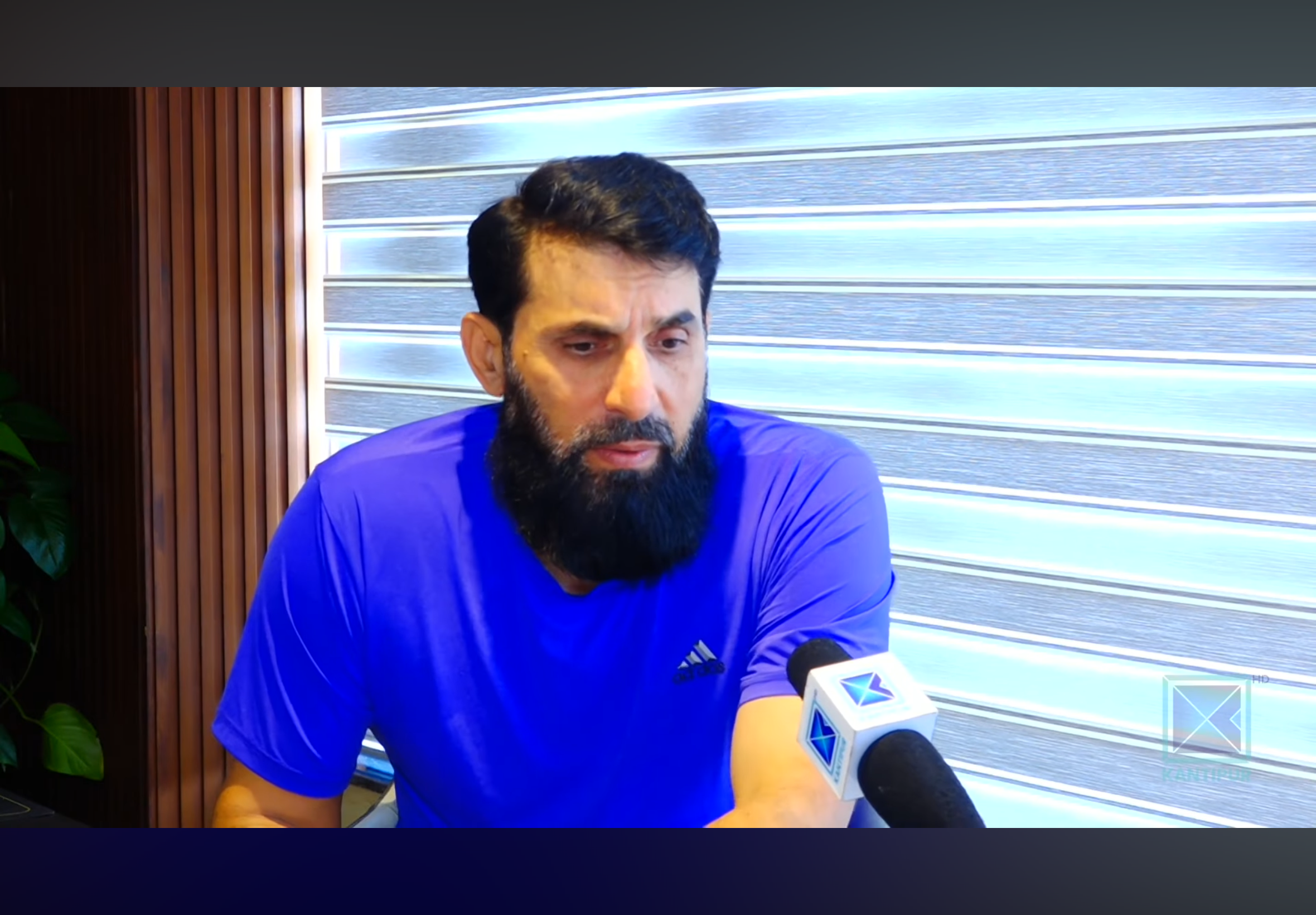
Sudurpaschim Royals’ head coach Misbah-ul-Haq in an interview with Kantipur on Sunday. Post Photo
Sabina Karki
Published at : November 2, 2026
Updated at : November 2, 2026 07:39
Kathmandu
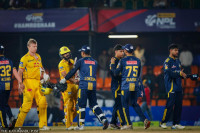
Sudurpaschim Royals appeared largely responsible for the delay in the five-over-a-side fixture against Biratnagar Kings on Saturday night. The match referee, Sri Lankan Wendell Labrooy, appeared busy talking with the Royals’ representatives—head coach, skipper and manager—while the Kings squad looked more than ready to play and were killing time with a football.
When the match concluded with the Kings registering a dominating 35-run victory, the post-match presentation hinted similarly as the Royals’ skipper, Dipendra Singh Airee, was not seen. The post-match presentation usually ends with the emcee having a talk about the match with both the captains. But Andrew Leonard only had a chat with Sandeep Lamichhane, skipper of Biratnagar.
While Lamichhane attended the post-match press conference, there were none from the Royals’ side. But when Kantipur met with Royals’ head coach Misbah-ul-Haq on Sunday afternoon, he hinted that the Royals were at the receiving end of unprofessional behaviour by match officials and the organisers.
Misbah, the former Pakistan skipper, said that “the match was not worth taking the risk”.
“It is very early in the tournament,” he said at the team hotel. “You have to play the next four league games and then maybe the playoffs, finals. And risking everybody for this game, it’s not worth it.”
When asked if the team first said yes to the reduced match and later denied, Misbah replied, “They decided that we are going to play this game and later they were saying that we never agreed.”
Misbah and his team had a clear belief. If the ground was unsafe, they are not taking the risk.
The match referee was joined by Paras Khadka, secretary at the Cricket Association of Nepal, to mediate with the teams. It was finally at 8:54pm that the toss for the five over apiece match was announced, again, this time for 9pm.
There was some issue with Sudurpaschim’s lineup that took the match referee a few extra minutes and the coin was tossed at 9:06pm. But Misbah says that the team was not ready to play even then.
“Our players did not want to take the risk of getting injured,” he said. “When you are asked that either you just play or you have to forfeit and give two points, you are left with no choice.”
Misbah also recalled how Ishan Pandey slipped at the boundary line horribly and how Sherfane Rutherford couldn’t use a substitute fielder. Rutherford could be seen with his hands in his pockets throughout Sudurpaschim’s fielding.
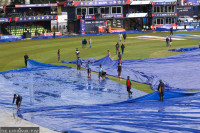
“One light tower wasn’t working, there was moisture on the pitch, and there was water all around the surface,” he added. “Everybody knows it—no one can run at their full throttle [in such conditions]. So, what's the point of having that game?”
The Laws of Cricket states that it is solely for the umpires together to decide whether either conditions of ground, weather or light or exceptional circumstances mean that it would be dangerous or unreasonable for play to take place.
“Conditions shall not be regarded as either dangerous or unreasonable merely because they are not ideal,” Law 2.7.1 states. “The fact that the grass and the ball are wet does not warrant the ground conditions being regarded as unreasonable or dangerous.”
The law states that the conditions shall be regarded as bad that it would be dangerous and unreasonable for play to take place if the ground is wet/slippery to deprive the bowler of a reasonable foothold, fielders ability to move freely, batters ability to play their strokes or to run between the wickets.
Talking to the Post in multiple instances, Nepal’s ICC umpires had stressed that the officials would not allow the match to continue if the outfield is slippery as the players’ well-being is always kept at the forefront.
But, as per Misbah, it was not how the umpires acted on Saturday.
“Whenever this sort of situation happens, don’t just take one point into consideration,” he said. “Just see if the conditions are perfect to play, or at least playable where the players are safe and can give their 100 percent, and then the match officials should decide to have a game. Not a 50/50 situation where they see it’s dangerous but still decide to play, because in the longer run, that creates these sorts of situations.”
Whatever happened, Misbah said he didn’t want to blame anyone. “But that situation could have been managed better by the match officials, the tournament committee, and unanimously by the teams,” he said.
There was one more thing that Misbah didn’t like on Saturday.
“The surprising thing was that our captain wasn’t invited to the presentation ceremony. How can you do that?” he questioned. “Okay, the game happened, whatever the controversy, but why are you not inviting a team’s captain at the presentation and only allowing one team to come and speak?”
Organisers told Kantipur that Sudurpaschim were once ready to play. “But after they had a discussion within the team, they said no,” Dhirendra Saud, NPL’s tournament director, told Kantipur. “In cricket, we follow what the match referee decides regarding playing conditions. The match officials had given green light for the match after multiple inspections and discussions with the ground staff.”
When asked what the CAN would do if other teams questioned their stance in a similar scenario in the future, Saud claimed that Saturday’s scenario would not repeat again.
“Moreover, the fans had waited hours for the match yesterday. And the investment by the teams is huge, CAN has worked very hard for cricket development,” said Saud. “So, we moved forward with the match after consulting with the match referee.”


Most Read from Cricket
Pakistan captain Sahibzada Farhan to miss NPL’s opening two matches
Kathmandu to host Cricket World Cup Qualifier Play-Off in December
Could Rahul Yadav be Nepali cricket’s next big thing?
What to know about Nepal Premier League’s big-money, star-studded rise
Nepal to host 15 matches at 2027 Under-19 Women’s T20 World Cup
Editor's Picks

What Balendra Shah can learn from Zohran Mamdani
Explained: The leaked WhatsApp chats that have shaken Nepal’s judiciary

Who is Inam Sapkota, the man linked to Cholendra Rana and top police officials?
The police chief who objects, delays—and ultimately complies
Shabana Azmi on acting, equality and the power of cinema
E-PAPER | November 02, 2026

×