This family-run Prague restaurant is introducing Czech diners to Nepal
At Lumbini-Indická a Nepálská Restaurace, food is only the beginning. The family behind the eatery uses music and community events to introduce Czech diners to Nepal.Courtesy of lumbinipraha/Instagram
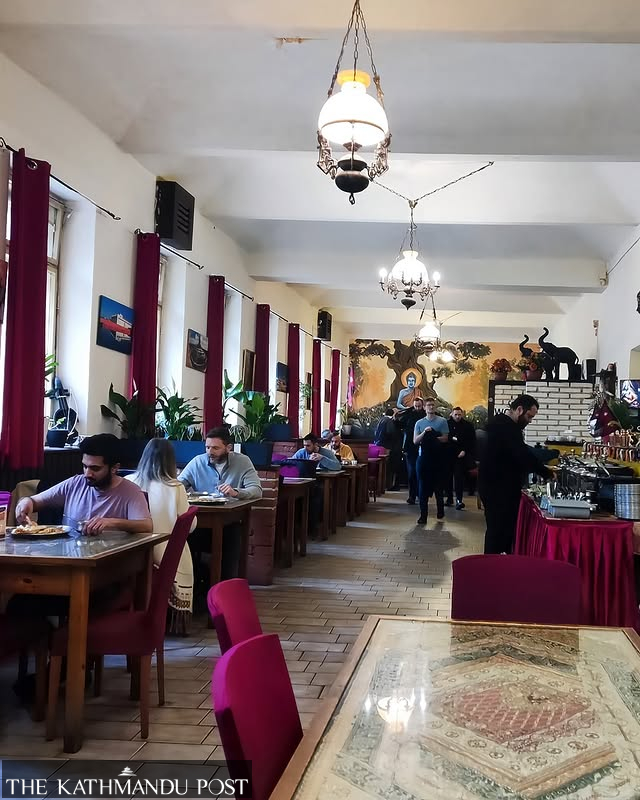
A little piece of Nepal sits in Prague, the capital of the Czech Republic, where a giant mural of the Buddha welcomes visitors. Walking inside, Czech diners can be seen tucking into plates of an ‘all-you-can buffet’ that runs from 11 am to 2 pm, Monday to Friday.
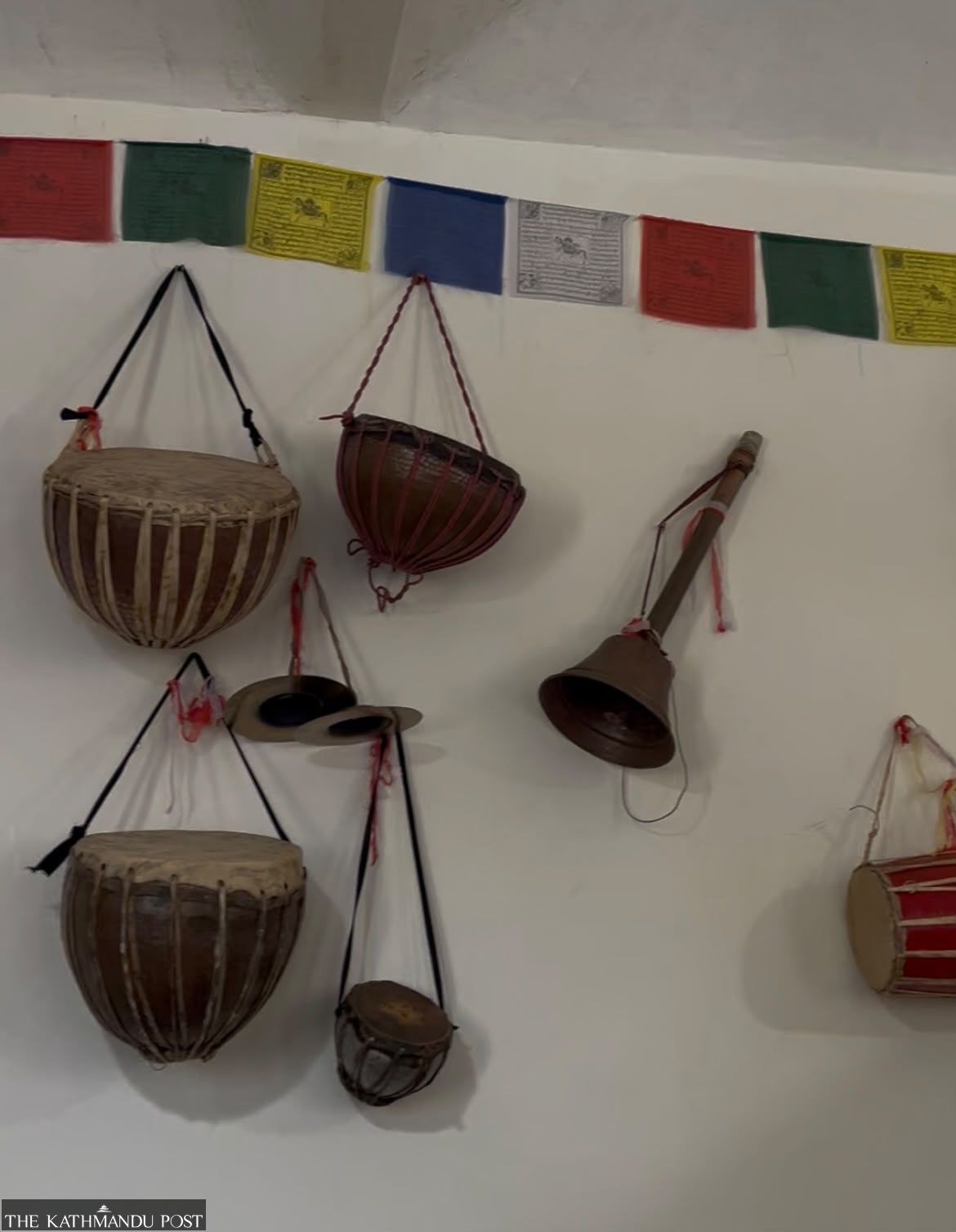
Around them hang traditional Nepali musical instruments—a full Naumati Baja set—turning the restaurant into something that feels as much like a cultural centre as an eatery.
This is Lumbini-Indická a Nepálská Restaurace, a family-run Nepali and Indian restaurant in Prague’s Žižkov district. For husband-and-wife duo Baikuntha Rayamajhi and Anjana Rayamajhi, who jointly run the establishment, serving food, they say, is only part of their mission.
Just as important, they say, is preserving and promoting Nepali culture thousands of kilometres away from home.
Although the eatery was established about eight years ago, the couple took over its management more than two years ago. Baikuntha says the opportunity came unexpectedly.
“I jokingly asked the owner if he wanted to sell the restaurant,” he recalls. “We negotiated as a joke, but eventually the deal actually happened.”
Anish Ghimire/TKP
Years of organising community events convinced him that a restaurant could be more than just a place to eat. He saw it as a space where Nepalis could come together while Czech diners discovered Nepal’s cuisine and traditions.
Today, Lumbini-Indická a Nepálská Restaurace serves familiar Nepali dishes such as momo, dal bhat and thali alongside Indian favourites, attracting Nepali, Indian and Czech customers alike.
But the walls reveal another side of the restaurant’s identity. The collection of traditional musical instruments is not simply for decoration.
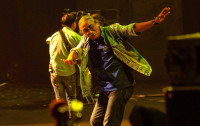
Since 2013, Baikuntha has led a Naumati Baja team that performs at weddings and community events across the Czech Republic and occasionally elsewhere in Europe.
“My wife and I also sing dohori,” he says. “We have our own performing team with musical instruments and a sound system.”
Anjana Rayamajhi shares both the business and the stage with her husband. While helping manage the day-to-day operations of the restaurant, she also performs traditional Nepali songs during cultural events, making music a natural extension of their family life.
Whenever Nepali artists visit the Czech Republic, many of their programmes are hosted inside the restaurant.
Since 2013, the restaurant’s owner, Baikuntha Rayamajhi, has led a Naumati Baja team that performs at weddings and community events across the Czech Republic and occasionally elsewhere in Europe. Anish Ghimire/TKP
Baikuntha Rayamajhi’s involvement in cultural activities extends well beyond the restaurant. He is the founding president of the International Nepali Artists Society (INAS) Czech Republic.
“When I started organising programmes, there weren’t many Nepali cultural events here,” he says. “Now there are many more people involved.”
For many Czech diners, Lumbini-Indická a Nepálská Restaurace is their first introduction to Nepal. They arrive for the food but often leave having encountered something more—a glimpse of the country’s music and traditions.
For Nepalis living in Prague, meanwhile, the restaurant offers a familiar space where language, culture and community come together.
As Nepali migration to Europe continues to grow (an estimated 450,000–500,000 Nepali nationals live across Europe), restaurants like this are increasingly serving purposes that extend far beyond business. They become gathering places, performance venues and informal cultural institutions.
At Lumbini-Indická a Nepálská Restaurace, an ‘all-you-can-eat buffet’ may bring customers through the door. But it is the sounds of the madal, the melodies of dohori and the warmth of a Nepali family welcoming guests that leave the strongest impression.




 16.73°C Kathmandu