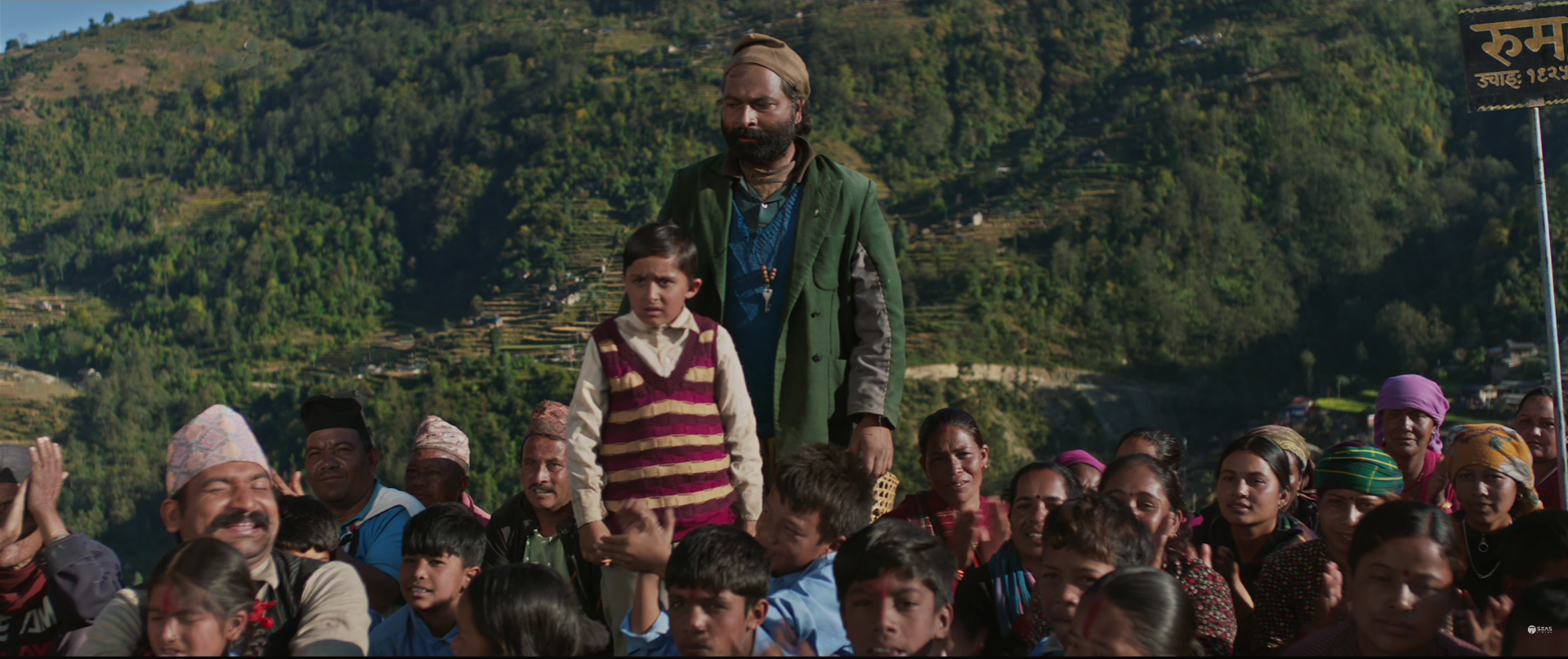
Around a small, flickering screen projecting a Rajesh Hamal film, an entire village gathers, but none look more alive with excitement than Gyan.
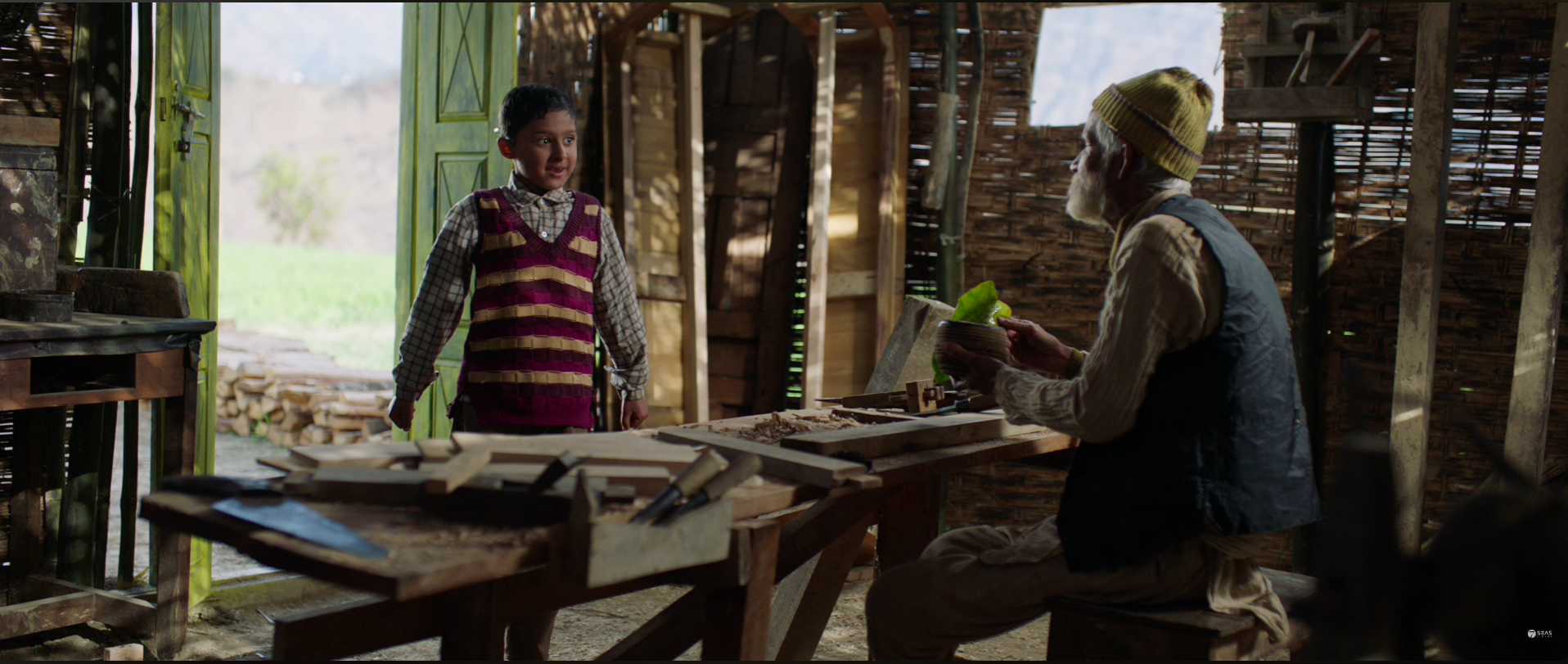
Film references tend to slip into his everyday speech and even homework, to the extent of evoking his teacher’s frustration. Yet, cinema is only a gateway to his visceral passion. The tactile and creative world of carpentry fascinates him above all else.
Coming from the makers of ‘Purna Bahadur Ko Sarangi’, one of the highest-grossing works in Nepali cinema, ‘Roll No. 1’ makes a piercing commentary on societal structures, educational systems, authoritative parenting and the fragility of child psychology.
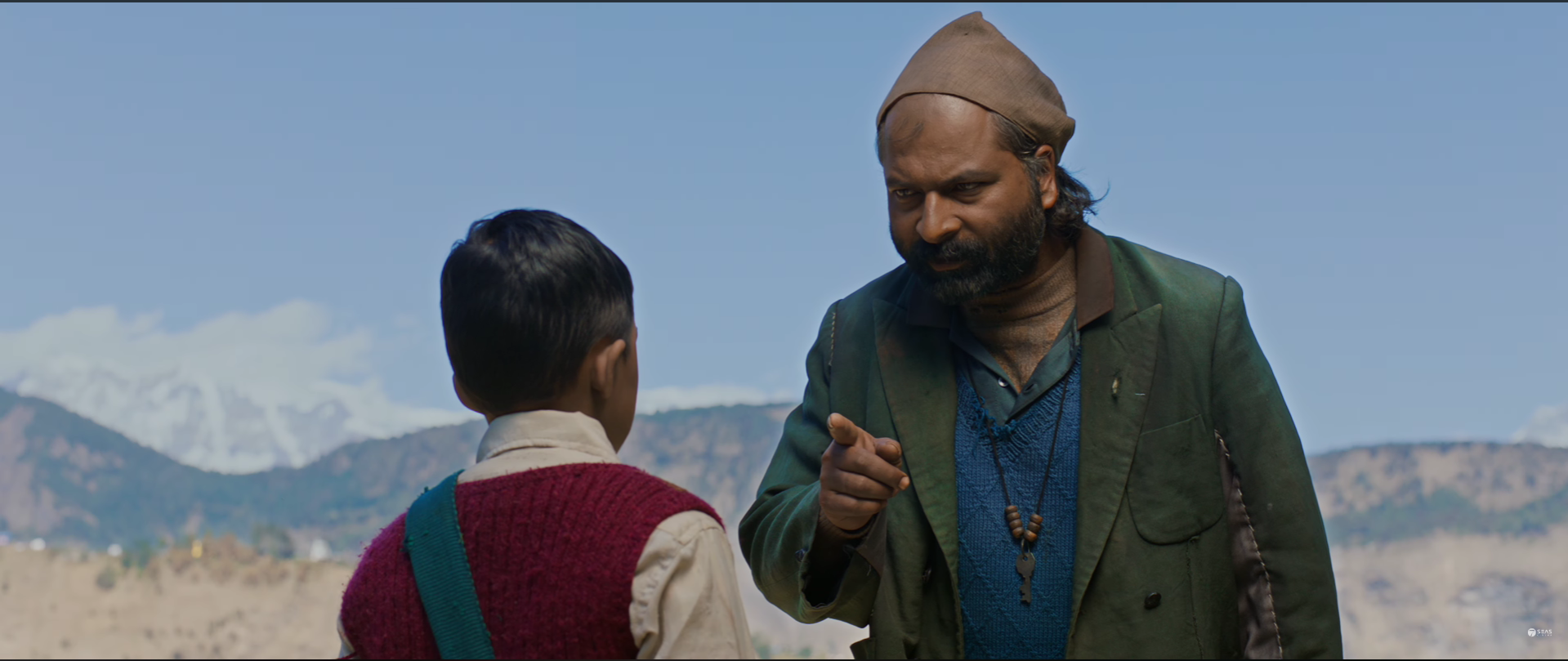
The film’s emotional anchor drops during a routine village screening. As the credits roll, Gyan, played by Nirvik Regmi, turns to his father to ask him the name of the movie. His father falls silent. Unable to read and write himself, he is confronted by the limitations of his own upbringing.
Initially, Sanchar, the father played by Mukun Bhusal, fears that formal education will separate him from his son, leaving him abandoned in his old age. However, the harsh realities of social marginalisation soon transform his fear into a desperate ambition. He begins to dream of his son becoming the top student in his class, the elusive ‘Roll No. 1’.
With a commendable critique of societal structures and disparities, the film, however, is driven by heavy emotional sequences, demanding that the audience empathise with multiple climactic moments that often flatten the narrative rather than making it powerful. Eventually, the film’s emotional excesses ultimately work against it, making parts of the story feel forced and fragmented.
Yet Nepali audiences seem to respond wholeheartedly to these sequences, almost as if the filmmakers anticipated this reaction from the outset. Perhaps they understand their audience exceptionally well.
Having inherited the burden of illiteracy, a legacy of generations of poverty, Sanchar is determined to break the cycle. He envisions education as the pathway to dignity and opportunity for his son. It is this dynamic that drives the narrative of ‘Roll No. 1’.
It is also this dynamic that varies how the audience connects with this film. Parents are drawn to the sacrifices of Gyan’s father, while younger audiences find themselves reflected in Gyan’s temperament and aspirations.
It is often the case that children become vessels for their parents’ dreams. A future is determined for them, and expectations are firmly set in place. Despite the socio-economic challenges that Sanchar seeks to overcome through Gyan’s academic success, he instead suffocates the child’s psychological world.
Emotional attachment with his father turns into exhaustion, frustration and resentment. This pressure makes him question what life truly amounts to. A child’s demands are simple: warmth, security and moments of playfulness. Sanchar, while trying to reshape his family’s silhouette of poverty, fails to understand his son's emotional architecture.
Seeking escape, carpentry and Begumbaje become Gyan’s refuge.
Gyan is also particularly spirited when he spends time with his friends. Govinda, played by child actor Samyam Katwal, presents him with the beauty of literature and poetry, almost as an escape from the competitive expectations of their fathers to make one of them Roll No 1.
With their group of friends, they play together, exploring their mischief and the freedoms of childhood. They are also bound together by the shared overwhelming expectations of their parents. A scene in which one of their friends cheerfully shares how lucky he is not to have a father lays bare an emotional contradiction in ‘good parenting’ in Nepali society.
The film’s paradox lies in the name ‘Gyan’. Translated as ‘knowledge’, the character is seen redefining the parameters by which it is measured. Gyan juxtaposes his inherited identity, perpetuating societal structures in his own way rather than shrinking to his father’s expectations. Bipin, played by Avon Raj Upreti, occupies a small yet defining role in this arc.
‘Roll No 1’ functions as a satirical critique of an outdated Nepali academic culture that creates a conflict between human individuality and academic grades in measuring a child’s self-worth, a system that has long received resistance from citizens. Also, it questions the political structure that vests ultimate power in its leaders. Here, the village’s fate is determined by how much it can satisfy a politician.
Maternal psychology is also explored in the film through Saraswoti, played by Renu Nath Yogi. After losing her child to birth complications, postpartum depression emerges as a layer in Gyan’s expeditions.
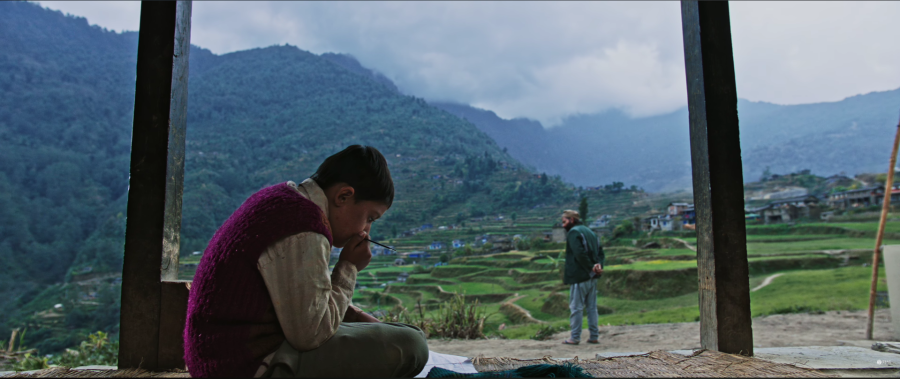
Filmed within the eccentric landscapes of Myagdi district, the frames and camera movements amplify its narrative arc. Scenes of mountains and hills serve both as backgrounds and as an emotional extension, reinforcing the sense of isolation and aspiration.
Remaining true to the emotional blueprint laid out by the makers’ previous hit, the melancholic score in ‘Roll No 1’ arrives quickly in climactic scenes. While the rhythms heighten the audience's immediate emotional responses, they occasionally risk rushing their natural grief.
The film, therefore, grants the audience the moral agency to either accept the logic of academic conformity or critically interrogate the structures that enforce it. Its strength lies in its ability to evoke empathy for both child and parent, even when it does not fully resolve the contradictions it presents.




 21.76°C Kathmandu