



 19.81°C Kathmandu
Thu, Jul 23, 2026
Culture & Lifestyle
‘Even a few minds changed is a revolution’
Filmmaker Samundra Bhatta on how literature and cinema together can reshape perspectives.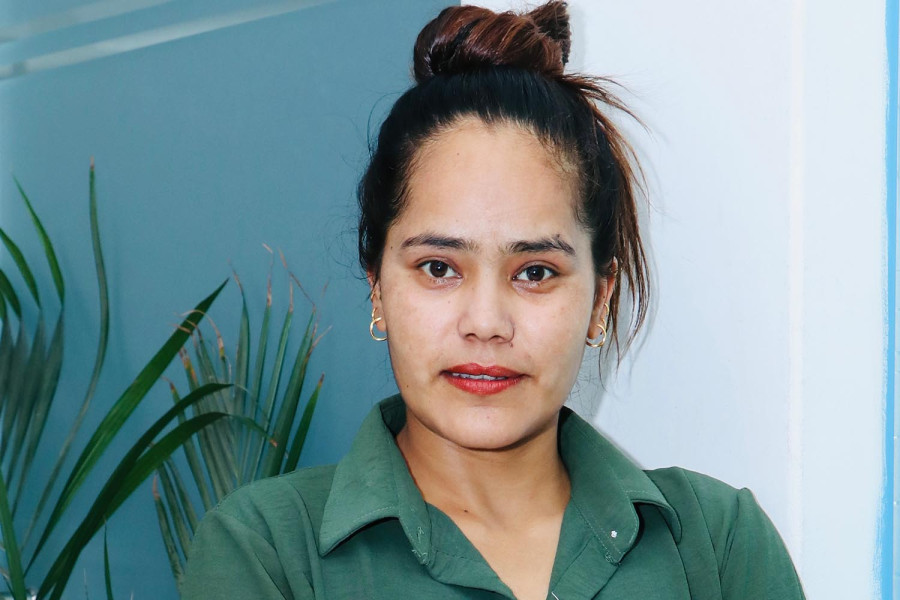
bookmark![]()
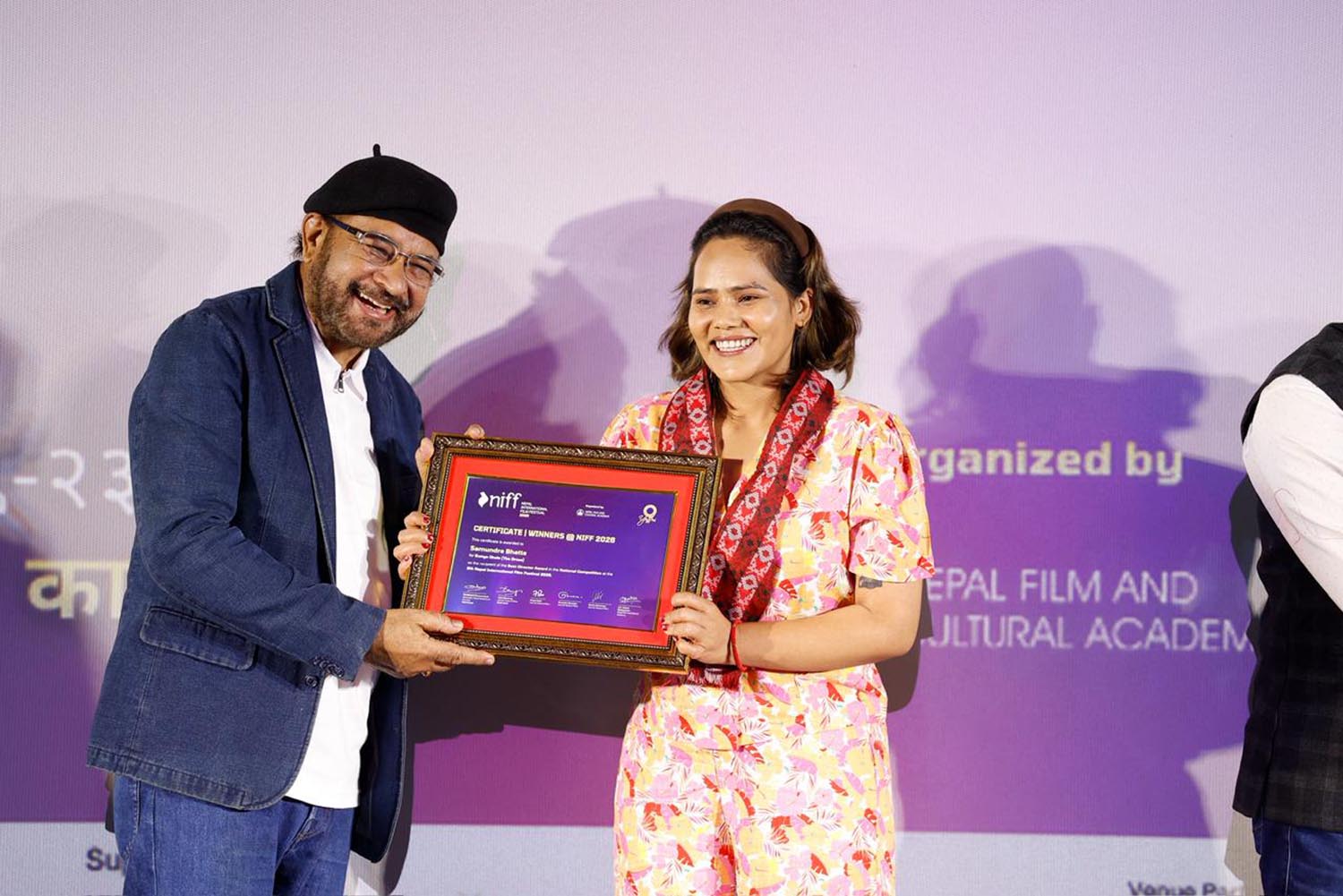
Bhatta’s ‘Gunyo Cholo: The Dress’ was awarded the Best National Feature Film at the 9th Nepal International Film Festival in Kathmandu on Monday. Courtesy of NIFF
Jony Nepal
Published at : April 9, 2026
Updated at : April 9, 2026 08:40
Through films like ‘Gunyo Cholo: The Dress’ (Best National Feature Film of the 9th Nepal International Film Festival), Nepali filmmaker Samundra Bhatta foregrounds the voices that have long been pushed beyond the margins of social consciousness. Bhatta was also awarded the Best Director for the same film.
Bhatta has over 13 years of experience in the Nepali film industry. She has been the Treasurer of the Film Director Guild of Nepal since 2019, helping the filmmaking community grow.
Bhatt has directed three feature films and worked as a segment director on the Cambodian documentary ‘The Border Breath’. Her filmmaking encompasses socially engaged storytelling, presenting complex social realities and amplifying voices that aren’t often heard.
In this conversation with the Post’s Jony Nepal, Bhatta discusses how literature and film together can positively shift public attitudes.
How did literature shape the way you understood the world before you became a filmmaker?
Literature has always broadened my horizon of understanding. Before becoming a filmmaker or developing any film idea, I read to research and build perspectives that later shape my characters.
Books make me rethink how I tell stories as a writer and director. They teach me how my characters’ lives and the stories I tell are shaped not just by their personal challenges but by social structures, media influence, gender, human rights, and technology. After reading, I think more about how to write stories that are thoughtful, socially aware, and morally responsible. I want my readers to think, feel, and question what they read.
For me, filmmaking and literature are deeply interdependent. When literature narrates stories through words, cinema visualises them, both amplifying the power of storytelling.
What was the initial experience that made you feel Gulabi’s story needed to be told through the film ‘Gunyo Cholo’?
During the Covid-19 pandemic, structured support for creative professionals became an urgent necessity. Through my association with the Film Directors Guild of Nepal, I learned that a specific budget was allocated for technicians and filmmakers. While working on the grant distribution, my friend Neelam Poudel told me about the negligence projected upon the LGBTQIA+ community at the time, socially, institutionally and even individually.
With any financial help that I could gather, I tried to extend support. Neelam then took me to meet a group of about 35 people, aged 20 to 80, all members of the LGBTQIA+ community.
I was struck by the silence that was imposed upon them. Visiting the room is an experience that continues to stay with me–one that significantly shaped the filmmaker that I am today. Guilt surrounded me when I realised that few to none have supported them, and neither have I.
They told me, ‘You are the first person who came here, not to shrink us into a subject of laughter and satire, but to simply listen to us. If possible, share our story too.’
I made a decision that day. To bring the voices to the limelight that are often dismissed and considered insignificant. Therefore, presenting the story of Gulabi was my effort.
Do you believe that literature and film together can positively shift public attitudes? Could you share some instances when you felt like it was possible?
Definitely. We cannot shape millions of minds all at once. But giving new perspectives to a few is still a revolution.
For me, helping my husband navigate the experiences of the LGBTQIA+ community was a triumph. He was even warned to watch out for my actions. People said, ‘She cannot bring these voices to the mainstream’. Yesterday, when I won the award, those very people came to congratulate me and celebrate with me.
Another instance was during the hall visit in Chabahil. 9 to 10 audience members came up to me and expressed how their worldview changed after watching the film.
Literary and visual narratives are powerful, translating specific lived experiences into a language understood by a larger audience, shaping emotions and redirecting attitudes.
The ‘Gunyo Cholo’ ceremony traditionally marks womanhood within a rigid cultural framework. How is it symbolised in the film?
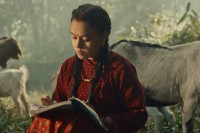
‘Gunyo Cholo’, more than a mere traditional attire, is an emotion for the people of the LGBTQIA+ community. Culturally symbolised as a fabric of femininity, Gulabi, a trans woman wearing it, interprets belonging and acceptance—something that society often denies.
Identity and affirmation of selfhood are profoundly shaped by family. At the end of the film, Gulabi’s father gives her the Gunyo Cholo. Change in society is possible only when the family exerts its force.
Samundra Bhatta’s five book recommendations
The Sociological Imagination
Author: C Wright Mills
Publisher: Oxford University Press
Year: 1959
Mills made me understand how personal problems connect to society, showing that they are not just personal weaknesses.
Manufacturing Consent
Authors: Noam Chomsky and Edward S Herman
Publisher: Pantheon Books
Year: 1988
This book taught me to critically understand information and news, and to harness the ability to think independently.
The Second Sex
Author: Simone de Beauvoir
Publisher: Gallimard
Year: 1949
Beauvoir’s writing helped me see gender equality, social perspectives, and human identity through a wider lens.
The Handmaid’s Tale
Author: Margaret Atwood
Publisher: McClelland & Stewart
Year: 1985
Atwood raises awareness about how political systems and social changes can affect human rights.
Life 3.0
Author: Max Tegmark
Publisher: Alfred A Knopf
Year: 2017
In this book, Tegmark helps us understand how technology can transform human life in the future.
Jony Nepal
Nepal is a culture and lifestyle reporter at the Post. She is also a Psychology and English language student.




Most Read from Culture & Lifestyle


Editor's Picks
Proposed ‘Romeo and Juliet’ law may spare boys, but what about girls?
Three prime ministers, 10 premierships. Why is Sudurpaschim still Nepal’s poorest province?
Inside the strange, disciplined, unreachable world of Nepal’s Prime Minister

Three credit booms in three decades ended in economic downturn
How Nepal could lose a generation of footballers due to FIFA’s suspension
E-PAPER | July 23, 2026

×