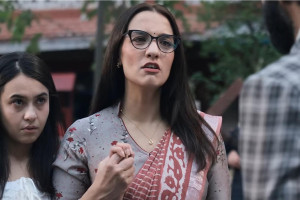
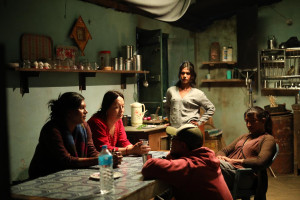
After being a digital photographer for a year and a half, Sukarya Lal Shrestha, coincidentally, discovered his grandfather’s photographs and began collecting stories and backgrounds about them. Paying homage to his works and replicating his medium of artistic expression, Shrestha became a third-generation film photographer himself.
In the present age of digital dominance, a pivotal chasm seems to be widening within the crowd—to experience life as in the old days; to prefer a slower, more tangible process. Analogue film photography has re-emerged at the core of contemporary aesthetics, inviting quiet reflection and slow, gradual gratification.
Shrestha says that film photography was the only medium available to his grandfather, whereas, by contrast, it remains just a hobby for him amid the abundance.
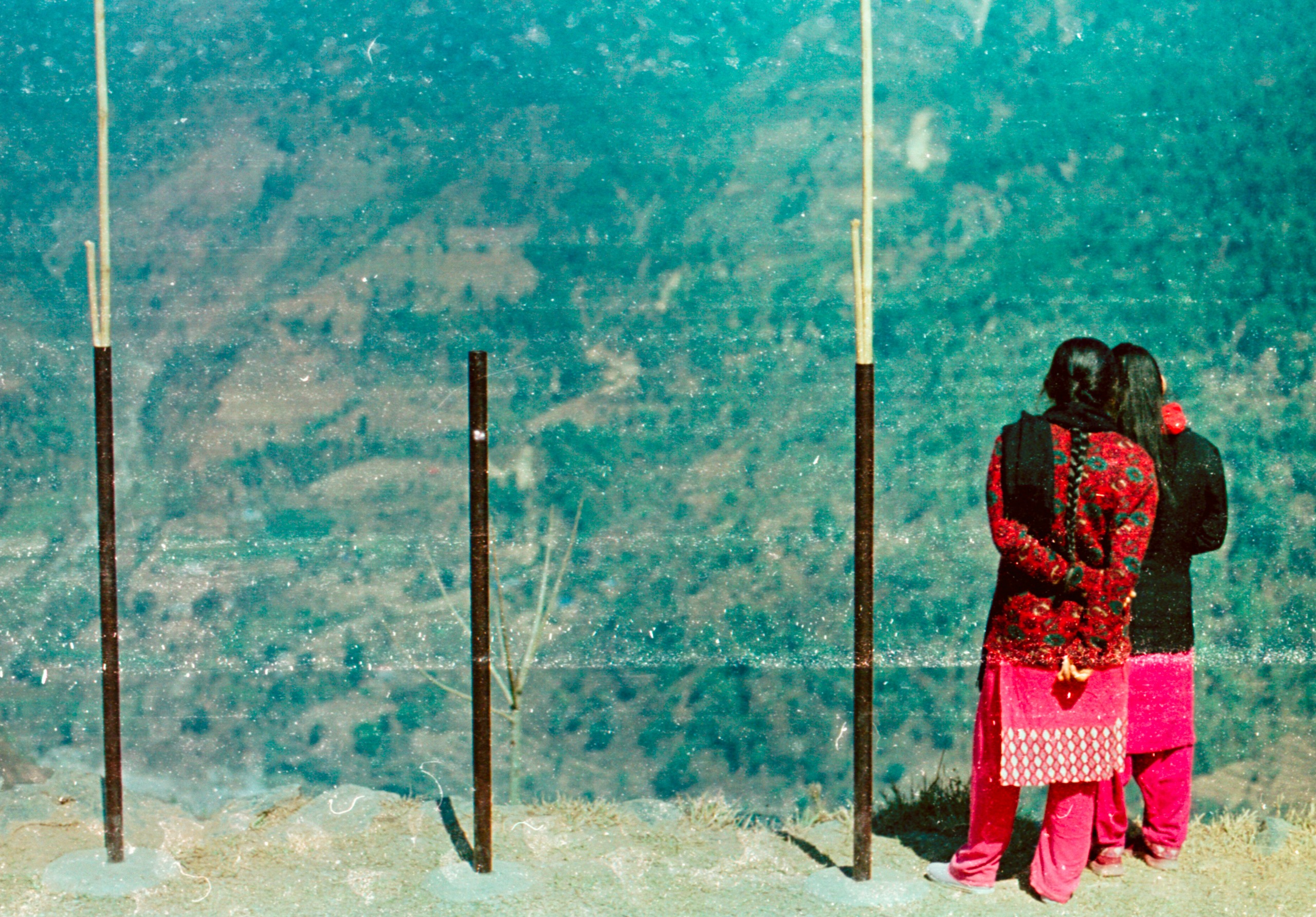
Women watch the road from a school in Ichchhakamana, Chitwan, in 2024. Courtesy of Sukarya Lal Shrestha
Macy Castañeda Lee, a Filipino film photographer, organiser and curator, explores the impact of colonial history and present-day socioeconomic conditions on photography in Manila and Nepal in Ocula magazine’s ‘South Asia’s New Analogue Photographers’. “In Nepal, photography arrived later (around 1860), introduced by British diplomacy. Nepal was never colonised, but the Rana regime tightly controlled who was able to learn and practise photography. Confined to royals and the elite, much of Nepalese photography can only be traced back to the 20th century,” writes Lee.
Grounded in tactile experience and hands-on development, analogue photography carries a rather emotional arc.
“Film photography, to me, feels like creating a distant memory. It carries a certain nostalgia, like small pieces of time made into an image. It preserves authenticity and aesthetics through its unpredictability, giving each image a unique character that feels more deliberate and real,” shares Bibek Gautam, a filmmaker and photographer based in Kathmandu.
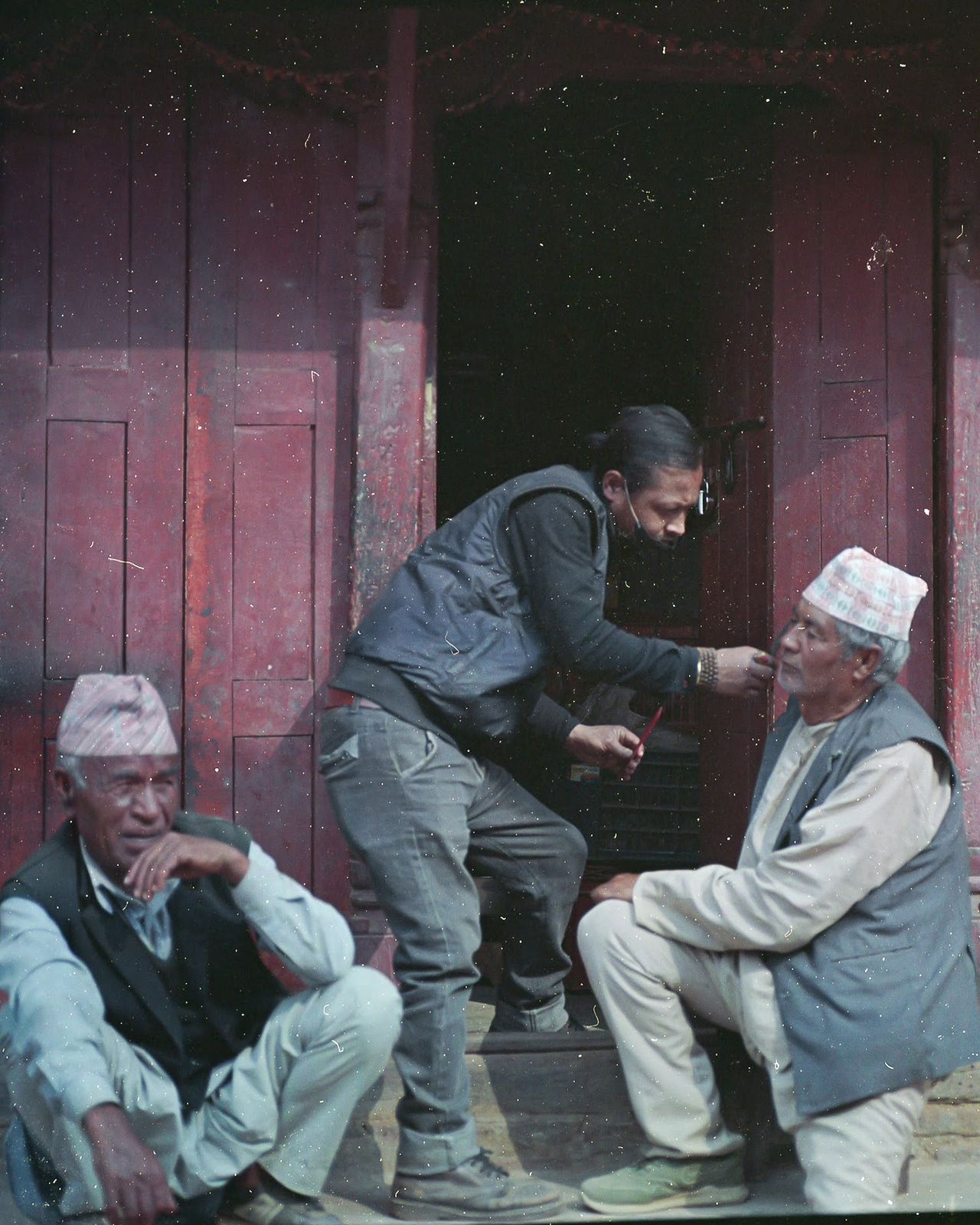
Capturing cultural occurrences on film demands a nuanced approach. Photographers do not have control over the fast-paced activities. Shrestha shares his introspections from uncertainties to reward in the due process. “It took me a while to gather the courage to go out and capture the cultural events on film. We cannot control anything. This pivotal experience is necessary for photographers,” shares Shrestha.
Niva Rajbanshi, co-founder of Analogue Club Nepal, shares how film photography is an escape from the digital surge. Courtesy of Niva Rajbangshi
Elisa Anchangbo Subba, a Brussels-based Nepali photographer and videographer, recalls how film photography is deeply embedded in her childhood, connectivity and nostalgia. “My parents would put the film photographs in a photo book, and some of the prints they would send out to Taplejung for my siblings and family to see, attached with a letter. A piece of our memory to be shared with them through our shared distance,” shares Subba.
She warns that if our photography became entirely digital, the craftsmanship of film would disappear. “We would lose the whole process of shooting, developing and printing, and much more than that, we will lose the patience that we create for the development. Also, accepting the loss of your work—learning to understand that there might be failed frames or rolls would gradually disappear,” she added.
Blending grit and vulnerability, female film photographers spark deeper poignancy in the process, building connection and remaining monumental in the male-dominated field. “All spaces are full of men. It is exhausting. Some even think they are entitled to mansplaining,” she says. “But we have to continue because what we do is not just aesthetic; it is much more than that. It is making space for other women so they can participate with us, giving them a sense of comfort and a platform they can rely on. That keeps me going,” shares Subba.
Photographer Naima Kirat Rai, however, has a different experience. “I haven’t approached photography through the gender lens. I see myself simply as an artist. That said, I do hope more women enter this field,” she shares.
Elisa Anchangbo Subba, a Brussels-based Nepali photographer and videographer, says film photography is deeply embedded in her childhood. Courtesy of Elisa Anchangbo Subba
Rai believes that film photography is ‘a chemical miracle’. “The textures, tones, and subtle imperfections that emerge are unique to each frame. The waiting, observing, and trusting the moment make each image honest and beautiful in a way that feels valid to the artist,” Rai explains.
Niva Rajbanshi, co-founder of Analogue Club Nepal, has been in the field for over fifteen years. He explains how film photography draws the younger generation to its thrill. “Young people have grown up with digital ‘everything’, and exploring film gives them a fresh, tangible experience. I think they’re tired of things looking perfect and clinical,” he shares. “The rush of seeing our work on plastic film—the anticipation, smell and the feeling of something tangible in our hands—is rewarding. When you see your vision come to life in a darkroom, there’s a real sense of accomplishment,” Rajbanshi adds.
Traditional photography is making a comeback, but processing these photos costs more now. Regardless, even with limited curation, the photographers carry their analogue cameras, preserving moments and allowing memories to emerge slowly.




 21.12°C Kathmandu