Eviction pressure adds to hardship for Gen Z protest victim
Still recovering from a gunshot injury during last year’s Gen Z protests, Nischal Thapa faces fresh uncertainty as eviction drive targets his Maharajgunj settlement.
A heavy silence has fallen over the informal settlement tucked behind the Tribhuvan University Teaching Hospital in Maharajgunj. It is not the silence of peace, but of paralysed fear.
Following a series of megaphone announcements by the Kathmandu Metropolitan City (KMC) ordering an immediate eviction, the two-decade-old neighbourhood has been plunged into chaos. Families are frantically wrapping worn utensils in bundles, while others wander the streets in a desperate, often fruitless search for a new place to call home.
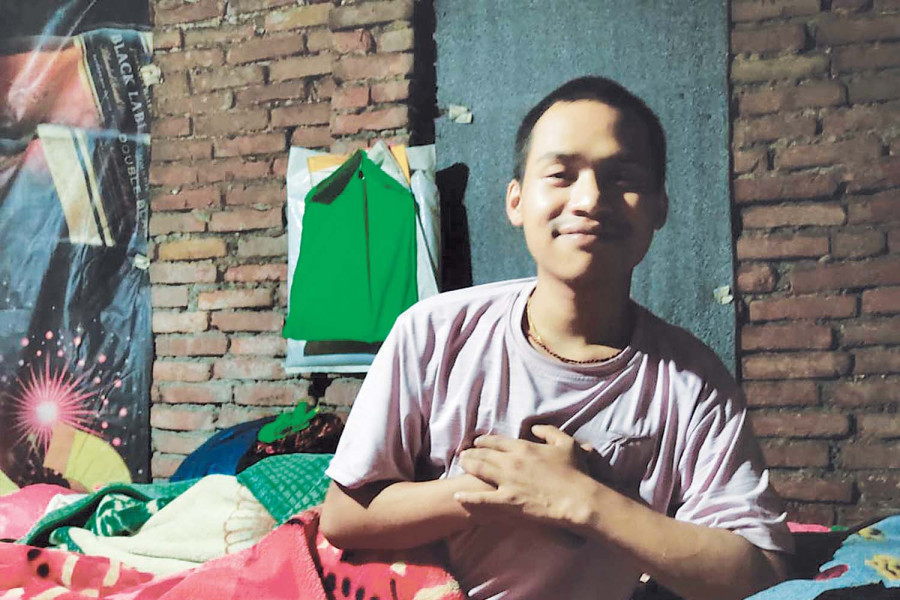
Among those caught in the upheaval is 24-year-old Nischal Thapa. Born and raised on this small patch of contested land, Nischal once believed that the key to a better life lay in a cleaner government. That conviction led him to the frontlines of last year’s Gen Z protests.
On September 9, amid a sea of youth on the Ring Road demanding systemic change, Nischal’s life changed forever. During a violent clash between demonstrators and security forces, he was shot below the waist. He was rushed to the emergency ward covered in blood—an ordeal that eventually earned him an official state identity card recognising him as a victim of the protests.
“We put our lives on the line for this movement,” Nischal says, his voice thick with irony and grief. “Yet, the very system that rose from that energy is now driving us from the only home I’ve ever known.”
Nischal’s recovery is far from over. His leg remains plagued by persistent numbness and sharp pain, making it difficult to walk and impossible to work. His physical disability has pushed his family further into the margins. Since his father’s death eight years ago, his mother has been the sole provider, scraping together a living through daily wage labour.
The financial strain is suffocating. After facing long queues and inadequate facilities at government hospitals, the family was forced to take out high-interest loans to seek specialised care at private clinics.
Since the KMC’s final notice on April 29, the small shack Nischal shares with his mother has been dismantled into a collection of bags piled in a corner. But the bags have nowhere to go.
“We’ve searched everywhere for a room, but landlords tell us they have nothing available,” Nischal says. “Some turn us away the moment they realise we are from the settlement. With this body and no money, where am I supposed to take my mother?”




 25.02°C Kathmandu