



 20.94°C Kathmandu
Sat, Oct 10, 2026
Theater
‘Seto Dharti’: A heavy story, carefully staged
Moving between past and present, the play brings Tara’s silenced life into a powerful theatrical form.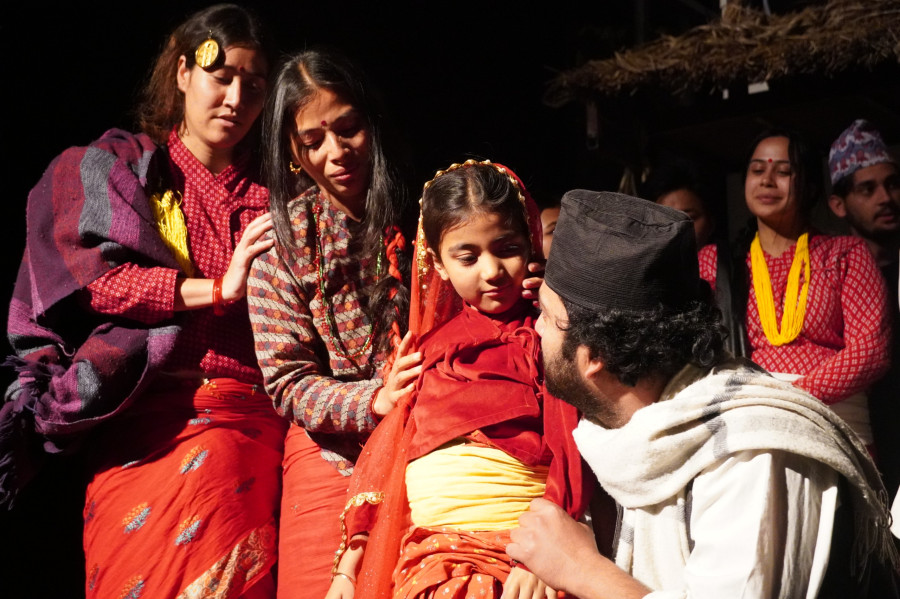
bookmark![]()
![]()
Tara’s entire life existed in the remnants of white, mourning her husband, whom she never knew. ![]()
![]()
Jony Nepal
Published at : April 21, 2026
Updated at : April 21, 2026 07:10
Kathmandu
Amar Nyaupane’s ‘Seto Dharti’ carries a legacy, a literary gravity, that makes its projection onto the theatre stage quite a task. This externalisation of the Madan Puraskar-winning novel offers the characters a physical presence through an ambitious and delicate undertaking.
Chanted by six pandits and one guru, the play opens with a mantra (sacred utterance). Subsequently, the guru’s dialogue follows, “If you want to acquire shanti (peace), you must become a brikshya (tree).”
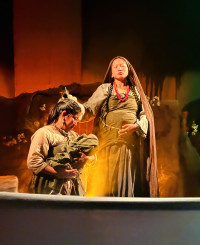
The stage visualisation, or perhaps the entire play, exists in duality. The stage’s left part holds Tara’s (played by Benisha Hamal) house in Devghat, and the right keeps her childhood home. Starting with Tara’s monologue in the ghat (steps leading down to the body of water), the play gently shifts to her memories, the flashbacks that shaped her existence in the present.
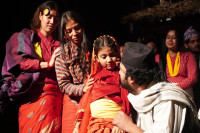
Seven-year-old Tara is rather mischievous. With her friends, she enacts ‘The Marriage Game’, in which she and Govinda are the bride and groom, while others assume the roles of the family: mother-in-law, sisters, and brothers.
When she returns home from the laughter and imitation, the play turns real.
A tumultuous gathering of her relatives—loud, chaotic, and prepared—waits for her and, more excitingly, the janti (a traditional wedding procession). Believing it is just a simple puja (religious ritual), Tara is made to sit in a mandap (a temporary, pillar-supported structure used in South Asia for ceremonies). Overwhelmed, she falls asleep, waking up to see her husband for the first time on his deathbed.
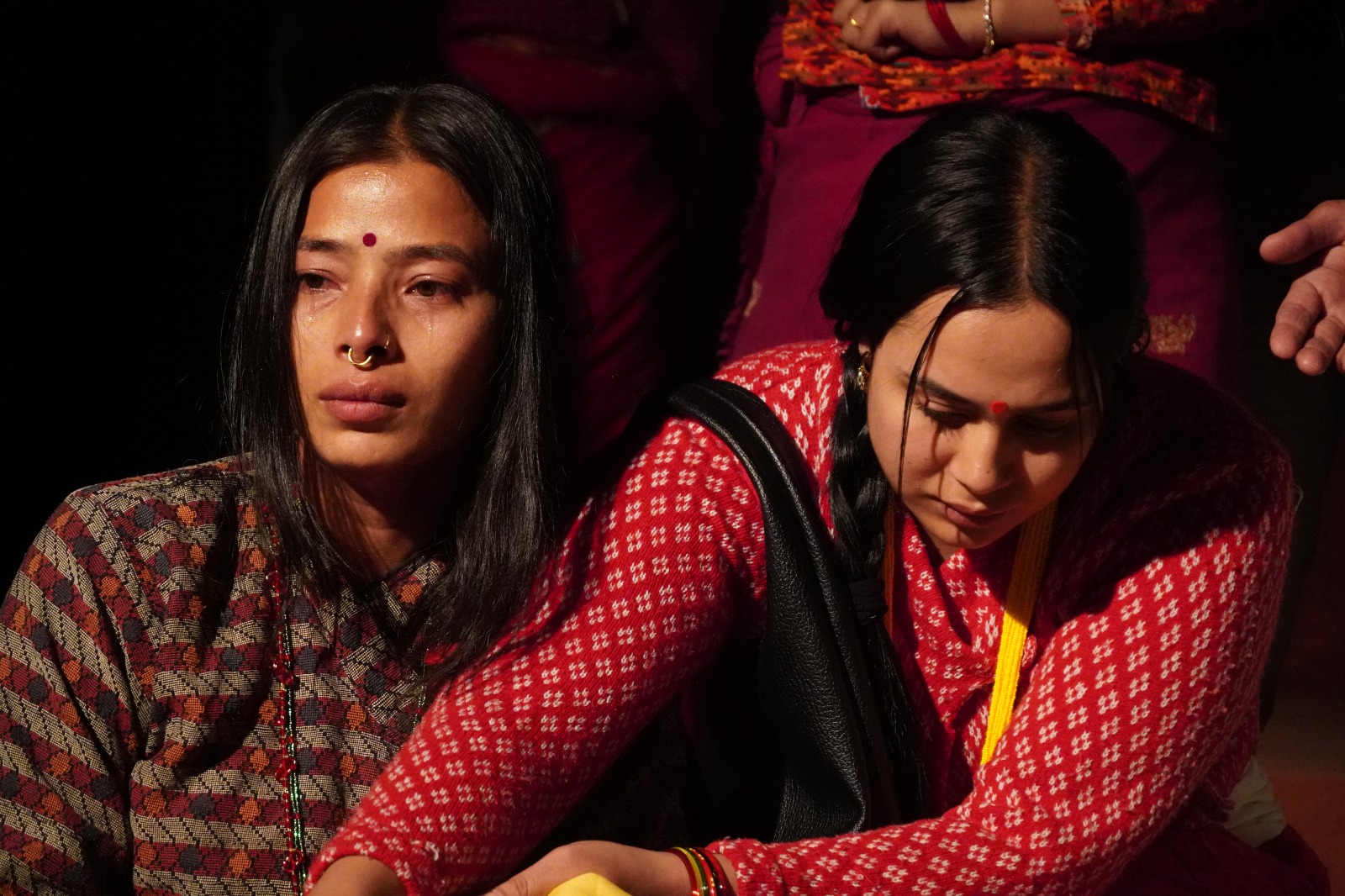
In between, the elder Tara, living in Devghat, steps into the memory like an unheeded voice suspended between past and present. She pledges, urging the child to wake up and her father to stop the marriage.
Watching a woman who has finally and painfully understood what had happened to her, trying to stop the inevitability of the past, evokes deep emotional catharsis in the audience. Some resonated, others empathised.
Consequently, Tara’s entire life existed in the remnants of white, mourning her husband, whom she never knew.
Child marriage in Nepal still remains a demoralising social reality that limits the lives of young girls. Remaining central to this reflection, ‘Seto Dharti’, stands as a powerful advocacy against child marriages through artistic exploration.
Tara, in her adolescence, was brought home by her father. When seen in all white, he is overwhelmed by a surge of guilt, making him realise the absurdity of what had happened to his daughter.
While returning, they encounter a cloth shop.
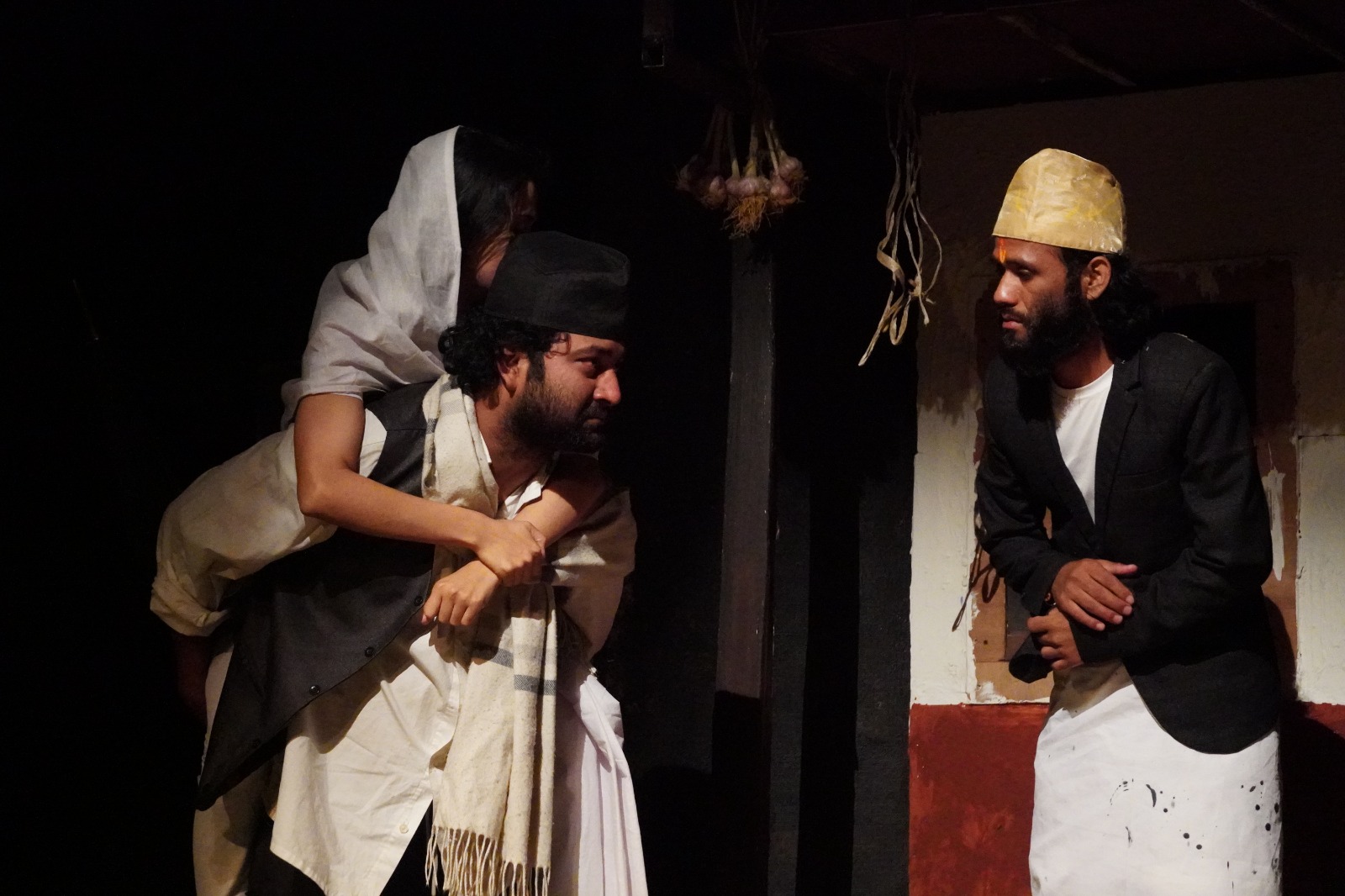
Fabrics are shown, and colours begin to recede until they disappear altogether. What remains is white. “People came to me asking why the shop only had white clothes,” director Sundar Dhital told the Post. “We were looking at the world from Tara’s perspective, where colours had faded into the shades of white.”
Hues change when Tara begins menstruating. Red feels foreign to her, almost intrusive. After all, why wouldn’t it? Her entire existence and dharti were surrounded by the rigidity of monochrome.
In her conditioned institutionalisation with white, red arrives as a disturbance rather than familiarity. Questions about it linger, underscored by the weight of cultural practices. They remain persistent yet unanswered,
“You cannot see the sun. Neither can you see the male members of the family,” Tara’s in-law family members told her, following the cultural rituals of first menstruation.
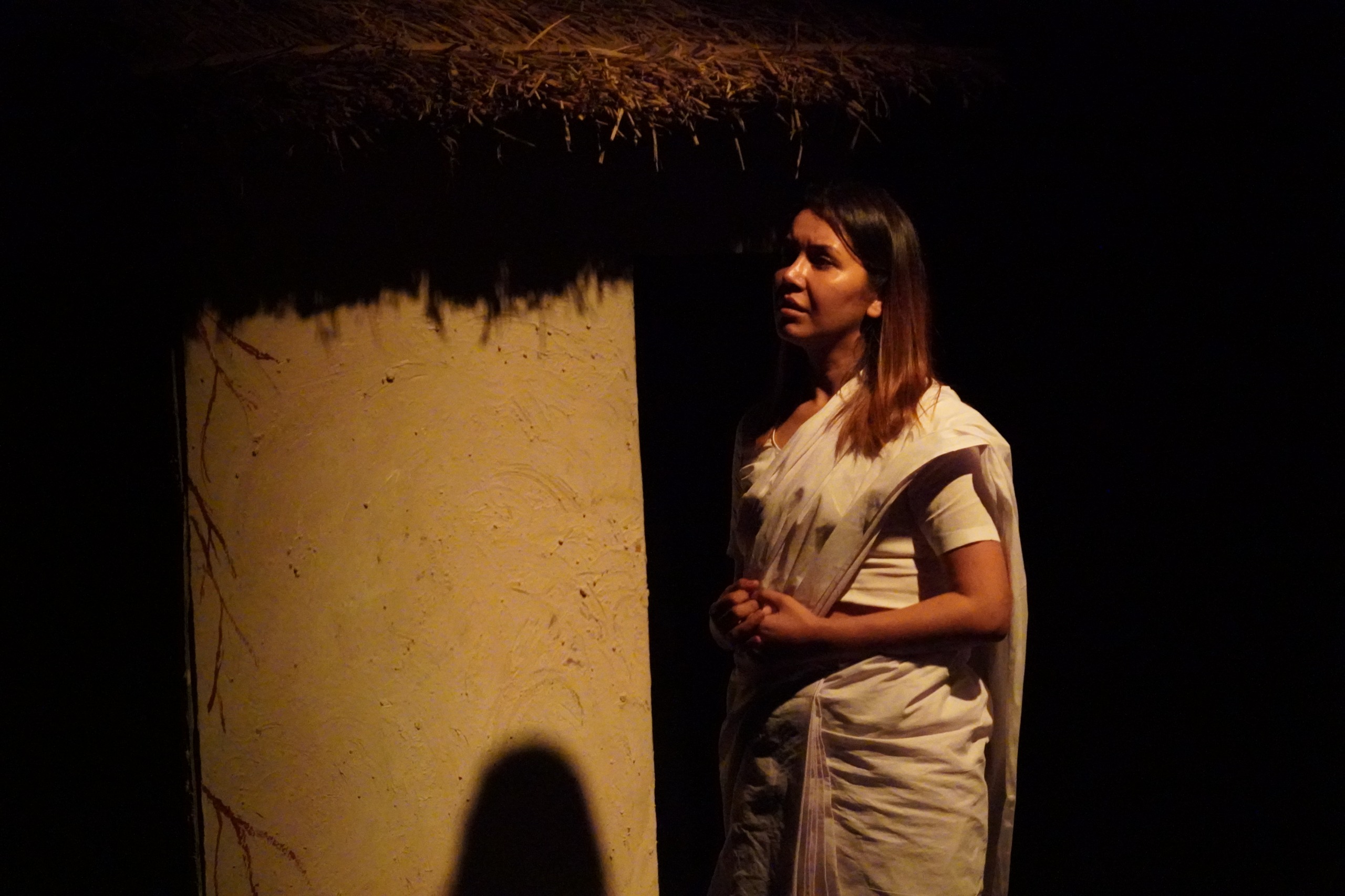
The antagonists of the play reside in the closest proximity to the main character, Tara, making the oppression intimate and inescapable. Within the tightly bound suppression and indignity, one of the most striking dialogues of the play emerges.
“If anyone has done the most sin, it would be God.”
Tara’s interaction with Yemuna, her childhood friend, remains central to the story. Envisioning marital intimacy through Yemuna’s narration, Tara begins to construct an understanding of desire that feels personal, even if it is borrowed.
The play’s emotional impact is heightened by the dialogue, lights, costumes, and stage design. In addition to them, live rhythms and sounds echo, further enriching the atmosphere. The team ‘Fokto’ sensitively responds to the nuances of the story and the director’s vision, deepening the play's gravity. Their rhythms add weight to the dialogue, cultural occurrences, and climactic moments.
The layered sonic texture of instruments like pachima, dhime, madal, dhamaha, guitar, gong, and windchime heightens the audience’s immersion in the narrative.
The directorial vision emerges as the play’s dominant force. “Before making the play, I re-read the novel with an underlying anxiousness of whether I could do justice to the story,” shares Dhital. “What affects me most is that I could not bring the character Pabitra into the play.”
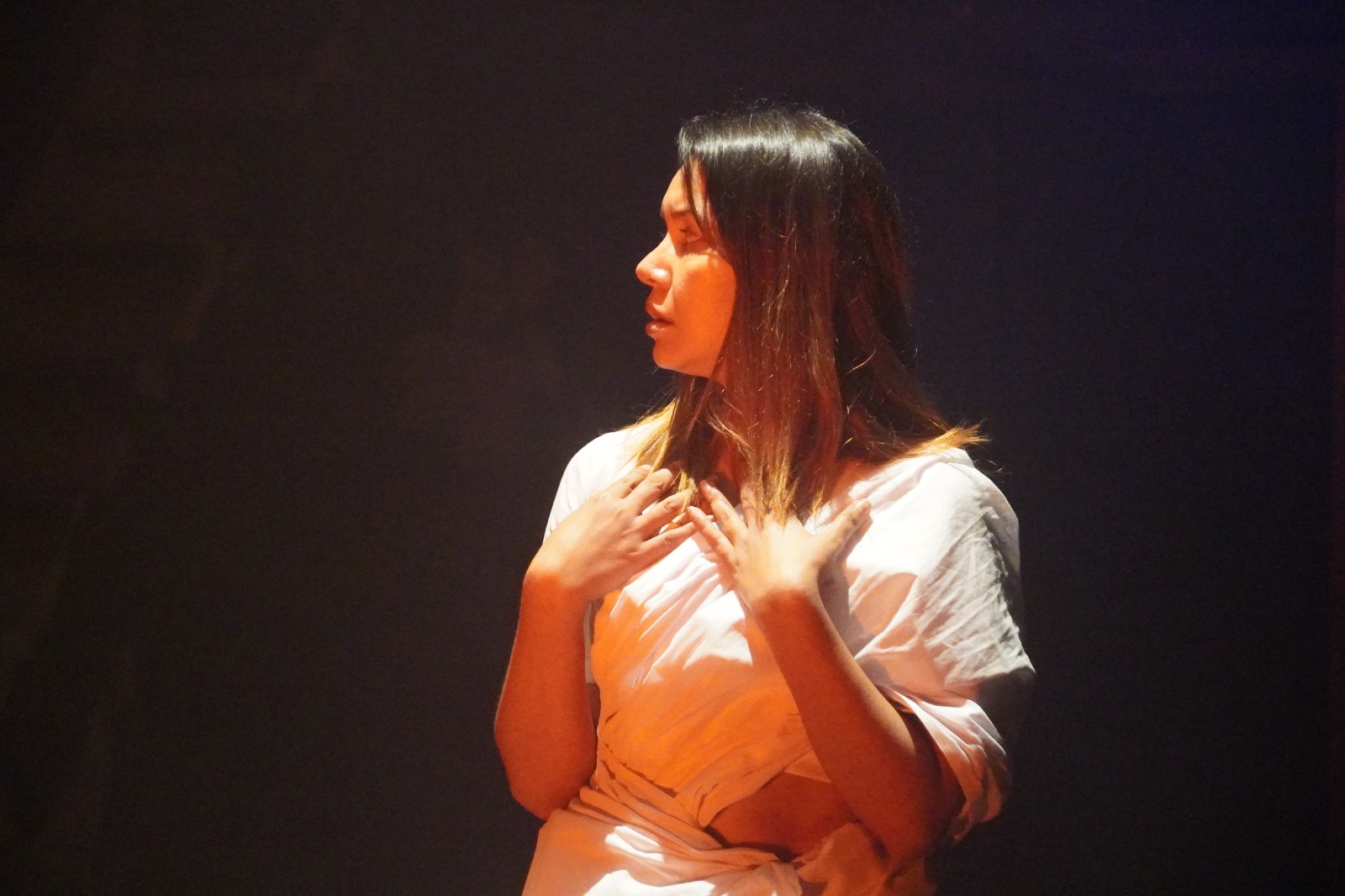
Projecting the novel into a show of one and a half hours is commendable, even appreciated by the novelist himself. “Shimmering down the vastness of the story, I could finally end up with this,” says Dhital.
Preserving the novel’s authenticity, Dhital had also reshaped a few occurrences based on his own artistic imagination. “I decided to show the scenes in parallel to each other, imagining what Tara would tell her younger self if she revisited her memories.”
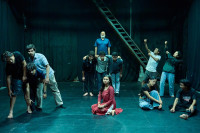
Each of the twelve scenes contains symbols that reinforce the play’s central motifs. In the final scene, only the three Taras, representing childhood, adolescence and old age, stand on the ground, dharti. The child and the adolescent Taras are positioned behind the bars of the windows, and in between them stands the elderly Tara, free and unbound.
What meaning does liberation hold when it comes after a life that was only encapsulated in the mists of oppression?
Seto Dharti
When: Until May 2
Where: Kantipur Theatre, Gairidhara
Time: 5:15 pm onwards
Also at 1:15 on Saturday, Sunday and Tuesday
Entry: Rs300 to Rs1,000
Jony Nepal
Nepal is a culture and lifestyle reporter/sub-editor at the Post. She is also a Psychology and English literature student.
Editor's Picks

Constitutional Bench caught in seniority, ‘pick and choose’ dispute

A Dom boy’s long road to becoming a doctor

From blankets to handmade dolls, two foreign women bring comfort to flood survivors

News Analysis: When institutional defence exposes institutional fault lines

It’s a bird … it’s a plane … it’s the Indian ambassador’s farewell tweets
E-PAPER | October 10, 2026

×