Strong sporting foundations key to producing champions, say athletes
From the absence of basic infrastructure in kabaddi to irregular football leagues and inadequate exposure for young volleyball players, athletes say Nepal must institutionalise and professionalise sports to achieve sustained success. Post Photo
Athletes have called for greater investment in sports infrastructure, training, sports education, and regular competitions, saying Nepal cannot hope to achieve sustained success on the international stage without stronger foundations.
They shared their experiences and concerns during a session titled ‘Foundations of Sports’ at the ‘Max Sports Summit’, organised by Kantipur Max Channel on Friday.
Nepal’s women’s kabaddi team has won bronze medals at the Asian Games twice, in 2023 and 2026. Manamati Bista was a member of the team on both occasions. Two months ago, she led the Nepali women’s kabaddi team to a bronze medal at the Asian Games in Japan.
“Our preparations for the Asian Games in Japan were underway in India. Once the fixtures were announced, there was enormous pressure on us to win another medal, given our previous success at the last Asian Games,” Bista said during the discussion. “But we won a medal and once again made the country proud.
“However, little has changed for us. There is no infrastructure for kabaddi in Nepal. It has been a long time since we were promised that a hostel would be built for players. It is particularly difficult for women athletes. Female players have to overcome barriers in their villages and communities to make their way forward.”
Nepal women's volleyball captain Niruta Thagunna said the team had prepared with the objective of improving on its previous performance. Although the players made every possible effort, she said they felt they had not received the level of preparation and support required to compete with other countries.
“There was a good mix of young and experienced players in the team. Overall, our performance was satisfactory. However, the new players lacked sufficient opportunities to play friendly matches and that affected their experience, and their performance. Although they played well, they still need more improvement and exposure,” Niruta said.
“Competitions like the Asian Games require thorough preparation, and two to three months of training is not enough. We need to move forward with a clear vision.”
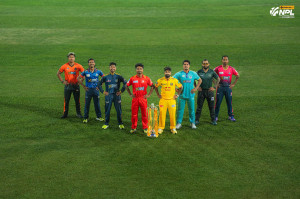
National cricket player Karan KC said the Nepal Premier League (NPL) was emerging as a model for Nepali sports. As a talent-hunting platform, the league has been providing opportunities to emerging players, he said.
“The arrival of a player like David Warner is a big deal for Kathmandu Gorkhas and Nepali cricket. Nepali players have an opportunity to learn from him. They have also been able to learn how to manage pressure and control the situation during difficult moments through the atmosphere created by the league,” Karan said.
Former national football player Bikram Lama said football could still remain Nepal's most popular sport if players had regular opportunities to compete.
“I played football for 21 years, but I got to play in only eight seasons of the league. Rather than dwelling on how and why this happened, everyone should now focus on creating an environment where the league can be held every year,” he said.
“Nepal is already facing a difficult situation, with the country currently suspended by FIFA. We have not been able to move forward despite these challenges. It was only after we stopped playing that we realised how many things we should have been doing differently. If we can communicate these lessons to the next generation, starting at the grassroots, we can move towards a more modern approach to the game and achieve better results.”
He said the problems facing Nepali football could broadly be divided into two categories: managerial and technical.
“Shortcomings in both areas have kept Nepali football confined to traditional methods, preventing it from keeping pace with modern and scientific approaches to the game,” Lama said. “The lack of adequate domestic league competitions is pushing Nepali football further behind with each passing day. We need to emphasise sports education, coaching qualifications such as the Pro Licence, and the moral and social education of players.”
He added that tournaments tend to have only an immediate impact, while the development of football requires long-term planning and institutional structures. Greater investment in sports education, rather than merely organising competitions, is essential for sustainable development, he said.




 15.5°C Kathmandu