



 21.76°C Kathmandu

Sat, Oct 24, 2026
Sports
Race to 2026 FIFA World Cup gathers pace
As squads take shape for the expanded 48-team tournament, contenders prepare, rules evolve and climate concerns emerge ahead of football’s biggest spectacle in the US, Canada and Mexico.
bookmark![]()
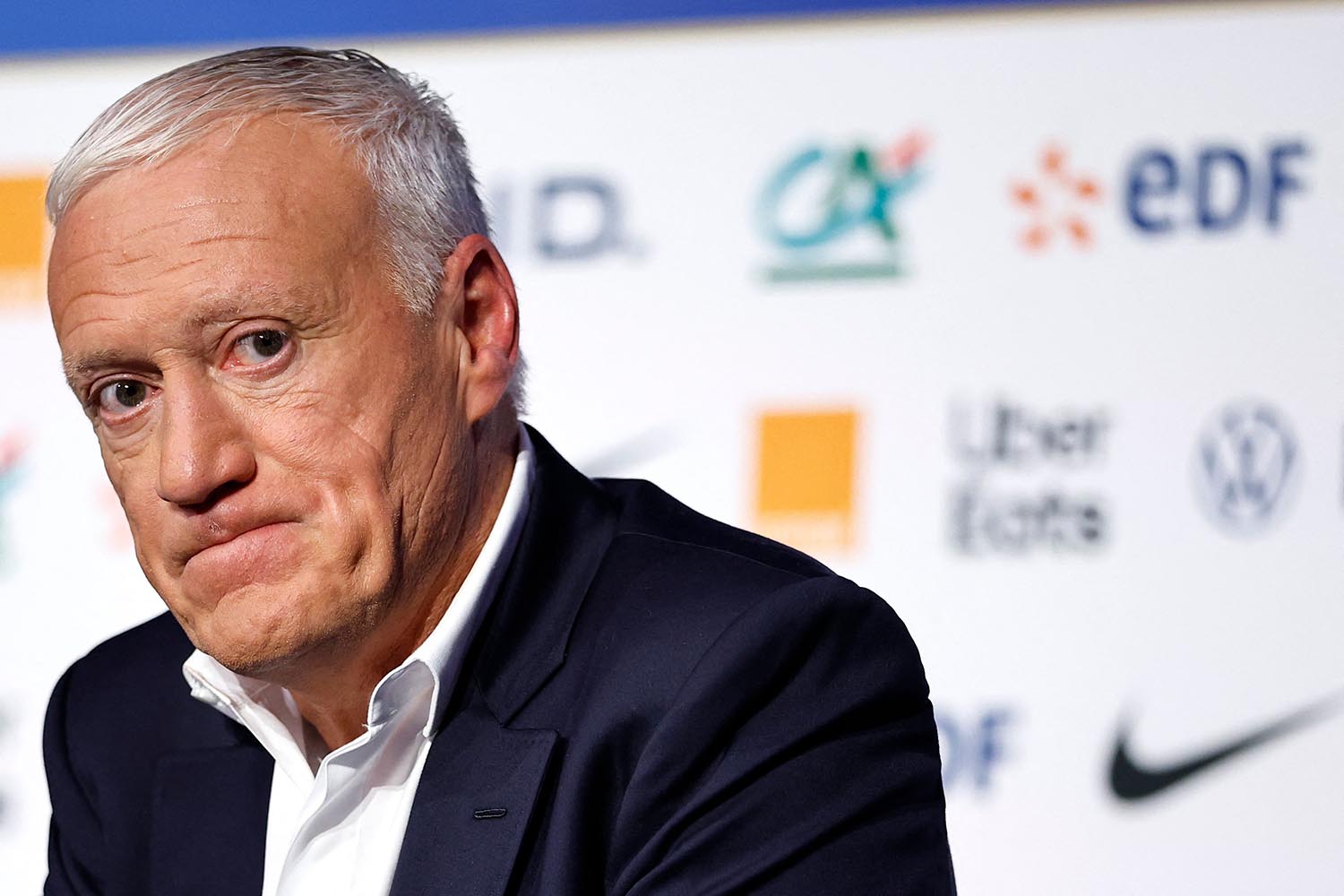
France's head coach Didier Deschamps at a press conference in Boulogne-Billancourt, outside Paris, on Thursday. ![]()
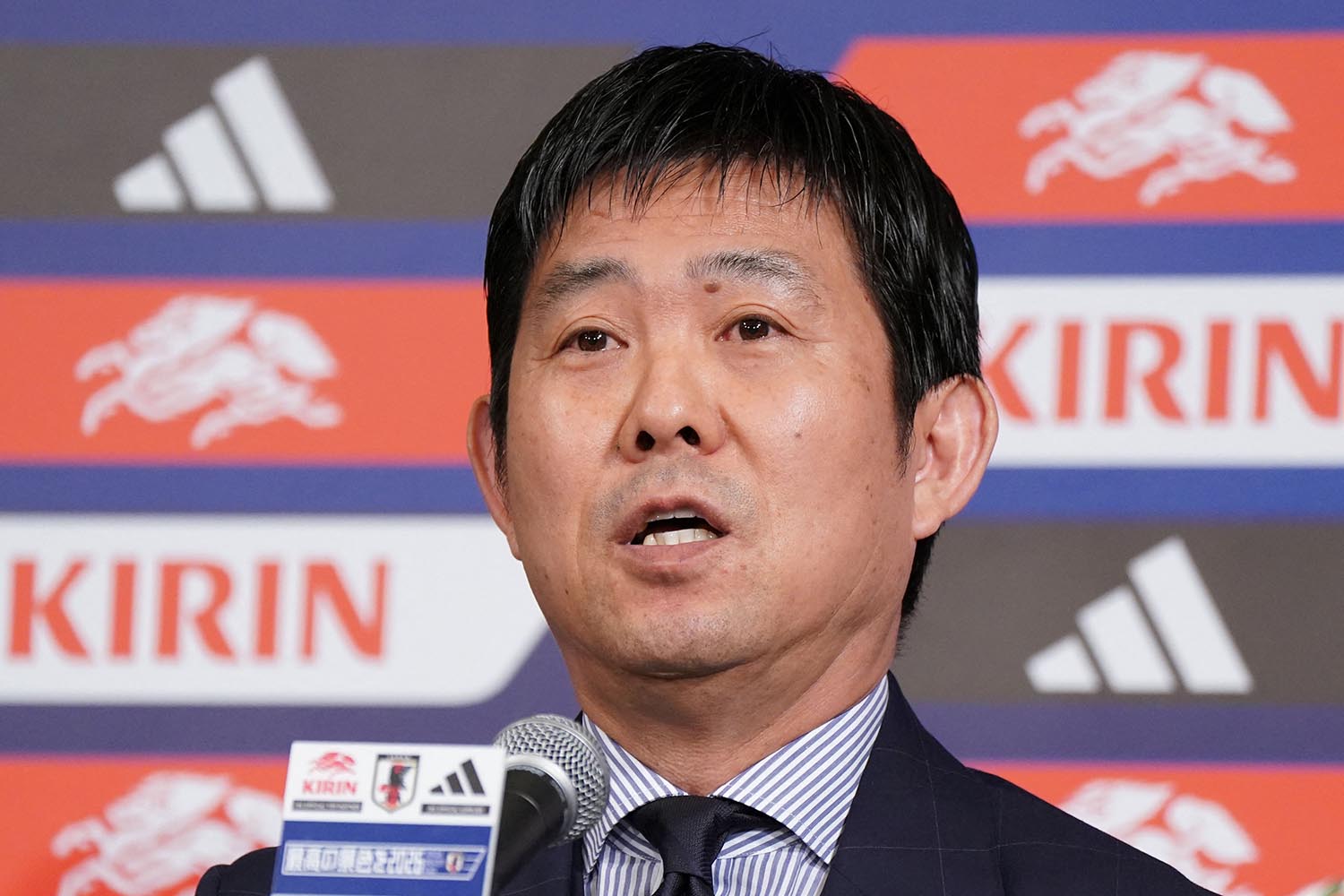
Japan's national football team head coach Hajime Moriyasu at a press conference in Tokyo on Friday.
Nayak Paudel
Published at : May 16, 2026
Updated at : May 16, 2026 07:48
Kathmandu
Less than a month remains for the 23rd edition of the world’s biggest sporting event—FIFA World Cup—to kick off in Mexico, with the co-hosts facing South Africa on June 12 at 12:45am Nepali time.
It will be the first edition of the football mega event featuring 48 teams. In the previous edition of the FIFA World Cup in Qatar, 32 teams participated, and Argentina won.
Four years on, Argentina—led by Lionel Messi—return to defend their crown against 47 other nations as teams begin unveiling their final squads and host cities in the United States, Canada and Mexico step up preparations to welcome millions of travelling fans.
The Post looks at some of the key storylines and major developments surrounding the 2026 FIFA World Cup.
Star-studded France
France enter the World Cup among the title favourites after losing the previous final to Argentina on penalties. Head coach Didier Deschamps, in charge since 2012 and the man who guided France to the 2018 title, announced a star-studded 26-member squad on Thursday.
The squad features attacking stars like Kylian Mbappé, Ousmane Dembélé, Rayan Cherki, Désiré Doué, Michael Olise and Marcus Thuram. They will be supported by midfielders N'Golo Kanté, Aurélien Tchouaméni and Adrien Rabiot, with Mike Maignan among the goalkeepers.
Meanwhile, Eduardo Camavinga misses out through injury, while goalkeeper Lucas Chevalier was left out of the squad.
“The main criteria is sporting performance,” Deschamps said during a press conference after unveiling his 26-man squad for the World Cup in Boulogne-Billancourt.
However, Deschamps is looking beyond the group stage as he is hungrier this time. The reason: the 2026 World Cup will be his last stint with the French national team.
"It’s a special feeling. I did many things today for the last time," he said. "The most important thing is today and tomorrow. We are focused on the World Cup.”
Former France great Zinedine Zidane is expected to succeed Deschamps. However, the French legend has not coached since ending his second spell in charge of Real Madrid in 2021 after leading the Spanish giant to three Champions League and two La Liga titles.
Japan without Mitoma
Japan have never missed the FIFA World Cup since their debut in 1998. Since then, the Samurai Blue have transformed from regional contenders into regular challengers on the biggest stage.
Known as the Samurai Blue, Japan reinforced their growing reputation at the 2022 FIFA World Cup with famous group-stage wins over powerhouses like Germany and Spain. Their best World Cup finish remains the Round of 16—achieved in 2002, 2010, 2018 and 2022—but expectations are higher this time as they aim to go further.
However, Kaoru Mitoma, who plays as a winger for the English Premier League side Brighton & Hove Albion, will be the biggest name to miss the World Cup.
Mitoma, 28, was left out as he is injured. He suffered a hamstring injury during the club’s 3-0 win over Wolverhampton Wanderers on May 9.
“The medical team assessed that it would be difficult for him [Mitoma] to get back to fitness during the tournament,” Hajime Moriyasu, head coach of Japan, said during a press conference in Tokyo on Friday.
Moriyasu also informed that Monaco forward Takumi Minamino, who tore his anterior cruciate ligament in his left knee in December last year, also did not make it to the final squad.
"I selected these 26 based on their past performances and through conversations with the coaching staff, believing that this is our best squad right now,” Moriyasu said. “I think I have chosen the best 26 players in order for Japan to win on the world stage at this moment.”
Moriyasu has openly spoken about Japan’s ambition to become the first non-European or South American nation to win the World Cup, despite being drawn in a challenging Group F alongside Sweden, the Netherlands and Tunisia.
Japan arrive in strong form, carrying a five-match winning streak that began with a 3–2 victory over Brazil last October, followed by wins against Ghana, Bolivia, Scotland and England. They will play Ireland in Tokyo on May 31 as their final warm-up match.
Despite the absence of Mitoma and Minamino, Japan still boast a strong squad filled with Europe-based talent. Goalkeeper Zion Suzuki leads from the back alongside defenders Takehiro Tomiyasu and Hiroki Ito, while captain Wataru Endo and playmaker Takefusa Kubo control the midfield. Forwards Ayase Ueda and Daizen Maeda are expected to carry Japan’s attacking hopes as the Asian giants chase their best-ever World Cup run.
When are other teams announcing their squad?
It was on May 11 that the defending champions, Argentina, announced their 55-member preliminary squad. According to the Associated Press, Argentina would announce their final squad only on May 30.
With FIFA planning to announce all the squads on June 2, the participating teams are expected to reveal their players before that.
As reported by the Associated Press, Brazil’s squad will arrive on May 18. A day later, Portugal are said to name their squad that will include Cristiano Ronaldo.
Morocco and Germany’s squads would then be made public on May 21, England’s on May 22, the Netherlands’ on May 25, the US’s on May 26 and Mexico on June 1.
Amendments to rules
The FIFA World Cup has often served as a testing ground for new laws and technologies in football, and the 2026 edition will be no different.
The International Football Association Board (IFAB), which oversees the Laws of the Game, introduced amendments to nine rules for the 2025/26 season that are set to be strictly enforced during the tournament in the United States, Canada and Mexico.
Among the key updates is the implementation of the “only the captain” guideline, designed to improve on-field behaviour and strengthen communication between players and referees.
Referees will also visibly count down the final five seconds of the new eight-second limit for goalkeepers holding the ball. Any goalkeeper exceeding the limit will concede a corner kick to the opposition.
IFAB has also clarified aspects of the offside law. While the first point of contact determines offside in open play, the last point of contact will now apply when a goalkeeper throws the ball.
'Gruelling heat' impact
Climate experts have warned that extreme heat could become a major talking point during the 2026 World Cup.
According to the World Weather Attribution (WWA), players and fans face a significantly higher risk of heat and humidity compared to the 1994 World Cup held in North America. Scientific analysis suggests that 26 of the tournament’s 104 matches could be played in conditions reaching at least 26°C Wet Bulb Globe Temperature (WBGT)—a measure combining heat, humidity, sunlight and wind to assess human cooling capacity.
At that level, the international players’ union FIFPRO recommends mandatory cooling breaks. Seventeen of those matches will take place in stadiums equipped with cooling systems, helping reduce risks.
Five matches could exceed 28C WBGT, conditions under which FIFPRO advises delaying or postponing games. Even the July 19 final at MetLife Stadium carries a one-in-eight chance of reaching 26C WBGT and a smaller risk of hitting cancellation-level heat.
“That the World Cup Final itself—one of the biggest sporting occasions on the planet—faces a non-insignificant risk of being played in 'cancellation-level' heat should be a wake-up call for FIFA and fans,” Friederike Otto, WWA co-founder and professor at Imperial College London, told Agence France-Presse.
Responding to AFP’s concerns, FIFA said it will monitor conditions in real time using WBGT and Heat Index tracking and remains prepared to activate contingency protocols if extreme weather threatens player or fan safety.
Nayak Paudel
Nayak Paudel covers sports for The Kathmandu Post. He previously worked at the Post (2018–19) and spent over five years at The Rising Nepal. His reporting spans crime, health, education, and social issues.


Most Read from Sports
Editor's Picks





E-PAPER | October 24, 2026

×