PM Cup 2026: Records tumble as Sudurpashchim reach historic final
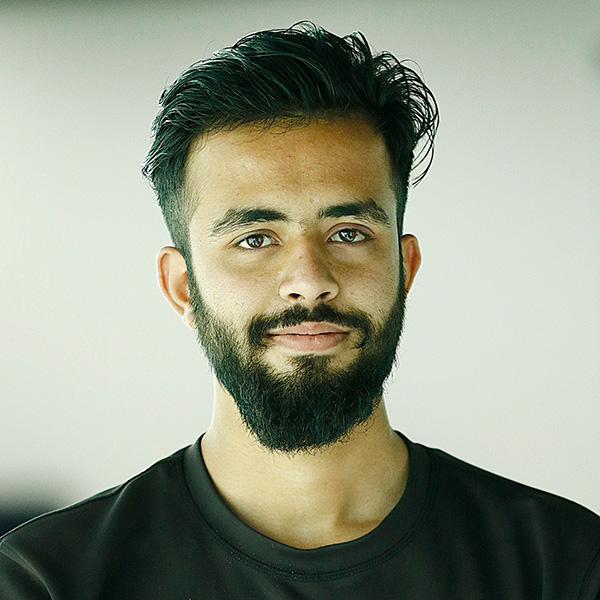
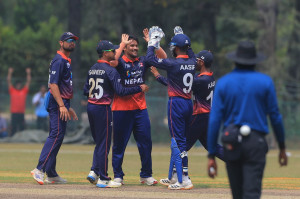
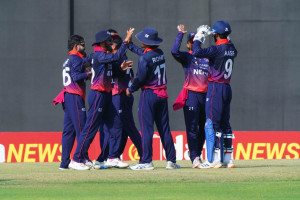
From Arjun Kumal’s 500+ runs to Aasif Sheikh’s first-ever double century, the eighth Men’s PM Cup saw stars shine and delivered a breakthrough for provincial cricket ahead of the final. (From left) Hemant Dhami, Aasif Sheikh and Arjun Kumal Courtesy of CAN
The league stage of the eighth edition of Men’s PM Cup, Nepal’s premier one-day cricket tournament, concluded on Wednesday. The league stage saw 45 games played among 10 teams across four venues. It also saw new records, in both individual and team categories.
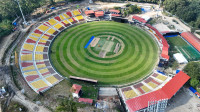
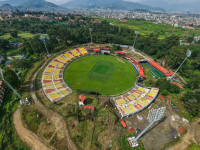
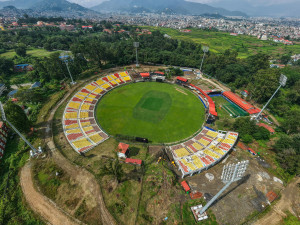
Tribhuvan Army and Sudurpashchim, the top two teams from the league stage, face off in the final at TB Shah Cricket Ground in Birgunj on Friday.
With the end of the tournament around the corner, the Post takes a look at some major takeaways.
A provincial team in the final
So far in the Men’s PM Cup, only the three departmental clubs—Nepal Police Club, Tribhuvan Army Club and Armed Police Force (APF) Club—had made it to the final. This edition marks a departure from that trend with Sudurpaschim contesting the title against Tribhuvan Army Club, the only undefeated team in the eighth edition.
While Army appear to be the favourites, it is still expected to be a tight contest.
Army won eight of their nine league matches while one of their fixtures—against APF on March 28—was obstructed by rain.
Sudurpashchim, on the other hand, won six of their nine fixtures. They lost to Madhesh, APF and Army.
While Army stayed atop with 17 points, Sudurpashchim followed with 12. APF and Madhesh could only manage 11 points from five wins each.
Sudurpashchim had a bad game when they faced Army in the league stage. Army had chased Sudurpaschim’s low target of 151 in 20.2 overs with seven wickets in hand on April 9. However, the provincial side is aiming to turn the tide in the final of the tournament, which has only been won by departmental sides.
Provincial teams improved their games this time and gave a serious challenge to the departmental sides, Paras Khadka, secretary at CAN, wrote on his Facebook on Wednesday. “It has made the tournament more competitive and entertaining,” he added. “It is a result of the dedication from the provincial and district associations to improve cricket from the grassroots. These are positive signs in the development of Nepali cricket.”
Record 500+ runs for Arjun Kumal
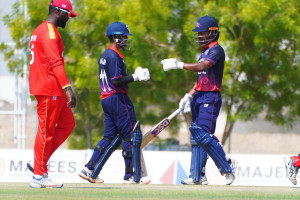
Arjun Kumal of Gandaki set a new standard in the Men’s PM Cup this edition, scoring over 500 runs. Kumal, with two centuries and half-centuries each, amassed 504 runs in nine matches.
Kumal was followed by APF’s Aasif Sheikh (457 runs) and Army’s Binod Bhandari (402 runs). No batter had scored 400+ runs in an edition of the Men’s PM Cup.
Kumal also became the fastest batter to cross 1,000 runs in the Men’s PM Cup after he scored 102 off 141 against Koshi on April 4.
Having proven his mettle at the domestic and the international stage—with the Nepal U19 side—Kumal is expected to be a future cricket star of the country.
At just 20 years of age, Kumal appears calmer and more composed than many senior players. His calculated shot selection and grace under pressure have drawn praises, with fans anticipating his senior team debut.
First double ton
Another star at the ongoing edition of Men’s PM Cup is Aasif Sheikh. Sheikh had a great start to the tournament. He smashed a 114 off 105 against Bagmati Province during APF’s first match. But he couldn’t repeat that performance in the next matches. He was restricted to 18, 21, 14 and 15 by Police, Army, Gandaki and Lumbini, respectively. Sheikh scored an unbeaten 65 against Karnali, but he again struggled, managing only a single each against Sudurpashchim and Koshi.
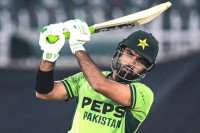
But the right-handed batter made a stunning comeback in APF’s last league stage fixture on Monday, becoming the first player to score a double century. He hammered a scintillating 142-ball 208 against Madhesh in his hometown of Birgunj.
Before Sheikh, the highest individual score in the Men’s PM Cup was APF’s Pradeep Singh Airee’s 158 during the second edition.
There would have been two players with a double century on Monday had Army’s Binod Bhandari scored 11 more runs against Koshi in another match of the Men’s PM Cup in Janakpur. Bhandari departed at 189 off 150.
Highest totals
APF’s 339/6 against Madhesh was the total that stood as the highest in the Men’s PM Cup since 2018. That score became the fourth-highest total by the end of the 2026 Men’s PM Cup’s league stage.
The record was first broken by Police at the Upper Mulpani Cricket Ground on March 24. Police had posted 355/9 on the board against APF.
That record got broken around three weeks later, twice in a single day: when Sheikh completed his double ton, and Bhandari scored 189.
Sheikh’s 208 off 142 helped APF post 390/5 on the board against Madhesh. Bhandari’s 189, meanwhile, aided Army’s 362/8 against Koshi.
Fewer individual wickets
Batters were not the only ones who were happy when the teams got to play more games since 2022. The first edition in 2017 saw eight teams—three departmental clubs and five developmental regions—divided into two groups of four each, allowing a player to play five matches at max.
In 2018, with 10 teams—three departmental and seven provincial—divided into two groups of five each, the maximum number of matches a player could appear in rose to six.
The tournament structure of 10 teams divided into two groups, semifinals between the two top teams from each group and a final lasted up to the fifth edition in 2022.
It was only after the sixth edition in 2024 that 10 teams started competing in a single league structure, allowing a player to take part in as many as ten games.
Bowlers were also well aware that they would get more matches to pick more wickets.
The highest number of wickets taken in a single edition until 2022 was Lalit Narayan Rajbanshi’s 20 wickets in six matches for Police in 2019.
In 2024, the difference was visible as Surya Tamang of Bagmati took 30 wickets in nine games. He was followed by Sudurpashchim’s Sher Malla (24 wickets), Rajbanshi (23 wickets) and Army’s Shahab Alam (23 wickets). All the top four wicket-takers in 2024 were spinners.
The spinners dominated the tournament last year as well. Rajbanshi bagged a record 41 wickets in 10 games in 2025. Alam followed with 31 wickets in 10 games.
Meanwhile, though the number of wickets is not so high, both spinners and pacers came up the ranks in 2026. In nine matches each, Sudurpashchim’s pacer Hemant Dhami and Bagmati’s spinner Sandeep Lamichhane are the leading wicket-takers in the ongoing edition. They both have 25 wickets each.
Dhami has the opportunity to leave Lamichhane behind as Sudurpashchim have one more game remaining: the final.
Meanwhile, if things go well for Sudurpashchim’s spinner Sher Malla, who was a key player for Sudurpashchim Royals in the second NPL, he could best both Dhami and Lamichhane. Malla has 22 wickets in nine games so far.
Six teams to Jay Trophy
The top two teams from the league stage competed in the final for the Men’s PM Cup title. The top four teams in the tournament would qualify for the Jay Trophy, Nepal’s only multi-day cricket tournament.
However, the Jay Trophy has been expanded to six teams for the next edition, meaning the top six teams will play red-ball cricket.
The top six teams that made it to the Jay Trophy next season are Army, Sudurpashchim, APF, Madhesh, Police and Lumbini.
The eighth edition of Men’s PM Cup has so far delivered records, rivalries and renewed belief. Friday’s final will decide not just a champion but the direction in which Nepal’s domestic cricket is heading. Beyond numbers and milestones, the tournament has underscored the growing depth of talent across provinces, an indication that cricket in Nepal is getting popular at the grassroots not just at town centres. This all signals a healthier and more competitive future for Nepali cricket.
Nayak Paudel covers sports for The Kathmandu Post. He previously worked at the Post (2018–19) and spent over five years at The Rising Nepal. His reporting spans crime, health, education, and social issues.




 24.34°C Kathmandu