Construction work on the Hetauda-Dhalkebar-Inaruwa 400 kV transmission line has resumed after a prolonged halt.
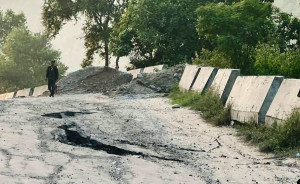
Following months of dispute with residents, work on tower foundations moved forward on Tuesday under heavy security presence.
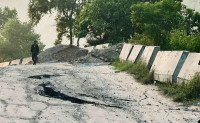
The project had stalled in wards 15, 16 and 17 of Hetauda Sub-metropolitan City in Makwanpur due to local obstruction.
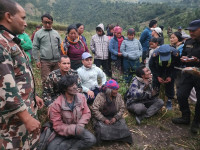
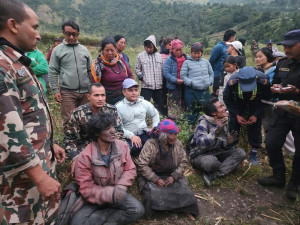
Tensions briefly escalated as residents attempted to block construction. Police have been deployed at sites designated for tower construction and wire stringing.
Locals say they will not allow the transmission line to pass over private, registered land without adequate compensation.
Residents have consistently demanded that the line be rerouted away from settlements. Where that is not possible, they have sought fair compensation and clear information on potential health risks and long-term impacts.
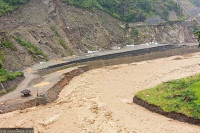
The 288-kilometre transmission line, stretching from the Thanabharyang substation in Hetauda to the Inaruwa substation, was divided into two sections. The 154 km Dhalkebar-Inaruwa section has been completed and charged, while the 134 km Hetauda-Dhalkebar section has faced repeated delays.
Of the 795 towers required, 98 lie in Makwanpur. Most have been completed, but 14 remain—two in ward 15, ten in ward 16 and two in ward 17.
Wire stringing has already been completed up to Hetauda-17 from Dhalkebar. According to the project office, land for tower sites was acquired and compensation distributed in 2018, though some locals have refused to accept payments.
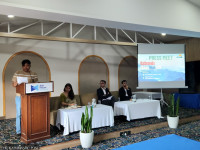
Shyam Kumar Yadav, director of the project, said a compensation evaluation committee, led by the Chief District Officer, has been formed to address disputes over land beneath transmission lines.
He said delays have caused annual losses of Rs5 billion to Rs6 billion. The existing 132 kV line, with a capacity of around 200 MW, has led to power flow constraints, particularly in winter.




 16.62°C Kathmandu