Victims of usurious lending demand action, not assurances
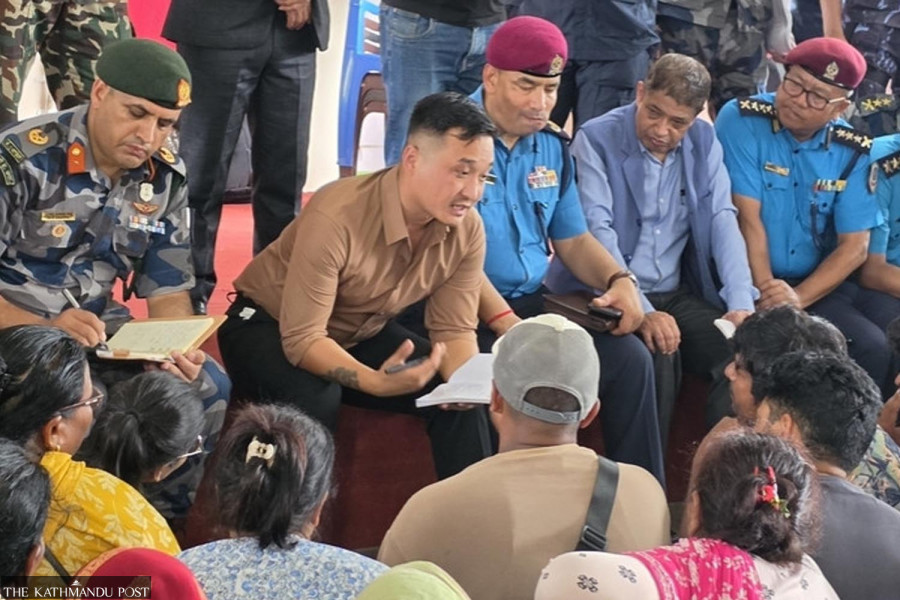
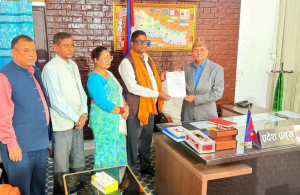
Protesters demand cancellation of fraudulent loan documents, return of seized property, tougher laws and a special tribunal, and say they will march to Kathmandu unless demands are heeded.Home Minister Sudan Gurung (seated, in brown shirt) and officials listen to grievances of loan-sharking victims in Nijgadh, Bara on Tuesday. Post Photo
When Home Minister Sudan Gurung walked into a hall at the Nijgadh Chamber of Commerce and Industry on Tuesday, 32-year-old Shyam Kumari Thakur could not hold back her tears.
The resident of ward 2 of Dhanushadham Municipality had travelled with hundreds of other victims of usurious lending, locally known as meter byaj, to seek justice from a state they say has repeatedly failed them.
"My husband was killed, we lost our land and we could no longer stay in our village," she told the minister, sobbing. "We repaid the loan, but they still murdered my husband. Where are my daughters and I supposed to go now?"
Her husband, Bhojendra Thakur, had borrowed Rs350,000 from a local moneylender in 2011 to expand his small furniture business. As security, he transferred the ownership of two kattha (677.26 sq metres) of land to the lender under a verbal understanding that it would be returned after the debt was cleared.
Shyam Kumari said her husband repaid Rs900,000 by 2015 after selling another parcel of land, but the lender never returned the property, claiming the debt remained unpaid.
The dispute turned deadly on July 29, 2024. She recalled that a group of around 10 men arrived at their home while she was observing a religious fast. They allegedly attacked her husband with iron rods, killing him on the spot, before assaulting her. She suffered severe head injuries that required 56 stitches.
"When I regained consciousness in hospital, my husband's funeral had already taken place," she said. "A loan destroyed my family. Today I have neither a home nor a future."
She filed a murder case against seven people, including the lender. According to her, the accused initially absconded before one later surrendered and was sent to judicial custody. He was subsequently released on the High Court's order. Fearing for her safety, she has spent the past two years living in rented accommodation elsewhere in Dhanusha with her two school-aged daughters.
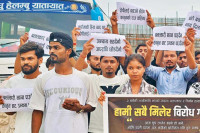
Shyam Kumari's ordeal mirrors the stories of more than 200 victims now marching on foot from Janakpur to Kathmandu, demanding action against exploitative moneylenders.
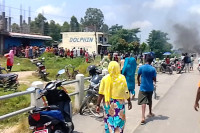
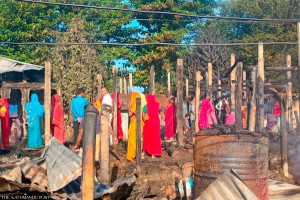
The ‘Justice March’, which began on July 10, had reached Bara by Monday after days of trekking in heavy monsoon rain. Participants say they will continue to the federal capital unless the government formally addresses their demands.
Many are walking barefoot along the East-West Highway despite swollen feet, blisters and exhaustion.
"The physical pain is nothing compared to the suffering caused by moneylenders and the authorities," said 62-year-old Pula Khatun of Rautahat. Khatun said she borrowed Rs100,000 but had already repaid around Rs800,000. Despite that, she alleges the lender retained ownership of her land and has demanded that she vacate her home, leaving her with no option but to join the march seeking justice.
The protesters have placed six key demands before the government, including the cancellation of fraudulent loan deeds, mortgage papers, land registration documents and cheques allegedly obtained through coercion, the enactment of stronger legislation, the formation of a special tribunal to handle meter-interest cases, and full implementation of past agreements reached with victims.
Home Minister Gurung met the marchers in Nijgadh on Tuesday morning and spent nearly five hours listening to their grievances. One after another, victims described losing homes, farmland and livelihoods even after paying back several times more than they had borrowed. Many also accused the police, district administration and courts of failing to protect them from influential moneylenders.
"The government understands your suffering. We are making every possible effort to ensure justice," Gurung told the gathering. He also instructed chief district officers and police officials not to harass victims and to ensure that genuine complainants were properly identified rather than treated as offenders.
Despite his assurances, many participants remained unconvinced, recalling previous promises that they said had never been honoured. During the meeting, Gurung also consulted Prime Minister Balendra Shah by telephone before the talks ended without a final agreement. Both sides agreed to resume negotiations after further discussions at the Prime Minister's Office.
Later Tuesday, the Cabinet decided to make public and implement reports prepared by three previous commissions formed to investigate the loan sharking crisis. The reports by Gauri Bahadur Karki in 2023, Tej Bahadur Karki in 2024, and Baburam Regmi in 2025, have never been released despite repeated demands from victims.
"We appreciate the government's decision to release the reports. But we don’t know what they contain. We won’t rely on verbal assurances anymore. Our six-point demands must be addressed through a formal agreement. Otherwise, the march will continue,” said a protester.
The latest march marks the third phase of the victims' movement after earlier agreements with successive governments failed to produce lasting results. Protest leaders say the group will continue towards Kathmandu through Hetauda if negotiations collapse.
According to the Home Ministry and the former Loan Shark Investigation Commission, more than 60,000 complaints have been registered nationwide. Madhesh province's eight districts and West Nawalparasi remain the worst-affected areas.
Officials acknowledge that resolving such cases remains difficult. Mahottari Chief District Officer Indradev Yadav said district administrations have received thousands of complaints, but many victims lack documentary evidence while lenders possess legally registered deeds, mortgage papers or cheques.
"We can pursue fraud cases only when there is sufficient evidence. Cancelling legally registered documents outside judicial procedures is extremely difficult. That is the biggest challenge,” said Yadav.
The protesters have presented six key demands to the government, including the cancellation of fraudulent loan documents, mortgages, land transfers and cheques obtained through exploitative lending; the enactment of a strong law against usurious lending; the establishment of a special tribunal and an inter-agency unit to ensure speedy justice; an investigation into moneylenders' illegally acquired assets; the return of land and property seized from victims, along with compensation and prosecution of offenders; and affordable financial support programmes to prevent vulnerable households and small businesses from falling into predatory debt again.




 14.76°C Kathmandu