



 20.12°C Kathmandu
Mon, Sep 14, 2026
Opinion
Why Nepal’s economy will need more than a two-thirds majority
Four months in, the new government is discovering that good intentions don’t fix decades-old structural problems.
bookmark
Gokarna Awasthi
Published at : August 16, 2026
Updated at : August 16, 2026 08:43
When Andy Burnham became UK Prime Minister on July 20, he used his first week to cut electricity taxes, lower bus fares, offer relief to pubs, and push decentralisation. The instinct is universal: politicians everywhere win support by making services cheap and accessible. The difference is that rich countries can afford the bill. Poor ones, like Nepal, cannot.
The gap between what citizens expect and what the state can deliver is becoming the real story of Nepal’s economy today, and it is one the government elected on the back of the Gen Z protests has yet to reckon with.
Nepal has crossed 5 percent GDP growth only 18 times since 1961. Only one government since the mid-1990s has lasted three years, and each bout of political turmoil has set the economy back further. The decade-long Maoist insurgency was the sharpest blow: growth bottomed out at 0.12 percent in 2001-02, the lowest in 36 years, as development spending was swallowed by security costs.
Growth recovered after the 2015 constitution — topping 7 percent on the back of post-earthquake reconstruction and renewed private investment — before Covid-19 knocked two years off momentum. The rebound that followed, roughly 6 percent growth, was real. But it also sucked in imports fast enough to push foreign reserves down to six and a half months of cover, prompting the central bank to clamp down on credit and imports. That clampdown, according to former banking association president Bhuwan Dahal, is where today’s slowdown actually began. The side effect? It pushed activity into illegal imports instead of curbing demand.
On paper, Nepal has rare advantages: a median age of 25, roughly Rs1.4 trillion in loanable bank funds, interest rates under 6 percent, reserves covering more than 20 months of imports, and tariff-free access to developed-country markets. Few economies at Nepal’s income level have all four at once.
Yet none of it is translating into jobs. Around 500,000 young Nepalis enter the labour market each year; neither the state nor the private sector can absorb them. As a result, roughly 700,000 people leave the country annually to work abroad. Registering a business still means visits to as many as seven agencies. Credit without collateral is effectively unavailable. And a crisis in cooperatives and microfinance has cut off the informal credit lines small traders relied on to manage cash flow — with no clear replacement, and no plausible case for a government bailout.
The consequence is an economy stuck in low gear: households sit on savings rather than spend them, investors won’t commit given uncertain returns, and liquidity piles up unused in the banking system.
A comparison with other countries in the region paints an unflattering portrait of the Nepali economy. Cambodia, which joined the WTO the same year as Nepal in 2004, attracts more than $4 billion in foreign direct investment annually whereas Nepal receives merely around $100 million. Nepal’s FDI remains under 1 percent of GDP. Bangladesh, Rwanda, Vietnam and Laos have all posted stronger growth by giving their private sectors more room to operate. India, meanwhile, has lifted roughly 500 million people out of poverty over two decades and is explicitly building toward developed-nation status by 2047.
In Nepal, too, the private sector is, by most measures, already doing the heavy lifting — contributing 81 percent of output and 86 percent of employment, according to Federation of Nepali Chamber of Commerce and Industry and International Finance Corporation data. Business leaders argue the constraint isn’t capital or opportunity but trust: treating entrepreneurs as suspects rather than partners, they say, does more to choke growth than any external shock. “The private sector must be engaged with trust,” says Bhawani Rana, former FNCCI president. “If it cannot function, the economy won’t improve.”
Nepal’s new government holds a rare two-thirds parliamentary majority, a mandate previous administrations could only envy. But a majority only solves a voting problem, not a structural one. Public frustration with the Oli government over restricted social media access showed how quickly newer, less tangible grievances can topple a government that ignores them; the older grievances — education, healthcare, infrastructure, jobs — have simply been left to compound for decades.
Reports about tension between the prime minister, the finance minister and the central bank Governor is an unwelcome signal in this context. “Disagreements can happen,” says Yuba Raj Khatiwada, who has held both the finance minister and governor roles. “But if they go unaddressed, everyone feels the effects.”
Nepal does not lack resources, demographic advantage, or market access. What it has lacked, across 32 governments since 1990, is the follow-through to convert potential into performance. Whether this government breaks that pattern — or simply adds to the list — will depend less on its parliamentary arithmetic than on whether it can restore confidence that reform is actually coming.
Gokarna Awasthi
Awasthi is Editor-in-Chief of Kantipur Daily and The Kathmandu Post.


Editor's Picks
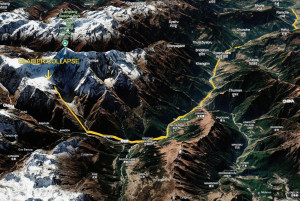
What triggered the Rasuwa flood? Scientists piece together a complex chain of events
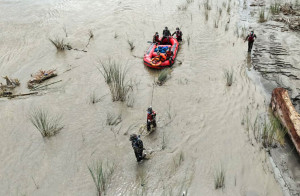
The floods keep coming. Nepal keeps starting over
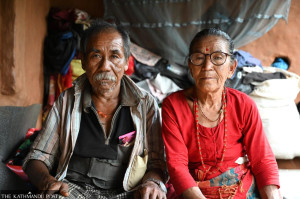
In a settlement destroyed by the Bhotekoshi flood, a disabled couple offer strangers the little they have
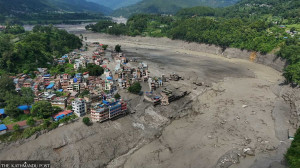
Nepal working on detailed assessment as Bhotekoshi flood reconstruction could cost up to $5 billion

Rabindra Dhant gave Nepal a reason to smile. Now his camp wants real action behind the praise
E-PAPER | September 14, 2026

×