



 22.12°C Kathmandu
Wed, May 20, 2026
Opinion
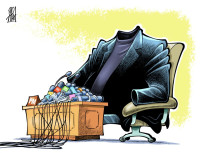
Thirty million voices, one message: fix government!
It can fix free-riding behaviour, end patronage and discourage the exodus of Nepali youth.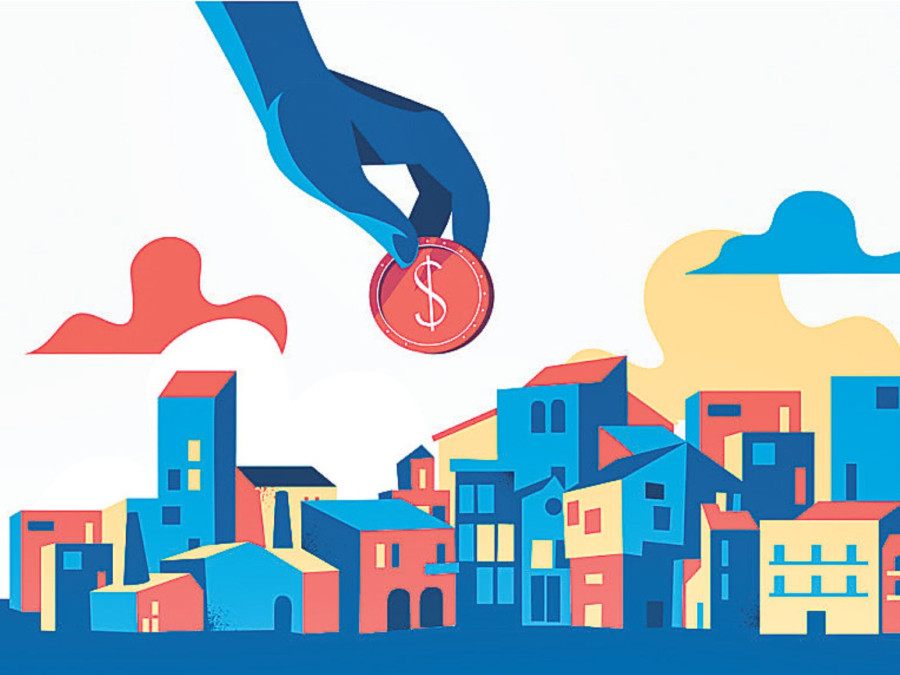
bookmark
Durga P Gautam
Published at : March 6, 2026
Updated at : March 6, 2026 15:03
Neither an election nor a new government provides a quick fix for the economic stagnation experienced by the Nepali economy. An election manifesto serves as a political contract between a party and the citizens, but it cannot undo the ‘economic ruin’ stemming from misguided policies driven by self-serving politicians and their cronies in the past. Yet, periodic elections are seen as affirming a country’s commitment to democracy, and a fresh election is designed to replace bad actors with good ones at the helm of government. Good governance is a prerequisite for establishing well-functioning economic and political institutions that will revive societal trust and produce market incentives to reverse economic stagnation.
Institutions are the rules of the game in a society that structures incentives in human interaction. Institutional mechanisms create order and reduce uncertainty in exchange, thereby enhancing competition and productivity. In a country where these rules are weak, there are few constraints to prevent economic actors from engaging in foul play in the marketplace, and there are few checks-and-balances to prevent political elites or power holders from exercising excessive authority. Consequently, systemic corruption takes hold in state machinery, rent-seeking erodes the corporate sector, and fraudulent activities go unpunished. According to Douglass North, a Nobel Prize-winning economic historian, institutional decay is the fundamental cause of economic decline of a nation.
Red tape and rent-seeking
The most important question is: What are the parameters that reveal institutional decay and economic decline? We do not need to delve into complex models to discover the fundamentals. Budgetary statistics in Nepal show a persistent decline in development expenditure. With capital spending allocated below 20 percent of the total budget in a typical fiscal year, less than two-thirds is utilised. Why is the process of capital accumulation so slow? Nothing is more detrimental to productive investment than inefficient bureaucracy, and nothing is more harmful to market mechanisms than rent-seeking in the business community. A good government can effectively reduce red tape and address rent-seeking.
The systemic failure in enhancing capital spending, coupled with structural bottlenecks and poor infrastructure, has paralysed the country’s industrial sector. According to Nepal Rastra Bank, the contribution of the industrial sector was a mere 13 percent in five years between 2019-20 and 2023-24. With the manufacturing sector, the primary engine of growth facing years of severe stagnation, the upcoming government faces a formidable challenge in increasing production efficiency and creating new jobs.
Political patronage
Without creating a broader set of employment opportunities and sharing a vision for the future, no politician will survive for long at the helm of government. Not surprisingly, the country has seen a long array of short-lived governments and has been submerged in political instability for decades. The fall of Oli’s government last September was abrupt, but the force that drove the massive Gen Z protest was built over the years. It was just one in a series of failed governments that increasingly based its economy on remittances rather than mobilising resources for sustained growth and job creation. Social scientists characterise such government reliance as a ‘free riding’ behaviour.
Since remittances bring foreign income for families, a free-riding government will reduce the delivery of public goods and services. Government officials indulge in misappropriating budgetary funds and cultivating political patronage. Besides, a persistent outmigration of the youth generation hurts institution building and slows the pace of technological change and innovation as it drains the stock of people with an incentive to invest their time, resources and energy in knowledge and skills—a key prerequisite for long-term economic growth and prosperity. Good government can fix free-riding behaviour, end patronage and discourage the exodus of Nepali youth.
Institutional fabric
Historically, the sustained economic growth experienced by early modern England was founded in the Glorious Revolution of 1688, which eliminated the rent-seeking behaviour of the monarchs, initiated a system of representative government and established an impartial judiciary. The Spanish Empire, on the other hand, rapidly declined because its institutional fabric was eroded by bureaucratic incompetence, arbitrariness and instability of the crown. England soon witnessed the beginning of the first Industrial Revolution, while Spain saw the stagnation of its industries and an overpowering fiscal crisis.
The divergent paths of these two European nations demonstrate the power of institutions in shaping economic outcomes. A good government with a credible commitment to the rule of law and a strong enforcement mechanism can fix institutions.
Intra-party democracy
Strong voices have been emerging within major political parties in Nepal that leadership changes are imminent. Several members from across the political spectrum share the view that no political party should turn a blind eye to what happened on September 8-9, 2025. In particular, the special general convention of the Nepali Congress held in January concluded by electing new leadership and sending a vibrant message that no member is ever a slave in this historic party.
As institutions are the rules of the game, organisations are the players. A political party is one such organisation whose actions can shape economic outcomes for generations. The internal workings of parties mirror the structural, social and cultural dynamics of the broader society and its institutions. If a party’s institutional framework rewards patronage, then patronal organisations will come into existence; if it rewards productive activities, then organisations such as firms will arise to engage in them.
Amid sharp criticisms regarding the loss of ideological ground or not even having one, most political parties in Nepal are blamed for the extreme lack of internal democracy. It has been described that many decisions of national significance are made by just a coterie of insiders, ignoring established institutional norms and party statutes. Rarely does such decision-making reflect the party’s core foundational principles or exhibit broader national interests. It’s only the emergence of new leadership that can overhaul its political organisation and fix intra-party democracy.
Durga P Gautam
Gautam is a visiting lecturer of Economics at the University of Richmond, Richmond, Virginia, United States.

.png&w=200&height=120)
Editor's Picks
Nepal keeps protesting over Lipulekh. India and China keep ignoring it
Overexploited for years, the Chure hills are weakening, and water stress is rising across the Tarai

As machines listen, human conversations fade

Why Sanskrit is not dead after all
Lumbini master plan remains unfinished after 48 years
E-PAPER | May 20, 2026

×