



 25.55°C Kathmandu
Sat, Jul 25, 2026
Opinion
Quest for equality
Throughout South Asia, the ideology of equality stemmed from religion before becoming a political discourse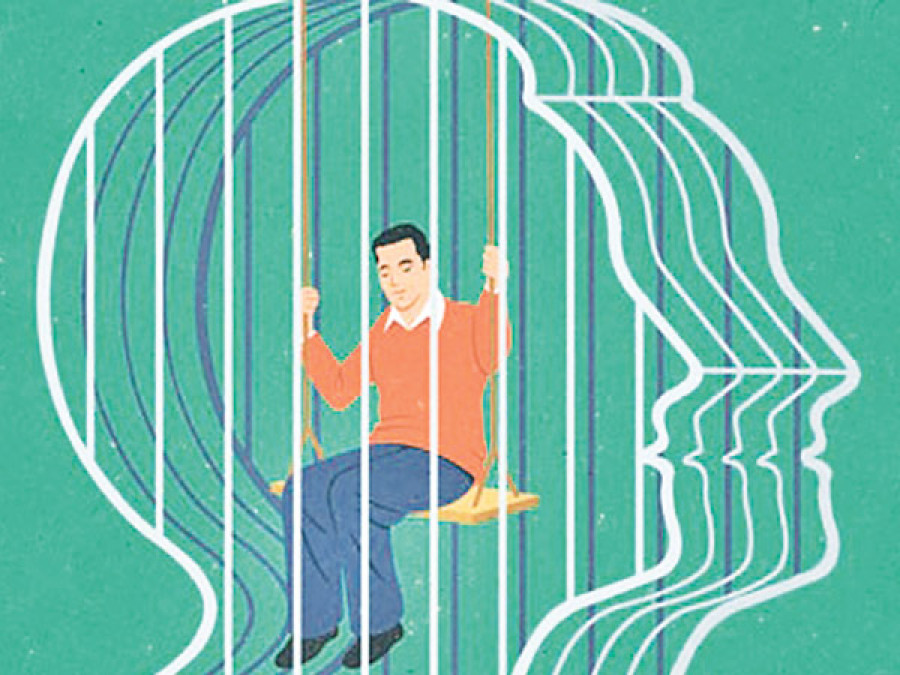
bookmarkIn 1948, Balkrishna Shamsher Jang Bahadur Rana (1903-1981), a member of the ruling family in Nepal, changed his name to Sama, which means ‘equal’, after spending several months in prison for associating with political forces against his family’s undemocratic regime. It is by this pseudonym that the great Nepali playwright is still known today. Opposition to autarkic Rana rule notoriously fuelled egalitarian and democratic conceptions in the country. The use of the adjective, sama, and its corresponding noun, samanata, ‘equality’, in the political sphere, dates mainly to this period.
Published at : July 10, 2015
Updated at : July 10, 2015 08:59
Inequality in religion
The introduction of equality paradigms ran counter to orthodox Brahmanism and untouchability. As a matter of fact, the 1854 Nepali Legal Code of Jang Bahadur was completely based on caste hierarchy principles. Everybody’s position in the social order depended on their alleged permanent degree of purity or impurity. All Nepali people, even those situated the farthest from the world of castes, were ranked according to these rules derived from old Sanskrit texts. In matters of law, punishment was inversely proportional to a person’s hierarchical position. The lower your status, the more severe your sentence. Indeed, in India as in Nepal, the caste system is nothing more than the institutionalisation of hierarchy.
Reaction to caste hierarchy, especially against the predominance of Brahmans, started long ago in India with Buddhism, an anti-Brahmanical religion in its inception. Similarly, reformist Hindu movements later opposed Brahman exclusivist ideas. A number of religious organisations, mostly among Vaishnava sampradayas, disseminated equalitarian ideas, which ran counter to the privileges of Brahmans and caste rigidity. Throughout South Asia, the ideology of equality stemmed from religion before becoming a political discourse.
Equality in religion
These ideas slowly spread through Nepal. By the end of the eighteenth century, Pranami, Josmani and Kabir sant devotional movements—to name just a few—had already gained ground in the Himalayas. In Nepal, they spread either in a subterranean manner, like the Pranami sect, or openly, like the Josmani cult, in both urban centres and rural areas. At the end of the nineteenth century, Arya Samaj, a movement that had long been forbidden in the Himalayan kingdom, appeared in the country. This organisation, which rejects Hindu polytheism in favour of a belief in a single supreme being, condemns the caste system. All these movements spread a more universal message, accessible to even those in low castes. They contest the principle of untouchability and the relegation of women to the status of second-class citizens. In most cases, Ranas and high-ranking Brahmans tracked down these social reformists who threatened their dominant positions. Yet Josmanis penetrated so deep within the royal court that Rana Bahadur Shah, Prithivi Narayan Shah’s grandson, underwent an initiation within this sant religious order.
The introduction of a Western democratic creed through colonial India also played a major role. Oppositional politics in Nepal, mainly in the Nepali Congress and in Nepali communist parties, were heavily influenced by these conceptions, even if most of their leaders belonged to the Brahman caste. In recent times, Nepali Maoists have radicalised this quest for equality. The Maobadis took drastic measures to establish equality in the regions under their control—between men and women, tenants and landlords, social groups, castes and even between religions. Their experiments did not meet with the same success everywhere. They are, however, of great symbolic importance. Today, the utopian belief of a totally egalitarian society is widespread in large sections of society.
The social realm of Adivasi/Janajati is often opposed to the caste hierarchy. It is true that Magars, Gurungs, Newars, Rais, Limbus, and Tharus have long had their own social rules that contrast with Hindu values promoted by Nepali-speaking upper-castes. They are much more egalitarian within their own communities. In Pyangaon, a unicaste Newar village where I lived in the 1970s, all agriculturist villagers used the same non-honorific forms when addressing each other and they shared meals on some occasions (desh bhoj) to express the equality of all the inhabitants. Yet despite this, the language of castes emerges as soon as village boundaries are crossed. Service castes that Pyangaon people call upon in their daily lives are viewed from a Hindu hierarchical perspective. Similarly, Tamangs, who live on a very communal basis among themselves, treat Kami blacksmiths (who make agricultural tools for them) as low-caste people who are liable to pollute them. They enforce the same bans as Hindus in relation to so-called “untouchables”.
Caste disparities and inequalities are less prevalent among these ethnic groups. Nevertheless, they have not totally disappeared. The Janajatis cannot, therefore, be considered proponents of equality in all meanings of the term. To see forms of aadim samyabad, primitive communism in their social organisation, as Marxists claim, is totally misleading. The Janajati hierarchical system is not based on caste but on gender inequality (even if it is sometimes less strict than among high-caste Hindus), seniority, and the principle of first occupancy of the territory. This is the reason why so many clans that arrived first have pre-eminence over others at ground level in political and religious concerns. The segmentary clan/lineage system is egalitarian in comparison to the multi-caste society, but it is still unequal in many respects.
Religious freedom
The genesis of equality-related idioms would not be complete without mentioning the influence, over the last few decades, of various religious movements advocating the equality of all human beings. This is especially the case for Christianity and Theravada Buddhism. After being banned for centuries by Shah/Rana kings and their Bahun purohits/gurus (though welcomed by late Malla kings), the number of converts to Christianity rocketed in post-1990 Nepal, after the return of democracy and the implementation of a more pluralistic religious policy. The number of converts is still low compared to India, but it has risen in an exponential manner over the last two decades. The groups whose members convert the most are from particularly subjugated and downtrodden communities (Maharjan, Tamang, Chepang, etc.). Similarly, Theravada monastic Buddhism has spread throughout different ethnic groups, such as Newars, Tharus and Magars.
The religious component of egalitarian (and revolutionary) ideas cannot be ignored. Indeed, some Western historians believe that the role of Protestantism and Catholic currents opposing the royal mainstream played a major role in the outcome of the 1789 French revolution. The genealogy of revolts and uprisings is obviously more complex than postulated in the Marxist theory of antagonistic social classes. The equalisation of status as posited by democracy has been fuelled by a whole chain of ideas, some of them religious.
Toffin is Research Professor at the National Centre for Scientific Research, France

Editor's Picks
Proposed ‘Romeo and Juliet’ law may spare boys, but what about girls?
Three prime ministers, 10 premierships. Why is Sudurpaschim still Nepal’s poorest province?
Inside the strange, disciplined, unreachable world of Nepal’s Prime Minister

Three credit booms in three decades ended in economic downturn
How Nepal could lose a generation of footballers due to FIFA’s suspension
E-PAPER | July 25, 2026

×