Nepal looks for grants for flood recovery, but loans may be unavoidable
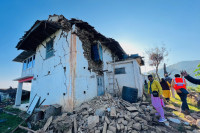
Officials expect the Post-Disaster Needs Assessment to put flood losses at around 30 percent above the initial estimate. Experts say Nepal may have to turn to soft loans to fill the funding gap. The government also plans to seek support under the global Loss and Damage Fund, arguing that climate change contributed to the severity of the August floods. Photo: Nepal Photo Library
The government is weighing whether to seek grants or loans to finance the reconstruction of infrastructure and property destroyed by the August 26 Bhotekoshi floods. The work is expected to cost billions of dollars.
The National Planning Commission has begun work on a Post-Disaster Needs Assessment (PDNA) to ascertain the full extent of the damage and the cost of recovery. The report is expected within five weeks and will form the basis for a planned donor conference.
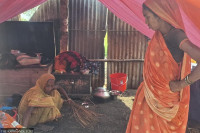
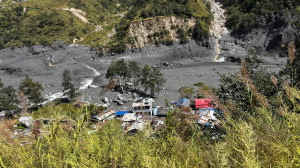
At least 1,377 people have been confirmed dead, 5,326 missing, and 6,827 others have been injured when the floods triggered by a massive glacier collapse on the northern slopes of Mt Langtang Lirung caused devastation in Rasuwa, Nuwakot and Dhading, among other districts.
A Rapid Damage and Needs Assessment (RDNA) conducted in the aftermath put the damage to private and public property at more than Rs400 billion. Around 7,570 houses have been destroyed or damaged, and 32,933 people affected, according to initial assessments.
Officials say the final estimate, which would be determined by the PDNA, could be at least 30 percent higher. This means the government may need $4-5 billion.
Now the government is looking beyond traditional development partners, including to philanthropic organisations and renowned billionaires, to help finance the reconstruction.
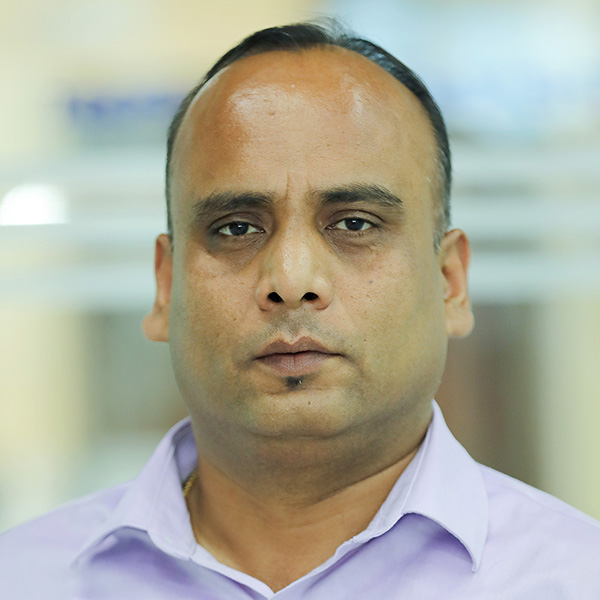
Foreign Minister Shisir Khanal has said the government would prefer grants and aid over loans, but has to make a formal decision.
“Though it has not been officially decided and is not a declared policy, we prefer grants and aid over loans for reconstruction and rebuilding,” Foreign Minister Shisir Khanal told the Post. “Given the way the loan portion is ballooning compared to our GDP, if we are able to generate grants and aid in a considerable amount, it would be easier for us.”
On Tuesday, during a meeting of the Foreign Ministry’s senior management team, Khanal also instructed senior officials to mobilise Nepal’s diplomatic apparatus to seek grants and aid from foreign governments and organisations.
“When we take up the matter with our foreign counterparts, we should stress grants and aid instead of taking loans,” he said, according to officials who participated in the meeting.
But officials and experts say grants alone are unlikely to cover the cost of reconstruction.
In a brief comment to the Post, Finance Minister Swarnim Wagle said that grants were always preferred, but they could not meet all of Nepal’s needs.
Govinda Raj Pokharel, who was vice-chairman of the National Planning Commission when it prepared the PDNA after the 2015 earthquake, said Nepal should consider soft loans.
“In the current global financial and economic architecture, it is almost impossible to receive sufficient grants and aid,” Pokharel said. “We need to reach out to wealthy individuals, charitable organisations and other philanthropic sources to secure grants.”
But he said the government should also consider taking soft loans. “It is impossible to secure enough grants and aid from conventional development partners alone.”
The floods have also caused major damage to hydropower projects along the Bhotekoshi and Trishuli rivers.
Uttam Blon, senior vice-president of the Independent Power Producers’ Association, estimated the damage to at least a dozen projects in Rasuwa and Nuwakot at Rs25-30 billion.
“Since we are busy with search and rescue operations at different hydropower projects, we have yet to calculate the total loss and damage,” he said.
The PDNA will consolidate estimates of physical damage, economic losses, the impact on affected communities and the costs of short- and long-term recovery.
The government also plans to seek support under the global Loss and Damage Fund, arguing that climate change contributed to the severity of the floods.
A senior government official said Nepal needs to frame the disaster as part of the wider impact of climate change on vulnerable countries like Nepal.
“The funding we seek from the Loss and Damage Fund could be symbolic, but it could open more avenues for us to claim compensation and seek justice,” the official said.
But officials acknowledge that international climate funding alone will not be enough. The PDNA is expected to recommend changes to settlement patterns, river-basin planning and the relocation of people living in high-risk areas, all of which would require substantial additional funding.
The government also plans to strengthen early warning systems, disaster preparedness and community-level response mechanisms.
“After the 2015 earthquake, our debt portion has increased significantly, which we want to minimise,” Khanal said. “Not taking loans is not a declared policy, but we prefer grants and aid.”
Anil Giri is a Chief Sub Editor covering diplomacy, international relations and national politics for The Kathmandu Post. Giri has been working as a journalist for more than two decades, contributing to numerous national and international media outlets.




 21.66°C Kathmandu