Nepal rescue teams race to reach workers feared trapped in hydropower tunnels
Search crews are clearing debris, draining flooded tunnels and blasting through rock as operations continue at several projects in flood-hit Rasuwa and Nuwakot.
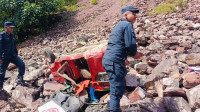
Nepali rescue teams are continuing to search underground hydropower tunnels in flood-hit Rasuwa and Nuwakot districts, with operations slowed by collapsed sections, large rocks, floodwater and damaged roads.
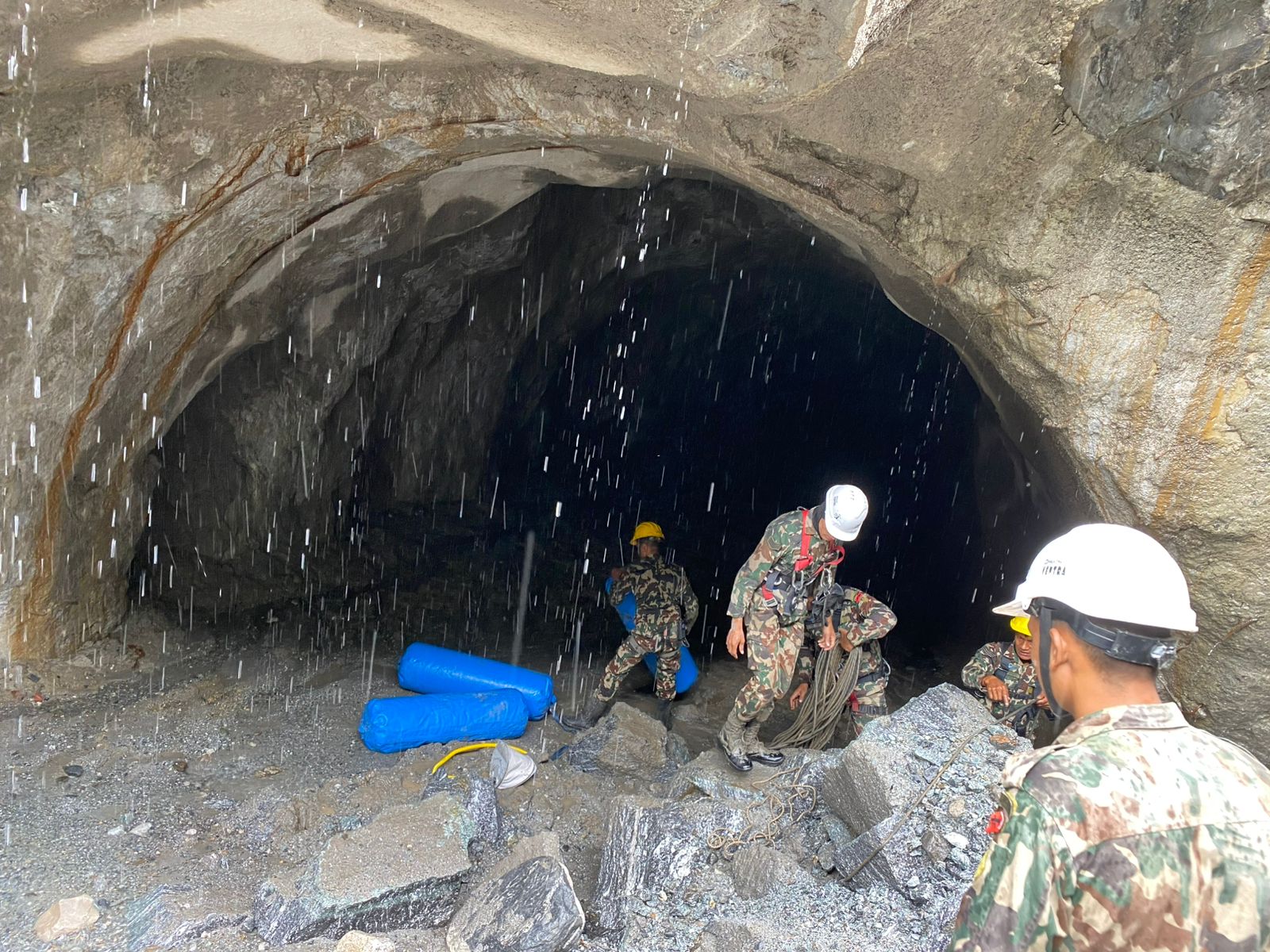
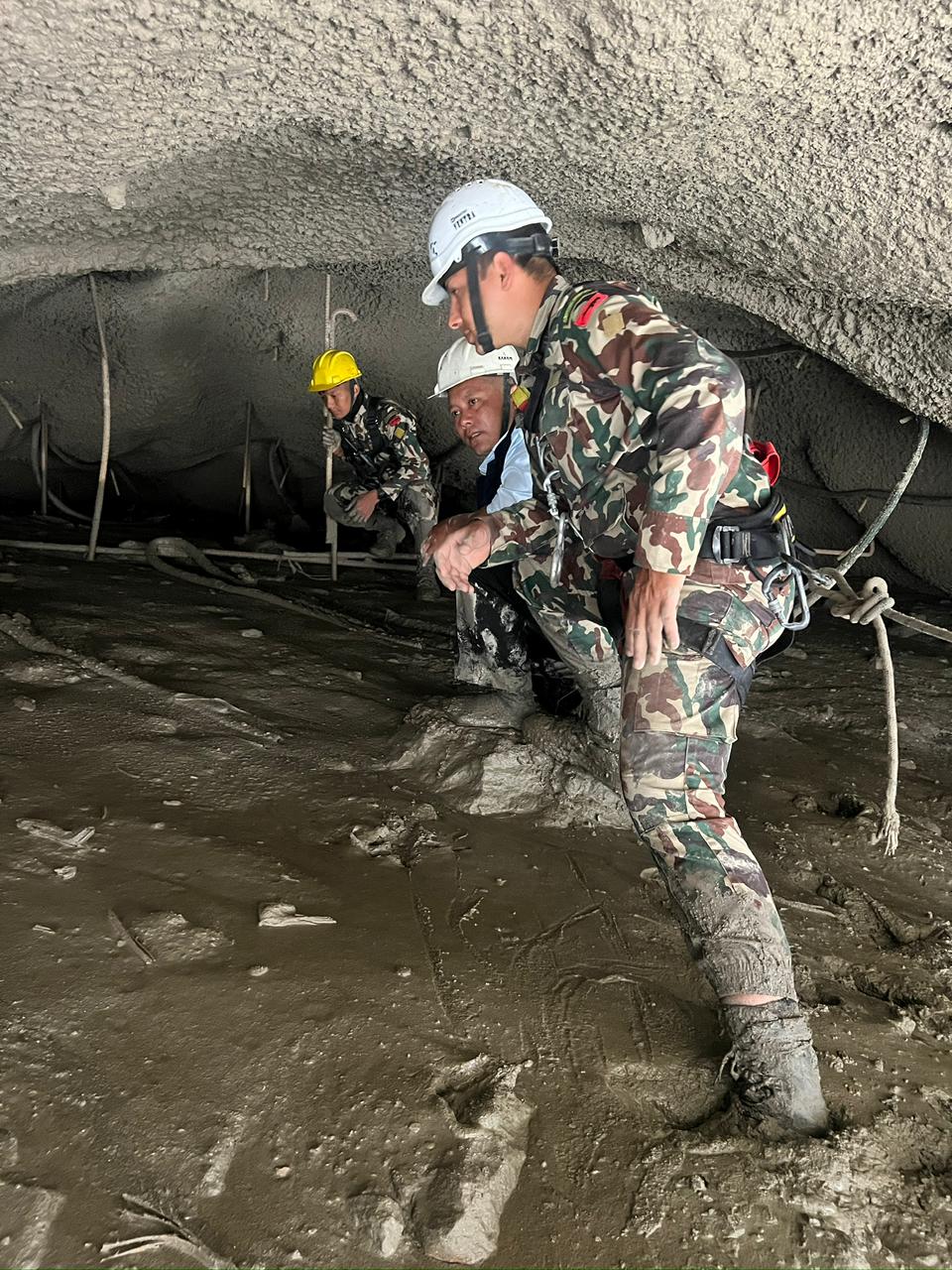
At the Rasuwagadhi Hydropower Project, rescuers have reached about 150 metres inside a tunnel but have been unable to advance because of large rocks blocking the route. The search and rescue operation resumed on Wednesday.
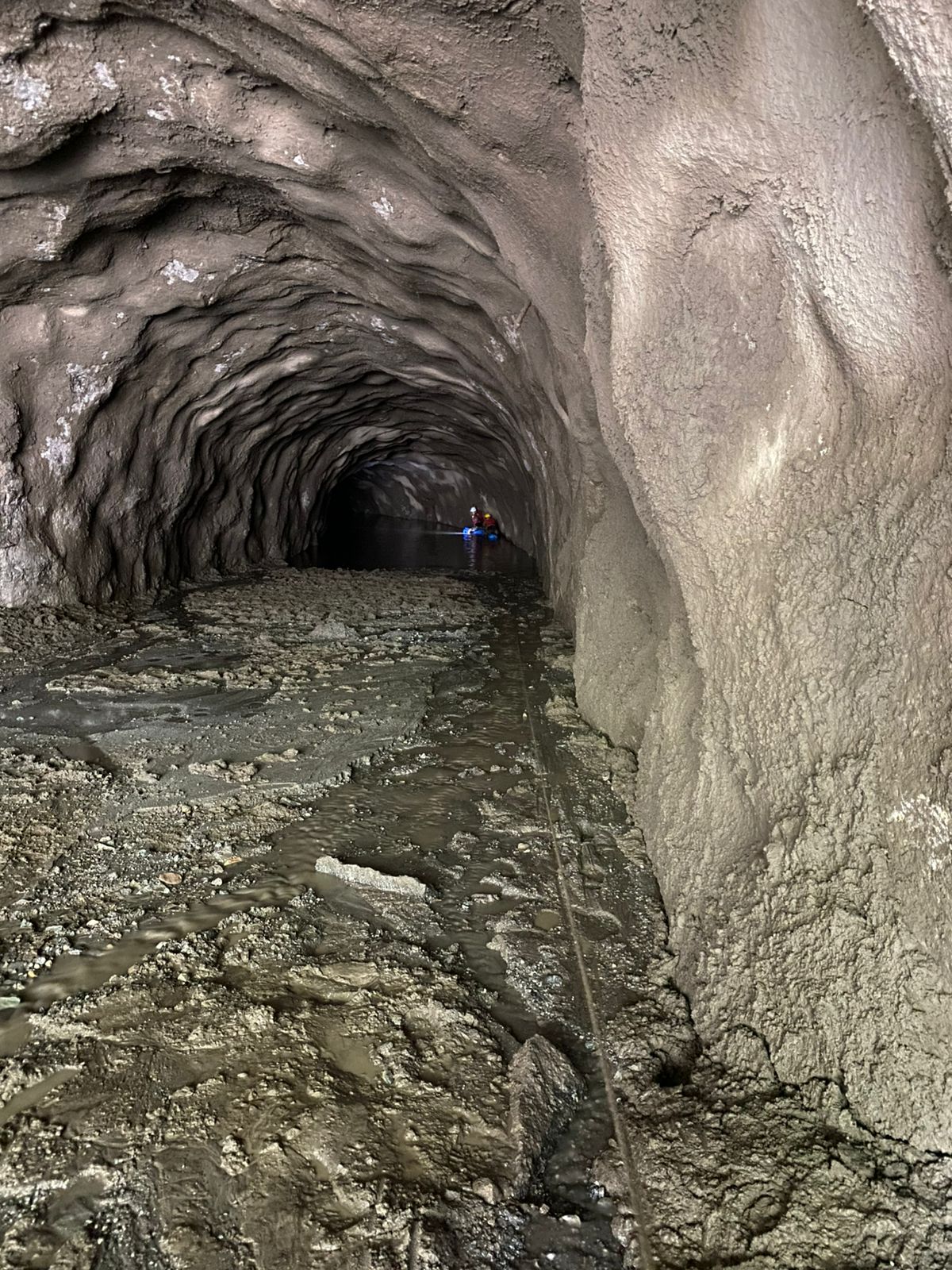
At the Langtang Hydropower Project, a joint team of 25 rescuers, including foreign personnel, has entered the tunnel to a depth of about 150 metres and is continuing the search.
Foreign and Nepali rescuers are also conducting operations at the Chilime Hydropower Project, while a Nepali Army team is searching at the Upper Trishuli-1 project in Haku.
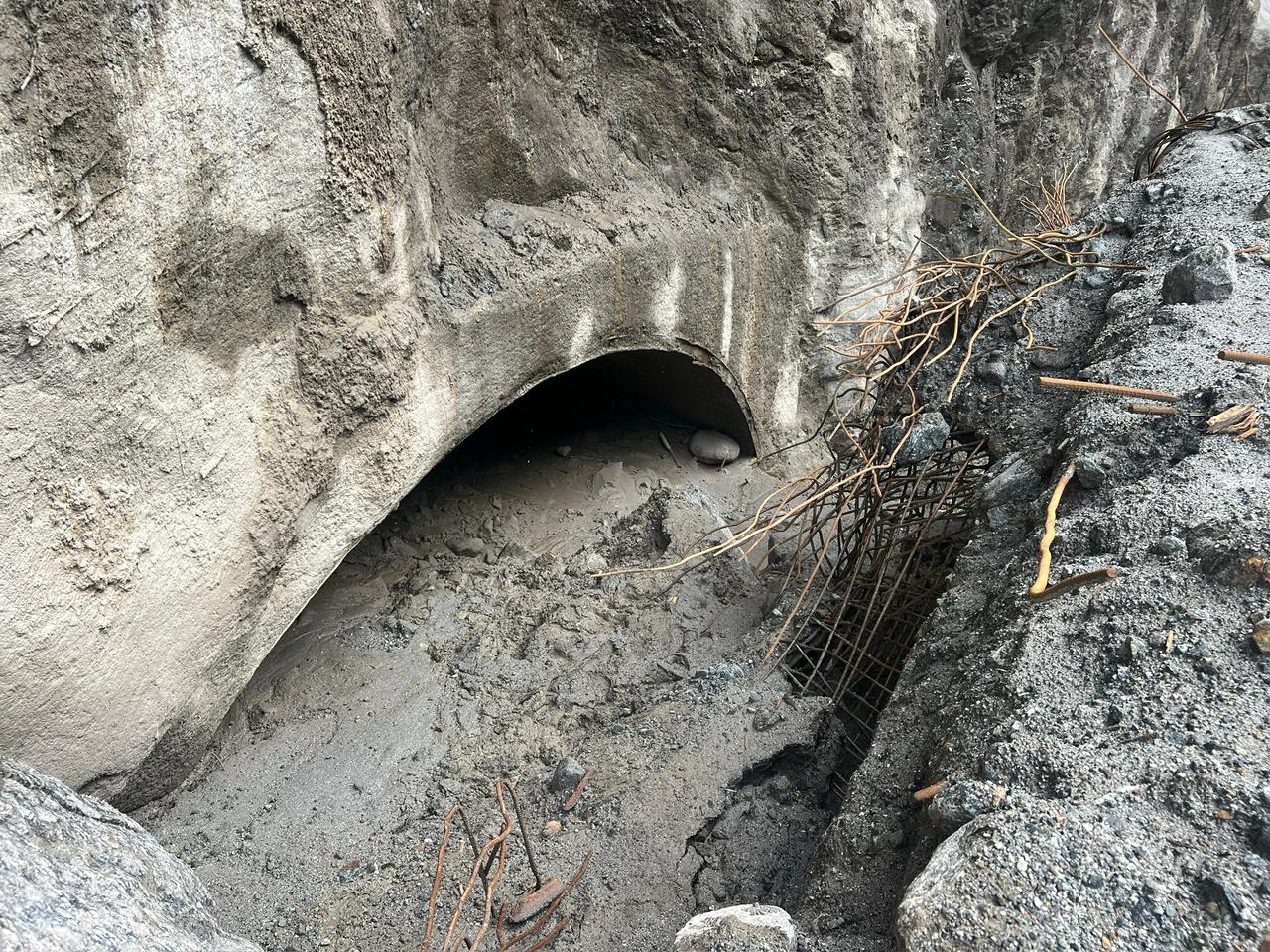
At the 60MW Upper Trishuli-3A project, a 93-member joint rescue team, including army personnel, has been clearing debris with three excavators and a Bobcat machine. After using compressors, breakers and controlled blasting, the team located the tunnel outlet.
The operation was then slowed by about 1.5 metres of water that accumulated inside the tunnel overnight because of rainfall. Rescuers have been using pumps to drain the water before continuing the search.
At the Upper Trishuli-3B project, a 61-member Nepali Army team, three civilian rescuers and the project's managing director have identified the project office and residential area. Excavators are being used to build an access road to the site.
The underground searches are taking place alongside wider rescue operations across the flood-hit region. Teams are conducting foot patrols through forests, hills, river corridors and settlements to assess conditions, reassure residents and identify areas where people may still need assistance.
Search operations are also continuing from the Trishuli-side colony towards Tupche, Sole Bazar and other parts of Nuwakot.
In Timure, where bodies have been recovered, the Nepali Army has begun sling-load operations to move them towards the Trishuli area for further management.
More than 9,200 Nepali Army personnel have been deployed across the affected areas stretching from Timure in Rasuwa through Nuwakot, Dhading, Chitwan and Nawalparasi East.
The troops are involved in searching for survivors and missing people, helping manage recovered bodies, reopening blocked roads and providing emergency medical care.
The operations come after devastating floods and mudflows swept through the Bhotekoshi-Trishuli river system on August 26, killing more than 1,100 people and leaving thousands missing, according to government figures. Several hydropower projects were hit, cutting electricity generation and leaving workers trapped or unaccounted for at some sites.
For rescuers, the most difficult operations remain underground, where unstable debris, blocked tunnels and rising water have made access slow and dangerous.




 14.83°C Kathmandu