From diplomacy to youth and climate, Kathmandu summit calls for a new approach to Nepal-India ties
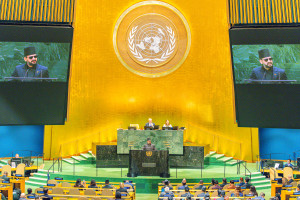
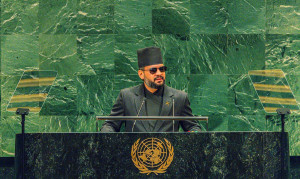
At the ‘NDTV Anviksha: Ideas Across Borders’, politicians, diplomats and public figures discuss diplomacy, youth, migration and Nepal’s future. Photo: NDTV
Nepal’s relationship with India needs to evolve alongside a rapidly changing region, with economic cooperation, technology, diplomacy and the aspirations of youths emerging as recurring themes at a major summit in Kathmandu on Thursday.
At ‘NDTV Anviksha: Ideas Across Borders’, organised by NDTV World, political leaders, diplomats, business executives, cultural figures and young voices from Nepal and India gathered to discuss the opportunities and challenges facing Nepal as it enters what organisers described as a consequential new chapter.
The event full of panel discussions brought together a wide range of political, diplomatic, business and cultural figures, including Nepal’s Finance Minister Swarnim Wagle, Foreign Minister Shisir Khanal, Nepali Congress President Gagan Thapa, Rastriya Swatantra Party chair Rabi Lamichhane and Indian Ambassador to Nepal Naveen Srivastava.
Indian parliamentarian and former diplomat Shashi Tharoor, Ram Madhav, national vice president of the Bharatiya Janata Party (BJP), and actors Manisha Koirala and Rajesh Hamal were also among the speakers.
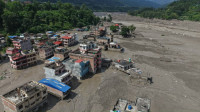
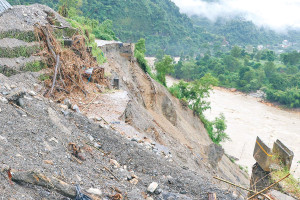
To start off the dialogue, Rahul Kanwal, CEO and editor-in-chief of NDTV, expressed solidarity with Nepal on Wednesday’s flash floods that have claimed over 350 lives and said India is always willing to help.
“Friendship doesn’t mean only being there for good times. Whatever we can do, we are ready to help.”
But much of the dialogue at Hotel Yak & Yeti was devoted to a different question: what should the relationship between Nepal and India look like in a changing South Asia?
Across panels involving politicians, diplomats and public figures from both countries, speakers stressed the need for greater trust, more frequent communication and respect for Nepal’s independence.
Foreign Minister Khanal said Nepal’s relationship with India and China should not be viewed as a choice between the two.
“Nepal has a unique relationship with both India and China, and we are not leaning towards either,” Khanal said. “It is like the relationship between a father and a mother—each is different, and neither can replace the other. We need both countries.”
Khanal also acknowledged that disagreements remain between Kathmandu and New Delhi, but argued the answer was more dialogue, not less.
Khanal said Nepal, India and Bhutan must also work together to protect the Himalayan ecosystem, warning that environmental degradation was becoming a threat to the civilisation of the region.
“Neighbours should come together because it is now a civilisational threat for us,” he said.
His remarks were followed by those of Indian Ambassador to Nepal Naveen Srivastava, who spoke about the future of India-Nepal relations and the need for greater cooperation between two countries.
“We have expanded our engagement with Nepali youths in universities and with young politicians in the past few years,” he said, describing education as a particularly strong pillar of people-to-people relations.
Yet the most direct assessment of the relationship came from Indian politician and author Shashi Tharoor, who argued India needed to change the way it approached Nepal.
“It’s always important for India to talk less and listen more,” he said.
He referred to India’s handling of Nepal during the 2015 blockade and earthquake period, calling the blockade a “Himalayan blunder” and saying India needed to show Nepal it respected it as an independent state.
“You can assume brotherhood, but you need to earn friendship,” he said.
He said he was less worried about the state of Nepal-India relations today than he had been a decade ago, pointing to more positive “body language” on both sides.
At the same time, he cautioned Indian commentators against viewing every development in Nepal through the lens of China.
“Let’s not get overexcited about Nepal-China ties,” he said, arguing that Nepal’s relationship with India “stands on its own feet” and that India should recognise that Nepal has other options.
The event also moved beyond traditional diplomacy to questions about Nepal’s young population and its future.
A panel on brain drain discussed the roughly 1,500 to 2,300 Nepali youths who leave the country every day. Rather than treating migration only as a loss, the panellists called for Nepal to find ways to benefit from the skills, education and networks its young people acquire abroad.
Manish Jha, spokesperson for the Rastriya Swatantra Party (RSP), said the discussion should focus more on the “gain side” of migration than the “drain side”.
“We need a better strategy to make more out of youths going abroad,” he said, with the panel stressing that opportunities needed to go hand in hand with education as well.
Adding more to the concerns of young people and their movement, Gagan Thapa, president of the Nepali Congress, said the anger among young people was evident even before the September 8 protests last year, but established political parties failed to respond.
“Even before September 8, I warned senior leaders in my party that young people are angry due to bad governance,” Thapa said. “There was a clear message. And it was our mistake that we did not pick that message sooner.”
He said his decision to stand against former prime minister Sher Bahadur Deuba came from listening to youths outside.
“The reason I stood against Deuba was because I was listening to people, and everything has its time and limit,” Thapa said.
He also cautioned against judging a government simply because it had won a mandate. “Winning a mandate is different and being successful is different,” he said.
The discussion on Gen Z challenged the idea that youth-led political movements were entirely new. Panellists noted that young people have historically been at the forefront of political movements, even if the tools and language used by today’s generation are different.
RSP Chair Rabi Lamichhane, meanwhile, thanked India for its solidarity following the recent floods and for Indian Prime Minister Narendra Modi’s call to Prime Minister Balendra Shah. He said such solidarity was “felt naturally, not shown”.
He also framed Nepal, India and China as part of a shared Himalayan ecosystem, saying the three countries were connected by “one mountain system”. He called on both neighbours to work together to address climate change and melting glaciers.
“We may not stop climate change, but we can stop being surprised every time such disasters happen,” Lamichhane said. “We should be able to better prepare.”
The summit also turned to culture, with actress Manisha Koirala calling for greater collaboration between the Nepali and Indian film industries, while actor Rajesh Hamal later discussed the changing landscape of Nepali cinema, his experiences in the industry, and how cinema can do more than just “entertain”.
Koirala said films could have a powerful influence on people’s lives and expressed hope for the new government, while stressing that optimism should not replace accountability.
“Accountability matters and results matter. We will see what happens,” Koirala said.
Cricket Association of Nepal Secretary Paras Khadka also touched upon women’s participation in sports.
“Nepal is hosting the U-19 Women’s World Cup next year. It’s a start. It takes time. Men’s sport gets all the attention and sponsorship. Women’s sport needs more exposure, like the Women’s Premier League, and we are putting in efforts to make that happen.”




 15.18°C Kathmandu