For some in Kathmandu, Dashain is just another day
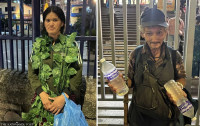
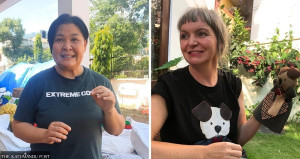
Unable to afford the journey home or even new clothes for their children, daily-wage earners struggle to find joy in Nepal’s biggest festival. (Left) Lal Kumari Rokaya and Gyanu Karki
At around 7.30pm, New Road was alive with shoppers heading home beneath the streetlights. Lal Kumari Rokaya moved through the crowd with a plastic money plant draped around her neck, looking for someone willing to buy it.
For many in the crowd, the evening marked the end of a day of shopping and the journey home. For Rokaya, it was another evening spent trying to earn enough to get by. She was selling artificial money plants to make ends meet, but she did not have the money to return to her hometown in Jumla for Dashain, Nepal’s biggest Hindu festival.
Rokaya, 26, had been selling the plastic plants for a month. She had arrived in Kathmandu with her family just two months earlier, hoping to build a better life in the capital. Instead, she was struggling to cover the basics.
While Dashain has arrived for others, Rokaya said she could barely feel the festive spirit.
“If we had money, it would feel like Dashain was here. We have no money, so we don’t even feel whether Dashain has arrived or not,” she said.
She longed to return to her village and celebrate with her family, but the journey remained beyond her means. She had not even bought new clothes for her children.
“It would cost us around Rs13,000 to Rs14,000 to get to Jumla, including transport, snacks and meals. Once we get there, we would also need money for good food,” she said. “We keep telling ourselves that we will go home for Dashain when we have money. Right now, even the money we would spend on travelling home could cover a month’s rent.”
Before moving to Kathmandu, Rokaya had lived in India. She and her husband decided to return to Nepal because they wanted to work in their own country and send their two young sons to school in Kathmandu.
But life in the capital has proved far more difficult than they anticipated.
“How long can you keep working in another country?” Rokaya said. She and her husband had returned to Nepal hoping to find work and educate their sons in their own country. But two months after arriving in Kathmandu, they have yet to find work and are running out of money. The cost of living is far higher than they expected, leaving her worried about how they will pay the rent and their children’s school expenses.
Rokaya lives in Kalimati, in the southern part of Kathmandu. Apart from the area around Dharahara tower and the Kalimati area where she rents a room, she knows little of the city.
“In the beginning, my husband would bring me here and leave me near Dharahara. I sell things around that area. This is a new place for me, and I don’t know anywhere else,” she said.
Her husband sells whatever he can find to make a living—sometimes apples, sometimes the kind of goods she sells, and sometimes something else. But his earnings alone have not been enough to cover the rent, groceries and their sons’ school expenses. With no other work available, Rokaya decided to start selling goods herself.
Her husband buys the plastic money plants, and she takes them out to sell. Every day, she leaves Kalimati at around 1pm, travels to New Road by microbus and spends the afternoon walking around Dharahara and the surrounding streets, hoping to sell her stock before returning home at night.
“From the afternoon onwards, I keep walking around, hoping someone will buy the plants. But most of the time, I hardly find anyone willing to buy them,” she said.
Selling on the streets is difficult, particularly for newcomers. By around 7.30pm or 8pm, Rokaya often finds herself unable to stay in certain spots because other vendors object to her using their space. “They ask me why I am sitting in their selling spot and tell me to move,” she said.
With nowhere else to go and little prospect of making another sale, she eventually heads home, sometimes without earning anything.
Each plastic money plant sells for Rs50 to Rs60, but finding buyers is difficult. Whatever Rokaya earns often goes towards an afternoon snack and bus fares between Kalimati and New Road, leaving little to take home.
“Sometimes, I struggle to sell even five plants,” she said. After paying for a snack and transport, she hands whatever money remains to her husband without calculating her earnings.
The plants are mainly decorative, and demand is limited. People occasionally buy them to decorate their rooms, she said, but many prefer real plants.
“Perhaps people do not buy them much because they prefer to keep real plants at home,” she said.
As Dashain approaches, Rokaya finds herself thinking about the journey she cannot afford to make. Watching others prepare to leave Kathmandu for their villages only deepens her disappointment.
“It feels sad to have to stay in Kathmandu when everyone else is going home for Dashain,” she said. “Whatever happens, we will stay here this year. But I hope that by next Dashain we will have enough money to go home and celebrate.”
***
Like Rokaya, 66-year-old Gyanu Karki says he feels little sign of Dashain’s arrival. With little money and no family around to celebrate with, the festival holds little joy for him.
Karki, whose ancestral home is in Kavre district, sits by the roadside in front of Kathmandu Mall, selling bottled water. He carries water in a bag and struggles to communicate clearly. He lives alone in Bhaktapur, and his circumstances leave him with little reason to look forward to the festival.
“Dashain used to be a lot of fun. My parents passed away, and then my brothers each went their own way,” he said. “Once our parents are gone, it seems nobody cares about anyone else. These days, I don’t even feel that Dashain has arrived.”
Living alone, Karki takes whatever work he can find. Sometimes he cuts grass during the day and sells it for a little money. Before returning to his room, he often comes to the New Road area to sell water in the evening.
The money he earns from selling grass and water pays for his room, groceries and other daily expenses. He says he has been unable to receive the government’s senior citizens’ allowance because the age recorded on his citizenship certificate is lower than his actual age.
His earnings are modest, but they are all he has to rely on.
“I use the money I earn from cutting grass and selling water to pay the rent, buy groceries and run the household,” he said.
He has not bought new clothes for Dashain, either. For him, shopping for the festival is no different from buying anything else: it depends entirely on whether he has the money.
“I buy things when I need them. I buy clothes when I need them. How can I buy clothes just because Dashain has arrived when I have no money?” he said.
Karki has no special plans for the festival. With many people leaving the capital to celebrate with their families, he expects business to be slow. He will not sell water on Dashain day.
“People will have gone home from everywhere, so I will not sell water that day,” he said. “I will stay in my room and pass the day there.”




 17.65°C Kathmandu