A locked library and the questions it leaves behind
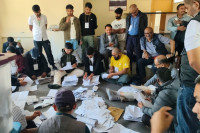
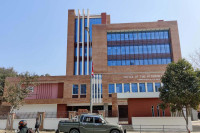
The closure of Kathmandu Valley Public Library has become a window into Nepal’s relationship with books, knowledge and public life.The Kathmandu Valley Public Library at Bhrikutimandap in Kathmandu remains closed due to unpaid rent. Deepak KC/TKP
Professor and writer Abhi Subedi often wonders: “No one talks about libraries in Nepal.”
This spring, for a brief moment, people did.
It was not because a new library had opened or because people had rediscovered reading. It was because one of Kathmandu’s oldest public libraries had been padlocked.
On April 13, the government shut down the Kathmandu Valley Public Library in Bhrikutimandap, the capital’s exhibition centre, managed by the Social Welfare Council. The council argued that the library had failed to pay around Rs30 million in rent.
The closure prompted an unusual public conversation.
Researcher Pratyush Onta wrote on X on May 15: “It looks like the Kathmandu Valley Public Library is going to be closed permanently. If you can’t innovate to financially support the largest public library in existence in your rich capital city, then don’t tell me your new ministry of innovation is going to do any good.”
Many others expressed similar concerns, questioning how a public library in the heart of the federal capital could simply disappear.
Subedi, however, meant something broader when he said that no one talks about libraries.
He was referring not to a single institution but to the absence of a library culture — a society where people become members of libraries, borrow books, spend afternoons in reading rooms and discuss ideas. Libraries, he suggested, represent something larger than access to books: they reflect how a society values knowledge, public spaces and the exchange of ideas.
“It could not become a culture in Nepal that people could become members of libraries and get books from there,” Subedi said.
It has been more than 90 days, and the Kathmandu Valley Public Library remains locked. According to estimates, the library houses around 60,000 books, journals, reports and booklets.
On Thursday, writer and editor Bimal Acharya expressed his concern on X.
“A library with around 3,000 members and about 200 daily visitors, established two decades ago through the efforts of a few generous book lovers, is now on the verge of disappearing,” he wrote.
Acharya’s concern was about more than one library. It reflected a larger anxiety over whether public reading spaces still have a place in Nepal’s priorities.
The closure of the Kathmandu Valley Public Library in April this year carried an uncomfortable historical echo. Nearly 95 years earlier, also in April, Nepal witnessed one of the most significant moments in the history of its libraries.
In April 1930 (Baisakh 1987 BS), a group of young intellectuals in Kathmandu set out to establish a public library to encourage reading and broaden people’s understanding of the world. Forty-five of them signed a petition addressed to Prime Minister Bhim Shamsher.
The circumstances, however, could not have been more different.
In 1930, people were punished not because a library had failed, but because they dared to create one.
The Rana regime viewed the effort as sedition.
All the petition’s signatories were arrested in what later became known as Library Parba (Library Episode). Some were exiled, others received life imprisonment, while several — including poet Laxmi Prasad Devkota — were fined and barred from participating in social work for twelve years.
Recalling the episode, Devkota later wrote that he and his companions were initially sentenced to three years in prison before the punishment was reduced to a fine of Rs100 and a written pledge not to engage in public work.
The Library Episode came to symbolise a time when access to books and ideas itself was considered a threat to authoritarian rule.
But the history of libraries in Nepal is also a history of persistence.
The aspiration behind that movement did not disappear. After the end of the Rana regime and the advent of democracy in 1951, Nepal saw a significant expansion of educational institutions and public libraries.
Between 1951 and 1960, institutions such as the Nepal National Library, Madan Puraskar Pustakalaya and Tribhuvan University Central Library were established. Even during the three decades of the Panchayat era that followed the royal takeover of 1960, when political freedoms were restricted, libraries continued to grow.
According to Bhola Kumar Shrestha’s Nepalma Pustakalaya (Libraries in Nepal), around 400 libraries were established across the country during that period.
History suggests that libraries in Nepal were never merely repositories of books. They often survived as spaces for learning, community engagement and the exchange of ideas, even during politically difficult periods.
The restoration of multiparty democracy in 1990 ushered in another wave of growth as civil society expanded and community institutions flourished.
Available estimates suggest that Kathmandu has around 60 libraries, while Nepal has nearly 1,000 public and community libraries.
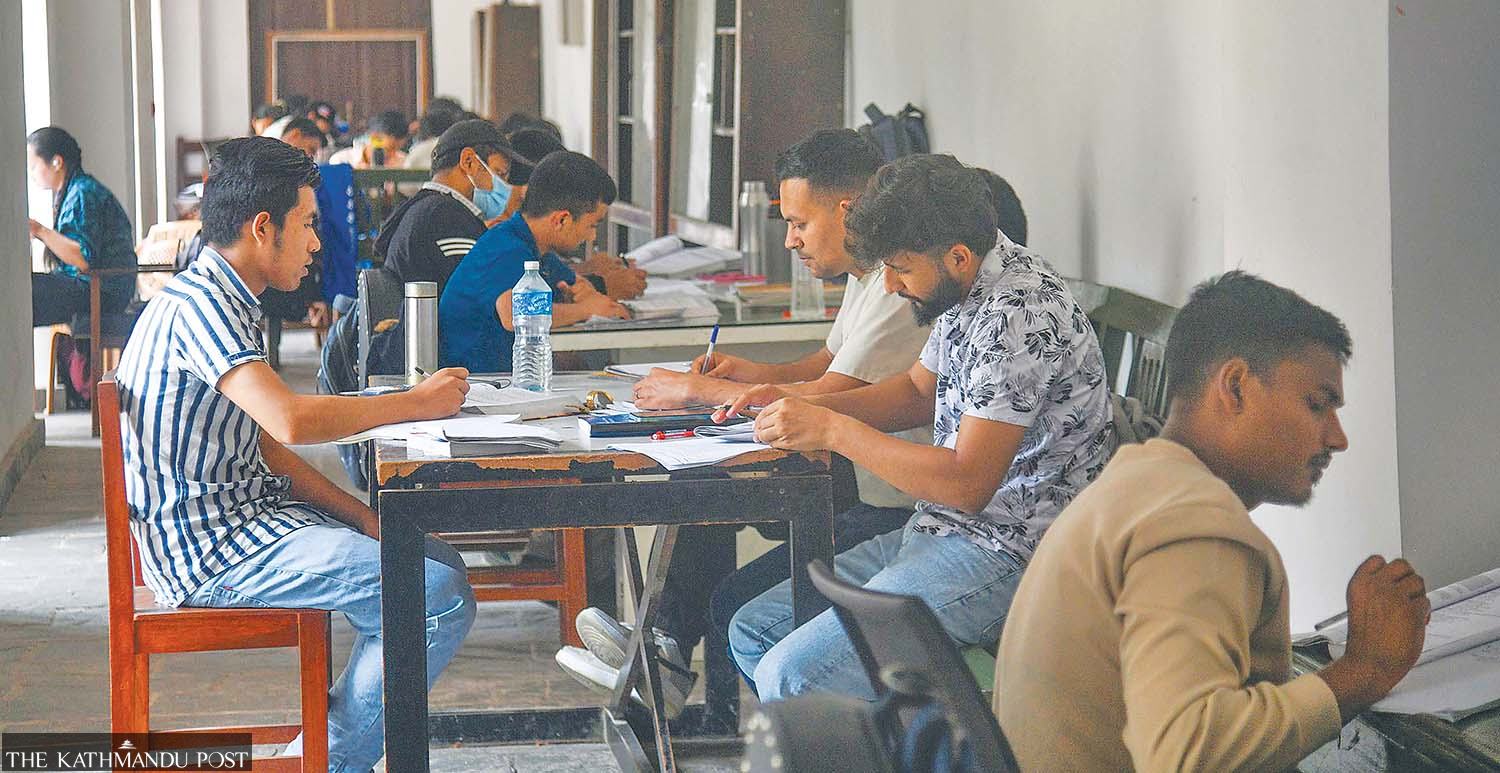
The photo taken on May 24 shows students engrossed in their studies inside the Kaiser Library at Thamel. Originally the private library of Field Marshal Kaiser Shumsher Rana, it was donated to the government by his family in 1968 and opened to the public the following year.
A 2022 survey conducted by the Ministry of Education, Science and Technology in collaboration with READ Nepal and the Peace Volunteer Association identified 927 public and community libraries across the country. Researchers conducted detailed interviews and collected data from 227 libraries across all seven provinces.
The survey found that more than 90 percent of the surveyed libraries were operational. Yet only 17 percent remained open every day of the week, fewer than four in ten had a sustainable source of income, and most relied on government grants, private funding or donations to survive.
The numbers suggest that libraries have not disappeared from Nepal. But neither have they become the thriving public institutions they were once imagined to be.
The closure of the Kathmandu Valley Public Library, therefore, is not simply a dispute over unpaid rent. It raises a larger question: what place do libraries occupy in Nepali society today? That question is not answered only by counting libraries, but by examining how society understands their purpose.
Novelist and political analyst Bishnu Sapkota believes the answer lies in how a society values knowledge itself.
A city’s civilisation and prosperity, he says, are reflected in how much it values art, literature and knowledge.
“That is inseparable from a culture of reading,” Sapkota said. “There are very few examples of communities taking the initiative to cultivate a reading culture or establish libraries on their own.”
For Sapkota, the question of libraries is ultimately connected to the intellectual foundations of a society. Public spaces reveal what communities consider important —whether they invest only in economic activity and infrastructure or also create places where ideas, imagination and knowledge can grow.
Professor and author Arun Gupto, whose book Sanskriti Chintan explores questions of culture, believes libraries can make cities more democratic and civilised.
The question, then, is not only whether Nepal has enough libraries, but what role society expects them to play.
Around the world, modern libraries have evolved beyond shelves of books. They have become public spaces where knowledge, culture and citizenship meet — places where people from different backgrounds can access information, encounter new ideas and participate in community life.
“That is why we need to imagine modern libraries,” Gupto says, pointing to Helsinki’s Oodi Library as an example. “It is not merely a collection of books; it is also a cultural and community space. Its democratic importance lies in making it accessible to everyone.”
According to Gupto, libraries contribute to a more democratic society when they reflect the cultural diversity of the communities they serve.
“When everyone has the freedom to read, they also gain a space to express themselves artistically and culturally. Such libraries help create democratic values,” he says.
Historically, libraries have often served as civic spaces. They have provided places where citizens encounter ideas beyond their immediate experiences and where public conversations can take shape.
That role becomes particularly significant at a time when questions about democratic institutions, civic participation and the shrinking space for public dialogue are being debated in Nepal. The condition of institutions that preserve knowledge and encourage open exchange is not merely a cultural concern; it is also connected to the quality of public life.
But imagining libraries as democratic and cultural spaces requires something more fundamental: societies must be willing to invest in keeping them alive.
Historian and sociologist Lokranjan Parajuli of Martin Chautari believes economics is a major factor behind the decline of public libraries.
“Running a library becomes difficult when there are no resources to add new books and journals or manage daily operations,” he says. “Before the 1960s, the government provided some financial support to public libraries. After that, such support largely disappeared.”
For many library advocates, the decline of libraries reflects more than a shortage of money. It raises questions about how seriously a society values spaces dedicated to learning, knowledge and public exchange.
A library is not only a place where books are stored; it is a space where a community’s reading culture and commitment to knowledge are built. When libraries remain empty and covered in dust, it signals a weakening connection between society and intellectual life.
But the problem is not that Nepalis do not want libraries.
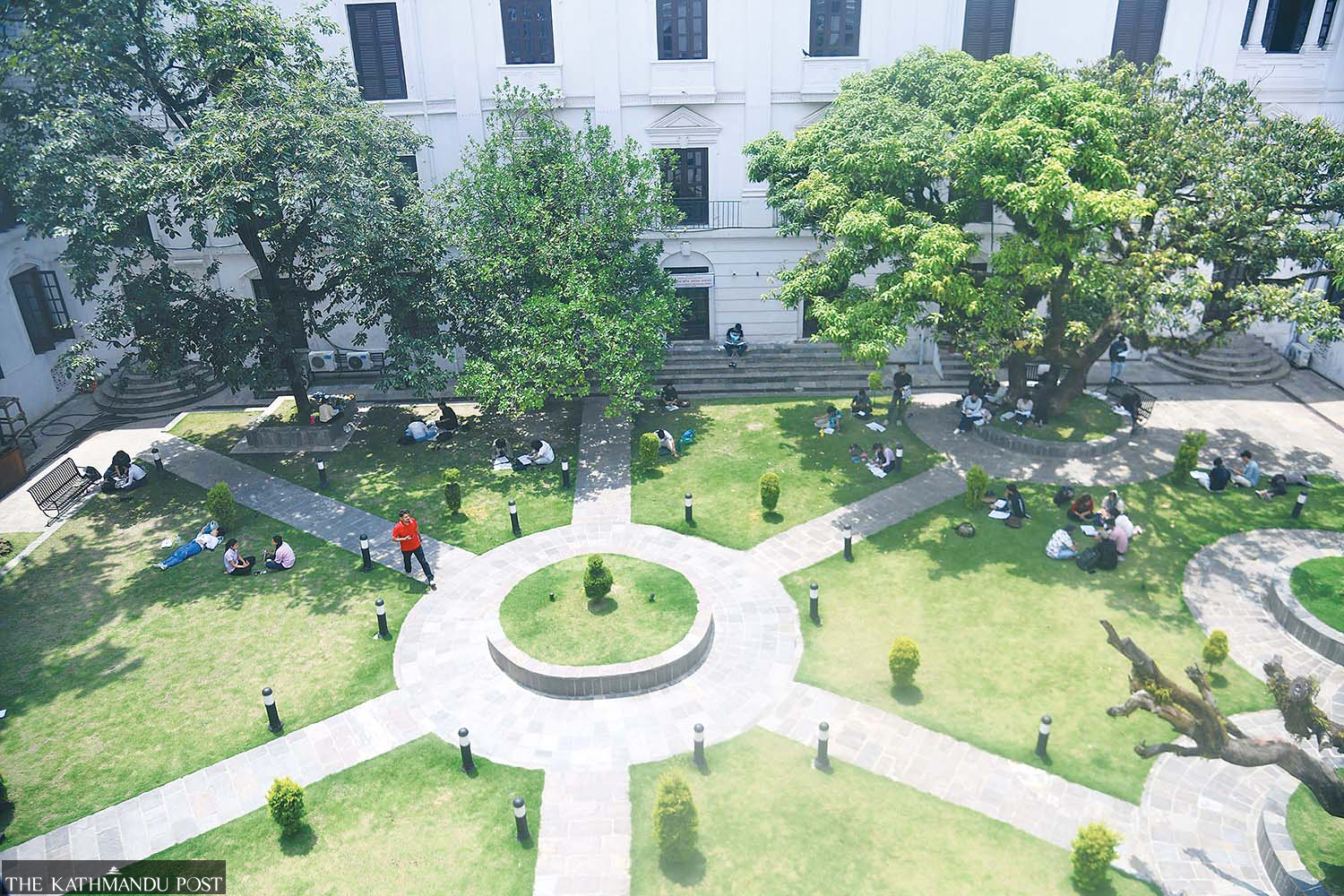
Most poorly maintained libraries remain quiet, but well-managed ones continue to attract readers. At the Nepal National Library, Kaiser Library and Tribhuvan University Central Library, readers often struggle to find seats. Some sit under trees or on open grounds to study.
The message from readers is clear: they want accessible libraries with proper resources and a conducive environment for learning.
On a recent afternoon, Bindu Sharma, an associate professor at Tribhuvan University, was immersed in a book at the Martin Chautari library. A regular visitor, she says libraries provide an environment that is difficult to create at home.
“I keep coming to the library to make good use of my time. At home, there are many distractions and it is difficult to create a reading environment,” she says. “I also come here to find reference materials and books that I need.”
She uses the Martin Chautari library to read on subjects ranging from sociology to political movements.
“Some books I use inside the library; some I borrow and take home. Even if I have only two free hours, I come to the library,” she says.
Sharma’s experience challenges a common assumption: that declining library use reflects declining interest in reading. The larger question is whether institutions have been able to create and sustain spaces where that interest can survive.
Yet library experts say Nepal’s libraries are facing a serious crisis.
Pushparaj Subedi, president of the Nepal Library Association and a library professional with more than 25 years of experience, says community and public libraries are particularly vulnerable. Government and academic libraries also face their own challenges.
Subedi believes one of the biggest problems is the absence of a comprehensive library law to regulate and develop the sector.
“The lack of a legal deposit law has also put the preservation and management of national knowledge at risk,” he says. “Weak policy and legal structures, lack of sustainable funding, slow digital transformation, poor infrastructure, inadequate services, shortage of skilled human resources and a limited understanding of the role of libraries have all contributed to the crisis.”
The problems, however, go beyond legislation.
Nepal’s constitutional framework also recognises libraries as part of the state’s responsibility. The Constitution of Nepal places library development under state policies related to citizens’ basic needs. It assigns responsibility for central libraries and university libraries to the federal government, while provincial governments are responsible for libraries and museums under their jurisdiction. Local governments are also expected to operate public libraries for community benefit.
But library experts say these responsibilities have not translated into meaningful action.
“All three levels of government have failed to fulfil their respective responsibilities,” says Subedi. “That is one of the reasons libraries have not been able to function effectively.”
Beyond the absence of implementation, Subedi points to wider structural problems affecting libraries.
The photo taken on May 24 shows students engrossed in their studies on the lawn of the Kaiser Library at Thamel. Originally the private library of Field Marshal Kaiser Shumsher Rana, it was donated to the government by his family in 1968 and opened to the public the following year.
Government libraries depend largely on state budgets. Academic and institutional libraries are managed by their respective organisations. But community and public libraries often survive through local initiatives, government assistance and donor support.
The absence of a reliable system of dedicated funding has remained a challenge for these public institutions. Beyond funding, Nepal’s community and public libraries have faced struggles of their own since the restoration of multiparty democracy.
Some have become targets during periods of political unrest. In moments of conflict, libraries — repositories of knowledge and memory — have often suffered damage alongside other public institutions.
Subedi believes the crisis is not simply about changing reading habits. He argues that the expansion of digital technology, declining habits of deep reading and the lack of national policies supporting research and knowledge institutions have all contributed to the weakening of libraries.
Yet he says efforts to establish and support libraries continue through non-governmental and international organisations, including READ Nepal, Room to Read, Lions Foundation, Asia Foundation, and Nepal Library Foundation.
For Subedi, however, the closure of the Kathmandu Valley Public Library represents a deeper institutional failure. He says the shutdown reflects negligence by the Social Welfare Council and its officials.
“The library was providing a service for the community. Closing it without making necessary arrangements is unfair and irresponsible,” he says.
The issue, he argues, was not simply about a building or a rent dispute, but about how a public institution serving readers was treated.
The problems facing libraries, however, go beyond a single closure.
While Subedi points to policy, funding and institutional weaknesses, Tribhuvan University librarian Ramesh Niraula looks at the history of how libraries have survived — and why many have struggled after their early enthusiasm faded.
Niraula believes many libraries that began through individual passion or community initiatives weakened when their founders and activists moved away or lost momentum.
“Many libraries were established with great enthusiasm, but without government support those who led them eventually became discouraged,” he says. “Community libraries cannot survive for decades relying on one or two individuals. They need resources to continue providing services.”
Niraula also points out that libraries once played an important social and political role.
During the Panchayat era, when open political activity was restricted, activists often used libraries as spaces for discussion and organisation.
“Before 1990, when open politics was prohibited, many libraries were established. Political activists themselves helped keep them alive,” he says. “But when those activists entered government and political institutions, the library culture weakened.”
He believes libraries have declined as centres of reading culture, even though they remain important as archives.
“The use of libraries has decreased. Books being borrowed and read the way they used to be has gradually declined,” he says. “After federalism, local governments should have strengthened community libraries, but their focus has largely been elsewhere.”
For Niraula, the closure of the Kathmandu Valley Public Library is particularly painful because it reflects a failure to recognise the difference between a public service institution and an ordinary commercial tenant.
“The government should have considered waiving the rent. Before putting a lock on the door, it should have asked itself: should a library and a liquor shop be treated in the same way?” he says.
He worries that the closure could discourage library activists elsewhere.
“There may be fear that something similar could happen in other places. This should not become a contagious trend,” he says.
Niraula also argues that mobile phones, the internet, PDFs and digital resources have not necessarily reduced the need for libraries.
“The question is whether people are reading or not. The medium they use to gain knowledge can be different,” he says. “These technologies may have affected book sellers, but they have not reduced the importance of libraries.”
For Acharya, however, the current crisis represents a deeper contrast between two moments in Nepal’s history.
He returned to the generation that fought to establish libraries when access to books itself was restricted.
“There was once a generation that believed people must read and that libraries must be built,” he wrote on X. “That generation donated the books they had read so they could be made available to the public, stamping them with the word ‘public.’”
“But today, even as Nepal has a generation of leaders who are among the most educated, informed and globally exposed in its history, those repositories of knowledge have been allowed to fall into neglect.”




 23.81°C Kathmandu