For nearly two decades, 62-year-old Durga Bahadur Budha has trekked into the remote alpine meadows of Mugu every spring in search of yarsagumba (Cordyceps sinensis), the prized Himalayan fungus-caterpillar that sustains thousands of families across Nepal’s Karnali province.
This year, the journey brought little reward.
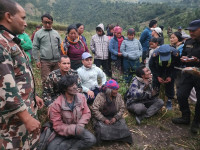
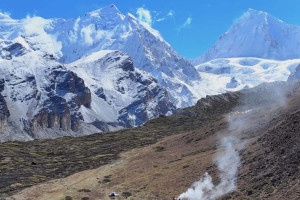
Budha, from Khatyad Rural Municipality in Mugu district, set off in the third week of May with his wife Shanti and sons Gobinda and Prakash for the Thulo Koiki pasture in Mugum Karmarong Rural Municipality. After a three-day trek carrying supplies worth about Rs50,000, the family spent two weeks combing the mountainsides but collected only 210 pieces of yarsagumba.
They sold the harvest directly at the pasture for around Rs1,000 apiece before returning home a month later.
“We crossed dangerous cliffs and risked our lives to reach the pasture, but even with four of us searching for two weeks, we could barely find 12 to 15 pieces a day,” Budha said. “Our expenses kept rising while the harvest remained poor. Even earning Rs100,000 after covering costs became difficult.”
Last year, his family earned around Rs350,000 from yarsagumba. The year before, they made about Rs250,000.
His neighbour, Padam Bahadur Budha, faced a similar disappointment. He and his wife Pabitra spent two weeks in the highlands after investing nearly Rs25,000 in food and equipment. They returned with only 120 pieces.
“Some days we couldn’t find even a single one. On good days, we collected eight or ten,” he said.
The harsh conditions compounded their difficulties. Pabitra fell ill from the cold and remained bedridden in the camp for a week.
“We had to clear snow to make a path through steep cliffs overlooking the Karnali River just to reach the pasture,” he said. “The yield was poor, and the fungus itself was small. There was no point staying longer.”
Their earnings dropped from around Rs200,000 last year to barely Rs80,000 this season. With income from yarsagumba no longer enough to support the household, Padam Bahadur has sent his two sons and daughter-in-law to India for wage labour over the past two years.
Collectors leave early as harvest disappoints
Mugum Karmarong Rural Municipality said nearly 4,000 collectors entered major yarsagumba pastures this season, including Koiki, Chaku, Haddang, Chestu, Roman, Kele, Chhuldur, Tedding and Yamja. The local government collected about Rs2.8 million in entry fees.
Around 70 percent of collectors have already left because of the poor harvest, according to Sobendra Malla, the municipal information officer.
“They kept saying there simply wasn’t enough yarsagumba,” Malla said. “Only about 1,000 to 1,200 collectors remain, and they are also preparing to leave.”
Entry fees ranged from Rs500 to Rs2,500 depending on where the collectors lived.
Collectors sold fresh yarsagumba to local traders for Rs700 to Rs1,000 per piece. Malla estimates bulk prices this year will range between Rs1.6 million and Rs1.8 million per kilogram.
The trade follows a well-established chain. Local traders purchase individual pieces from collectors during the harvesting season. As the season ends, wholesalers travel to the region and buy the accumulated stock by weight.
Last year, the Division Forest Office issued transport permits for 107 kilograms of yarsagumba from Mugum Karmarong. This year, not a single trader has applied for transport permits so far.
The consequences of a poor harvest are particularly severe in Mugum Karmarong, where farming provides little food security.
Because of extreme cold and a lack of irrigation, only one annual crop, naked barley (uwa), can be grown across most of the municipality, and the harvest rarely feeds families for more than three months.
“Our main livelihood is collecting yarsagumba,” said Tasi Lama of Mugum Karmarong-3. “If the harvest fails, it becomes extremely difficult to support a family for the rest of the year.”
Lama has been collecting yarsagumba for nearly a decade but was unable to go this year due to illness. His parents and elder brother still joined the harvest.
“Everyone says they aren’t finding enough this year,” he said. “My parents told me they’ll return in about a week. They’ve collected around 250 pieces.”
The same pattern has emerged in neighbouring Dolpa district.
According to Shey Phoksundo National Park, 6,205 collectors entered 21 major alpine pastures this year, including Rupapatan, Chinarangsi, Majhadanda, Majhadhari, Batulile, Kanda, Phurke, Gyane and Jairi.
The park collected Rs10.7 million in entry fees by charging Rs500 for residents of buffer-zone communities, Rs2,000 for collectors from elsewhere in Dolpa and Rs3,000 for those from outside the district.
Nearly 2,000 collectors have already returned.
“They all say they couldn’t find enough yarsagumba,” said acting conservation officer Bigyan Sen Oli. “We believe production is lower than last year, although we’ll know the full picture after the season ends.”
Falling prices and rising risks
Last year, the park issued transport permits for 150 kilograms of yarsagumba. So far this year, permits have been issued for only 20.5 kilograms. Traders pay Rs31,000 per kilogram in royalty when obtaining transport permits.
The Division Forest Office in Dolpa said yarsagumba is also collected in six national forests outside the national park. Last year, it issued transport permits for 192 kilograms. This year, no trader has applied.
“We issue transport permits when traders move yarsagumba out of the district,” said Division Forest Officer Jitendra Mahat.
Collectors say they are facing a double blow of declining production and falling prices.
Chandra Bahadur Mahara, from Nalgad Municipality in Jajarkot district, returned from Baulikad pasture in Dolpa a week ago after spending two weeks there with his wife and 19-year-old son.
The family spent about Rs30,000 preparing for the expedition, but collected yarsagumba worth only around Rs80,000.
“The journey itself is exhausting,” Mahara said. “You suffer altitude sickness, risk falling from cliffs, and walk through dangerous mountains day and night. This year, there was little yarsagumba, and even selling it was difficult. In previous years, we stayed for at least six weeks. This year we came back after only two.”
Collectors sold their finds for between Rs700 and Rs1,000 per piece.
Mahat attributes the declining harvest to below-normal rainfall, climate change, habitat disturbance and reduced reproductive capacity caused by increasing human activity.
He added that many collectors also found fungus-infected yarsagumba this year, which traders refused to buy.
Prices have also been declining steadily in recent years, according to trader Parbal Lama from Chharka Tangsong in Dolpa.
Yarsagumba, which sold for Rs2.7 million per kilogram two years ago, fell to Rs2.4 million last year.
“High-quality yarsagumba has been scarce this year, so prices are likely to decline further,” Lama said. “If we could sell directly to buyers in China, we would get better prices. Instead, we’re forced to accept whatever Kathmandu-based traders offer.”
The harvest remains one of Nepal’s deadliest seasonal occupations.
According to the Karnali Province Police Office, four collectors, two in Dolpa and two in Mugu, died from altitude sickness this season. Nearly 50 others suffering from altitude-related illness were rescued by volunteers and security personnel.
Every year, collectors face life-threatening risks from high altitude, severe weather, heavy snowfall and treacherous terrain, said Deputy Inspector General Jaya Raj Sapkota, chief of the provincial police.
Fragile livelihood with few alternatives
Government data show a sharp decline in yarsagumba production across Karnali over the past decade.
According to the Province Forest Directorate, 941 kilograms of yarsagumba were transported out of the province last year, down from 1,200 kilograms the previous year and 1,900 kilograms in the 2023-24 fiscal year.
The figures were far higher a decade ago, reaching 2,169 kilograms in 2017-18 and 2,414 kilograms in 2018-19.
Botanist Bed Prakash Sharma said several factors are contributing to the decline, including erratic rainfall, climate change, habitat degradation, forest fires and increasing human pressure on fragile alpine ecosystems.
Although yarsagumba collection was suspended for nearly three years during the Covid-19 pandemic, Sharma said the interruption also disrupted the species’ natural reproductive cycle.
For many families in Nepal’s Himalayan districts, medicinal herbs remain the only viable source of cash income.
“If we can’t earn from herbs, our only option is to go to India for labour work,” said Lanka Bahadur Rokaya of Tripurasundari Municipality in Dolpa.
During the yarsagumba season between mid-May and early July, he searches for the prized fungus. The rest of the year, he collects other valuable medicinal plants and wild mushrooms.
“Except during heavy snowfall, we’re always collecting one medicinal herb or another,” he said.
Suresh Adhikari, Minister for Industry, Tourism, Forests and Environment of Karnali Province, said medicinal herbs remain the backbone of the province’s rural economy.
“Conservation and better marketing of medicinal herbs are essential for strengthening Karnali’s economy,” he said. The provincial government is preparing a master plan for yarsagumba conservation while promoting value addition, tourism and employment to reduce dependence on a single, increasingly fragile natural resource.




 24.59°C Kathmandu