Families to remain first line of care under proposed elderly policy
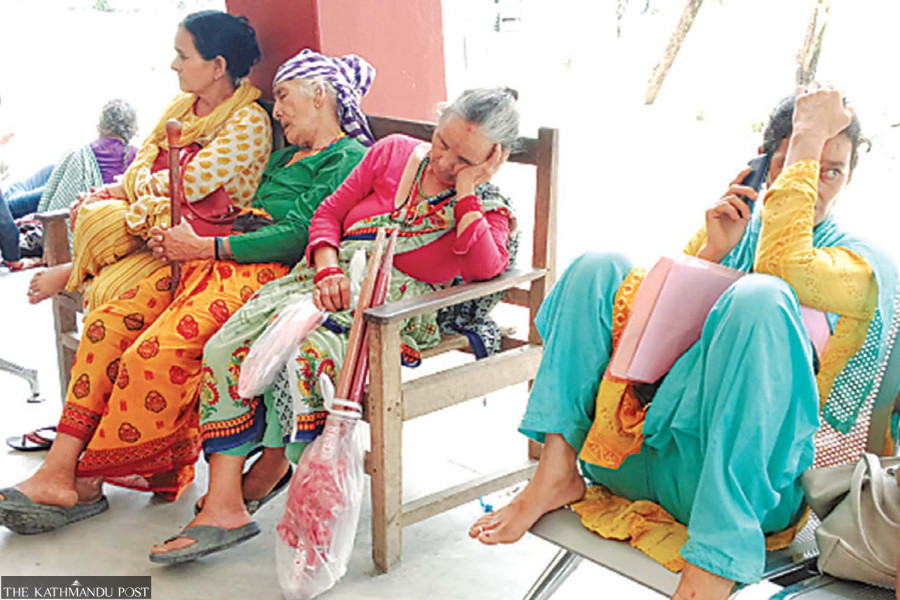
The proposed policy prioritises family and community-based care while assigning local governments a larger role in healthcare, rehabilitation and social support for senior citizens. In recent years, urbanisation, the rise of nuclear families and labour migration abroad have made caring for elderly family members an increasing challenge. Post File Photo
A draft of the National Policy on Senior Citizens 2026 proposes making families the primary support system for elderly care, while placing greater responsibility on local governments to expand community-based services. Prepared by the Ministry of Women, Children, Gender and Sexual Minorities, and Social Security, the draft prioritises family and community-based care to help address loneliness among senior citizens.
The draft, which has been released for public consultation and feedback, states that old age homes or institutional care should be arranged only when care within the family or community is not possible. This effectively positions institutional care as a last resort rather than the preferred option.
According to the 2021 national census, Nepal has 2,977,318 senior citizens, accounting for 10.21 percent of the population. In recent years, urbanisation, the rise of nuclear families and labour migration abroad have made caring for elderly family members an increasing challenge. Acknowledging that many senior citizens are forced to live alone, often without regular healthcare, emotional support or day-to-day assistance, the draft sets out the responsibilities of the state and local governments rather than placing the entire burden on families.
The proposal calls on local governments to expand community-based care, day-care centres, home-based healthcare, rehabilitation programmes and elderly-friendly services. It also gives priority to geriatric care through regular health check-ups, mental health services and better management of chronic diseases. Rather than limiting healthcare to hospitals, the draft envisions a system that can deliver medical services at home when needed. It also seeks to recognise senior citizens not only as recipients of social security allowances but also as valuable sources of knowledge and experience.
The draft proposes engaging active senior citizens in social, educational and development activities, making use of their skills and experience within their communities while promoting the transfer of knowledge between generations.
It also addresses issues such as neglect, abuse, financial exploitation and property disputes involving senior citizens. The proposal calls for stronger mechanisms to prevent abuse, handle complaints and provide legal protection. Single, incapacitated, economically disadvantaged senior citizens and elderly women have been identified as vulnerable groups requiring additional protection.
In line with the federal governance system, the draft assigns local governments a greater role in delivering services for senior citizens. Under the proposal, local authorities would maintain updated records of senior citizens, operate community-based services, coordinate healthcare and organise programmes to encourage social participation.
The draft also states that measures will be introduced to ensure senior citizens can more easily access transport fare concessions currently available on public transport, with plans to gradually extend such benefits to domestic air travel.




 20.12°C Kathmandu