Budget process stalls in four provinces as rifts emerge within ruling coalitions
Internal disputes over budget allocations have delayed deliberations in Sudurpaschim, Lumbini, Karnali and Koshi, while Madhesh prepares to begin debate 17 days after unveiling its spending plan. Contrary to the parliamentary practice of beginning discussions soon after a budget is tabled, debates have yet to commence in the provincial assemblies of Sudurpaschim, Lumbini, Karnali and Koshi.
Budget deliberations have stalled in four provincial assemblies after ruling party lawmakers opposed spending plans introduced by their own governments, exposing widening cracks in the administrations and delaying the passage of budgets for the new fiscal year.
Contrary to the parliamentary practice of beginning discussions soon after a budget is tabled, debates have yet to commence in the provincial assemblies of Sudurpaschim, Lumbini, Karnali and Koshi. As of Tuesday, there is no certainty on when deliberations will begin.
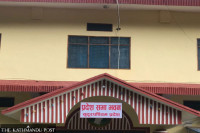
The deadlock is most pronounced in Sudurpaschim, where the Provincial Assembly has remained largely inactive for the past two weeks.
The province is governed by a coalition led by the Nepali Congress with the CPN-UML as coalition partner. However, the UML has refused to endorse the budget and is preparing to register amendment proposals, arguing that it contains serious procedural and technical flaws.
Chief Minister Kamal Bahadur Shah acknowledged that the budget contains technical errors and said discussions were underway within the ruling coalition on how to address them.
“There is still time for discussions. We will pass the budget before the end of the fiscal year,” Shah said.
UML leaders, however, disputed the chief minister’s claim that discussions were progressing.
Santosh Kumari Sharma Thapa, deputy leader of the UML parliamentary party, said no discussion had taken place regarding either the assembly meeting or budget deliberations.
“There is widespread dissatisfaction with the budget,” she said, adding that the party’s parliamentary leader was currently in Kathmandu.
According to the Provincial Assembly Secretariat, several thematic committees are on study visits outside the province, leaving no immediate preparations to convene the assembly.
Dev Bahadur Bogati, secretary of the Secretariat, said discussions between the coalition partners had yet to produce an agreement.
“The ruling parties themselves have not reached a consensus; discussions might be underway”, he said.
The UML has accused the Nepali Congress of monopolising the budget preparation process despite both parties sharing power.
While the UML leads the ministries of Physical Infrastructure, Land Management, Agriculture and Cooperatives, and Internal Affairs and Law, the Congress holds the chief minister's office along with the ministries of Economic Affairs, Social Development, and Industry, Tourism, Forests and Environment.
The party had earlier threatened to withdraw from the coalition over disagreements during budget preparation before eventually agreeing to remain in government. Finance Minister Bikram Singh Dhami then presented the budget shortly before midnight on June 15.
The UML later decided to seek amendments, alleging that the budget was incomplete, violated the principles of the Appropriation Bill, failed to provide ministry-wise allocations and ignored project selection criteria.
The party also pointed to inconsistencies in the budget figures. While Dhami announced a budget of Rs37.70 billion in the assembly, the budget document published the following day put total expenditure at Rs37.703966 billion.
Opposition lawmakers from the Nepali Communist Party (NCP) have also alleged that key budget documents, including the Appropriation Bill, Finance Bill, budget statement, expenditure estimates and the Medium-Term Expenditure Framework, have yet to be formally tabled in the assembly.
The dispute has fuelled speculation over a possible realignment in provincial politics, with discussions reportedly underway between the UML and the NCP on forming a new coalition government.
“Informal discussions have taken place at different levels,” said Khagraj Bhatta, leader of the NCP parliamentary party.
“We have already decided to strongly oppose the budget and prevent its passage because it violates the fundamental principles of budget formulation.”
The continuing deadlock has raised questions over the government’s ability to secure passage of the budget before the constitutional deadline.
A similar impasse has emerged in Lumbini Province, where uncertainty also surrounds the start of budget deliberations.
The Provincial Assembly had been expected to begin debate on Wednesday after the Business Advisory Committee prepared a tentative agenda following consultations with the government. However, the meeting was postponed at the last minute after dissatisfied UML lawmakers maintained that they would neither participate in the discussion nor allow proceedings to move forward.
The UML lawmakers, despite belonging to the ruling coalition led by Chief Minister Chet Narayan Acharya, have argued that the budget contains serious flaws and should not be endorsed without revisions.
Their protest earlier forced Speaker Tularam Gharti Magar to adjourn the assembly indefinitely on June 25 after repeated disruptions prevented discussion on the budget.
The Nepali Congress, another coalition partner, has since agreed to proceed with budget deliberations after acknowledging shortcomings in the spending plan during its parliamentary party meeting.
Following the Congress decision, the Speaker called the 11th meeting of the eighth session for Wednesday at the government's request.
However, Provincial Assembly Secretary Durlabh Kumar Pun said the meeting had again been postponed, adding that a new date would likely be decided on Thursday or Friday.
The proposed agenda included a general discussion on the annual revenue and expenditure estimates presented by Minister for Economic Affairs Dhanendra Karki, the minister’s response to lawmakers’ questions, and the tabling of the Appropriation Bill, among others. The Lumbini government unveiled a Rs37.38 billion budget on June 15.
The budget allocated planning ceilings of Rs40 million each for directly elected provincial assembly members and Rs20 million for proportional representation lawmakers. However, several ruling coalition lawmakers complained that many of the projects they had proposed had been excluded.
NCP lawmaker Narmaya Dhakal from Bardiya said that of the 11 projects she had proposed under her Rs20 million allocation, only projects worth around Rs10 million had been included.
She claimed that even Minister Timilsina had seen only one project worth Rs2 million included from projects worth Rs40 million proposed under his allocation.
Other lawmakers from Bardiya, including Raj Kumar Chaudhary, Bhawaneshwar Chaudhary and Rastriya Janamorcha lawmaker Tara Thapa, also said many of their proposed projects had been omitted. Although the government attributed the omissions to technical errors, they alleged that projects from the district had been deliberately left out.
Chief Minister Acharya and Minister Karki have held several rounds of discussions with dissatisfied UML lawmakers, but the differences remain unresolved.
UML chief whip Yumana Roka said the party convened a board meeting on Tuesday after its parliamentary party meeting on Monday failed to break the deadlock.
UML lawmaker Dinesh Panthi said the discussions ended without any agreement.
NCP lawmaker Indrajit Tharu said many lawmakers believe the budget is inconsistent with the province's periodic development plan, policy priorities and budget principles and should be revised before being endorsed.
Political tensions have also intensified in Koshi Province, where lawmakers from the ruling coalition have threatened to obstruct the assembly over dissatisfaction with the budget presented by Minister for Economic Affairs and Planning Bidur Lingthep.
Lingthep unveiled a budget of Rs40.45 billion, but lawmakers from both the Congress and the UML have criticised it as unbalanced and disproportionately favouring selected areas and individuals.
The disagreement forced Thursday’s Provincial Assembly meeting to be postponed.
The dispute has also triggered debate over whether a budget can be amended after it has been tabled in the assembly.
Parliamentary experts say that once a budget is presented, it becomes the property of the legislature and can only be passed or rejected.
Former minister and UML lawmaker Rewati Raman Bhandari said that although the budget itself cannot be amended, the Cabinet could later cancel selected projects and redistribute funds through fiscal transfers to address concerns raised by dissatisfied lawmakers.
“Amending the budget is no longer possible. However, the Cabinet can cancel certain projects, return the funds to the consolidated fund and redistribute them through fiscal transfers if necessary,” Bhandari said.
Congress lawmaker and chair of the Economic Affairs Committee, Binod Bantawa Rai, said the budget preparation process had been seriously flawed and called for a more balanced and inclusive allocation of resources.
Congress deputy parliamentary leader Himal Karki claimed that 27 ruling coalition lawmakers had already signed a petition expressing dissatisfaction with the budget.
Government ministers, however, argue that opposing a budget introduced by one's own government is inconsistent with parliamentary practice and warn that defying the party whip on such a crucial matter could trigger a wider political crisis.
Opposition leader Indra Bahadur Angbo also said revising the budget after its presentation would be difficult but suggested that dissatisfied lawmakers could instead be accommodated through fiscal transfers after the budget is passed.
Meanwhile, Madhesh Province is preparing to begin budget deliberations on Wednesday, 17 days after the provincial government unveiled its spending plan.
Finance Minister Yubaraj Bhattarai presented a Rs41.14 billion budget on June 15 and tabled the Finance Bill the same day. Although the Provincial Assembly Secretariat had initially scheduled meetings on June 26 and June 27, both were postponed at the government's request.
Bhattarai said the delay was caused by lawmakers being occupied with inter-provincial visits and party programmes.
“We wanted to begin discussions on June 18 or 19, but lawmakers were engaged in other commitments,” he said.
However, Upendra Mahato, a lawmaker from the Janata Samajbadi Party-Nepal, accused the government of deliberately delaying debate to avoid detailed scrutiny.
“The government appears intent on rushing the budget through after limiting opportunities for detailed discussion,” Mahato said, alleging that the ministry-wise budget contains numerous flaws that deserve thorough debate.
In contrast, Bagmati Province has already begun deliberations on its Rs66.93 billion budget, which was presented on June 15, making it the only province where discussions are proceeding as scheduled.
(Arjun Shah in Dhangadhi, Ghanashyam Gautam in Butwal, Ajit Tiwari in Janakpur and Parvat Portel in Biratnagar contributed to this news.)




 21.92°C Kathmandu