At 14, she defied her family’s plan to marry her late sister’s husband
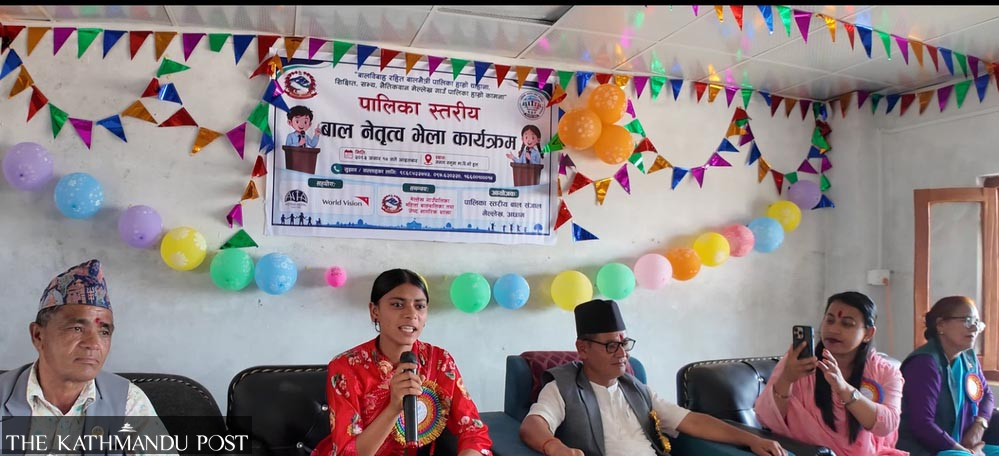
Sushilata Nepali, a teenager from Achham district, resisted her family, her community and an entrenched tradition to stop her own child marriage. Now she leads the campaign to ensure no other child faces the same fate. Nepal has outlawed child marriage, setting the legal age of marriage at 20 for both men and women. Yet the practice remains widespread, particularly in rural areas where poverty, tradition and social pressure often outweigh the law. Menuka Dhungana/TKP
At 14, Sushilata Nepali from ward 6 of Mellekh Rural Municipality in Achham, one of Nepal’s most remote far western districts, should have been worrying about homework, school exams and the ordinary dreams of adolescence. Instead, she was preparing for a wedding she never wanted.
Seven months ago, her parents and members of her community decided she would marry her late sister’s husband, following a deeply rooted but unofficial social practice that survives in parts of western Nepal. The custom allows a widower to marry one of his deceased wife's sisters, with the family often having little say over which sister is chosen.
Sushilata refused.
She stood alone against her family, relatives and social pressure. Today, instead of sitting as a child bride, she chairs the child network of Mellekh Rural Municipality and leads local efforts to prevent child marriage.
“I was alone on one side,“ Sushilata said. “My parents and the whole community were on the other side.“
A grade 8 student at Nandeshwari Secondary School in Shodasha, Sushilata never imagined her childhood would end this way.
The events that changed her life began with tragedy.
Her elder sister, Tanki Nepali, married Jenish Nepali of neighbouring Bajura district on September 17, 2024. The marriage lasted only six months. On March 22, 2025, Tanki died in a hospital in New Delhi after both of her kidneys failed.
The family was devastated. But before long, another shock followed.
Six months after Tanki's death, Jenish's family approached Sushilata’s parents with a proposal. They wanted the youngest daughter, then just 13, to take her late sister’s place as the bride.
Two of Sushilata’s older sisters, aged 26 and 22, were both unmarried. Yet the groom’s family chose the youngest.
“In our community, after a sister dies, people think the younger sister should marry the widower,” Sushilata said. “My parents and people in the village fixed my wedding for April 14 without my knowledge.”
Rumours of the wedding spread quickly.
People around her insisted she had no choice. They told her marrying her late sister’s husband was simply what families did.
“I cried. I begged my parents not to do it,” she said. “The closer the wedding came, the more frightened I became.“
She turned first to her friends and teachers. She pleaded with them to stop the marriage.
Teachers visited her home. Friends spoke to her parents. Local youth, including Sarmeet Khadka, also tried to persuade the family.
Nothing worked.
The wedding preparations continued. Relatives gathered. Ceremonies were arranged. Sushilata was about to be dressed as a bride. Then she made a desperate calculation. She told her family she had started menstruating.
In many communities across Nepal, weddings are postponed if the bride is menstruating because it is considered ritually inauspicious.
“I knew they would stop the wedding if they believed I was menstruating,“ she said. “That was the only way I could buy some time.”
The strategy worked. The wedding was postponed by 15 days. For Sushilata, those two weeks became a race against time.
She had previously attended a life-skills programme called Rupantaran (transformation), run in the village jointly by Astha Nepal, a non-profit and World Vision, a child charity. There she had learned that child marriage is illegal in Nepal and harmful to girls’ health, education and future.
Armed with that knowledge, she sought help again. “I asked everyone I could,” she said. “The facilitators from the programme came to my house and tried to convince my parents.”
Even then, her family remained reluctant. A breakthrough came almost by chance.
On April 15, a ward-level children's club was being formed in the village. Sushilata attended the meeting and shared her story.
“The members promised they would stand with me,“ she said. “For the first time, I felt I wasn't fighting alone.”
A few days later, representatives from all eight wards of Mellekh Rural Municipality gathered to establish the municipal child network.
Sushilata stood before the assembly and recounted everything: the death of her sister, the pressure from her family, the planned marriage and her determination to stop it.
She also announced that she wanted to lead the network. Three candidates competed for the position. The delegates unanimously elected Sushilata as chair.
Soon afterwards, the marriage planned for April 28 was cancelled permanently. Today, she leads a 27-member municipal child network. Her priority is clear.
“My first goal is to stop child marriage,” she said. “The same family and community that once prepared to seat me in a wedding ceremony now see me sitting in the chair of the municipal child network.”
Nepal has outlawed child marriage, setting the legal age of marriage at 20 for both men and women. Yet the practice remains widespread, particularly in rural areas where poverty, tradition and social pressure often outweigh the law.
For Sushilata, resisting those forces required courage few adults are ever asked to summon.
She fought not only to save her own childhood but to ensure other girls would not have to fight the same battle alone.
Sushilata Nepali chairs a municipal-level children’s assembly. Menuka Dhungana/TKP
Armed with that knowledge, she sought help again. "I asked everyone I could," she said. "The facilitators from the programme came to my house and tried to convince my parents."
Even then, her family remained reluctant. A breakthrough came almost by chance.
On April 15, a ward-level children's club was being formed in the village. Sushilata attended the meeting and shared her story.
"The members promised they would stand with me," she said. "For the first time, I felt I wasn't fighting alone."
A few days later, representatives from all eight wards of Mellekh Rural Municipality gathered to establish the municipal child network.
Sushilata stood before the assembly and recounted everything: the death of her sister, the pressure from her family, the planned marriage and her determination to stop it.
She also announced that she wanted to lead the network. Three candidates competed for the position. The delegates unanimously elected Sushilata as chair.
Soon afterwards, the marriage planned for April 28 was cancelled permanently. Today, she leads a 27-member municipal child network. Her priority is clear.
"My first goal is to stop child marriage," she said. "The same family and community that once prepared to seat me in a wedding ceremony now see me sitting in the chair of the municipal child network."
Nepal has outlawed child marriage, setting the legal age of marriage at 20 for both men and women. Yet the practice remains widespread, particularly in rural areas where poverty, tradition and social pressure often outweigh the law.
For Sushilata, resisting those forces required courage few adults are ever asked to summon.
She fought not only to save her own childhood but to ensure other girls would not have to fight the same battle alone.




 14.69°C Kathmandu