



 14.74°C Kathmandu

Sat, Oct 17, 2026
National
Government cancels national ID tender, plans in-house management
Decision to scrap foreign technical support comes amid printer breakdown, server failures, and mounting card-production backlog.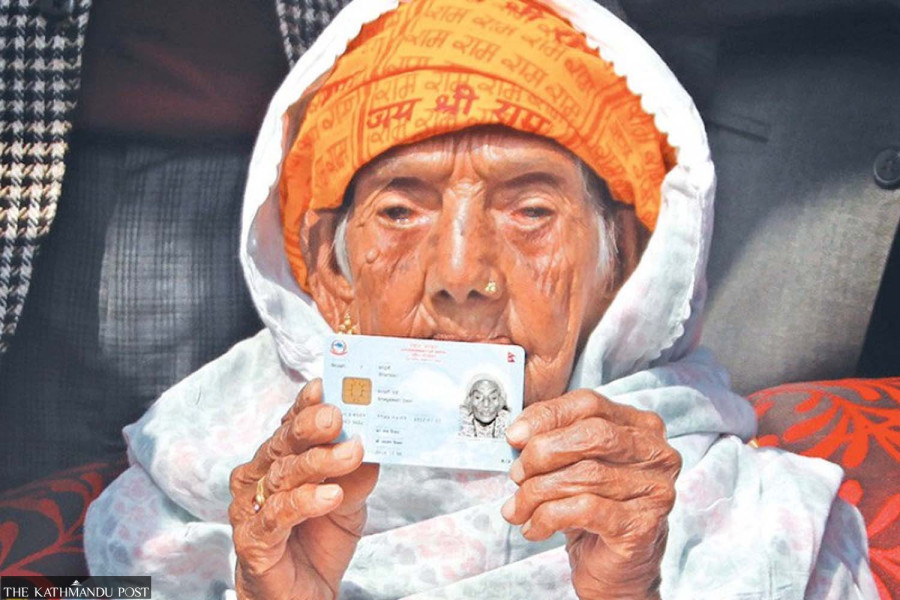
bookmark
Sudeep Kaini
Published at : June 22, 2026
Updated at : June 22, 2026 21:48
Kathmandu
The government has cancelled a global tender for the operation, maintenance and technical support of the National Identity Card Management Information System (NIDMIS), opting instead to manage the system internally despite growing concerns over technical capacity and worsening delays in issuing national identity cards.
The Department of National ID and Civil Registration, under the Ministry of Home Affairs, cancelled the “NIDMIS Support and Maintenance” procurement process on May 8. The government now plans to take full control of the system with support from the Office of the Prime Minister and Council of Ministers.
The decision marks a significant shift in the management of one of the country's largest digital infrastructure projects. Since the rollout of the national identity card programme, critical functions including biometric enrolment, data storage, system maintenance and card printing have relied heavily on foreign technology providers.
Nirajan Shrestha, information officer at the department, said the procurement process was cancelled in accordance with Sections 26 and 36 of the Public Procurement Act, 2063, which allow a procuring entity to annul a tender if submitted proposals are found to be technically or financially non-responsive.
The international tender was published on December 17, 2025. Three international firms submitted bids: Gravity Group IND LLC of Dubai, Iris Corporation of Malaysia and In Smart Identity France SAS of France.
According to a department official familiar with the procurement process, the evaluation was halted before it had been completed.
“We had received three applications and were reviewing the financial proposals when instructions came from the Prime Minister’s Office that the government would manage the system itself,” the official said. “The process was stopped before the technical evaluation was completed.”
The decision was followed by changes in the department’s leadership.
Three days after the tender was cancelled, director general Namaraj Ghimire was transferred to the Muslim Commission on May 11. According to a senior department official, Ghimire had opposed cancelling the procurement process, arguing that the department lacked the expertise needed to independently operate and maintain Level-3 and higher technical infrastructure. Level-3 refers to the highest-tier systems supporting mission-critical digital operations.
Following Ghimire’s transfer, the Ministry of Home Affairs appointed joint secretary Krishna Poudel as the new director general on June 1.
A member of the prime minister's secretariat defended the government's decision, saying it was intended to ensure that sensitive citizen data remains under domestic control.
“The government will hire the technical experts it needs to operate the system independently,” the official said, adding that bringing the infrastructure under government control would strengthen Nepal's digital sovereignty.
Before the cancellation, technical support had been provided by Advantage International Pvt Ltd, the local representative of French digital security company IDEMIA, formerly associated with In Smart. The government signed an agreement with the French company in 2018 covering biometric registration, smart card production, personalisation and related technical services.
The new international procurement process had been initiated after that agreement expired.
The cancellation also comes as Prime Minister Balendra Shah's administration moves to centralise information technology and digital governance. The government is preparing to establish an Information Technology and Electronic Governance Office under the Office of the Prime Minister and Council of Ministers, alongside the newly created Ministry of Science, Technology, and Innovation.
However, the policy shift has coincided with growing operational challenges that have sharply reduced the department's ability to produce national identity cards.
Department technicians say the printing system is functioning at only a fraction of its previous capacity.
Of the two industrial-grade printers supplied under the French contract, one has broken down completely, while the second is operating at reduced capacity because regular maintenance is no longer being carried out.
“When the French company managed the system, both printers operated in two shifts and produced between 16,000 and 18,000 cards every day,” a department technician said. “Now one printer has failed, the other is also showing signs of wear, and production has fallen to around 3,000 cards a day.”
The technician warned that the department currently lacks the expertise required to restore the system if a major technical failure occurs.
“If the remaining printer or the central system crashes completely, we do not have the specialised technical knowledge to restore operations without external support,” the technician said.
The slowdown has significantly widened the backlog in card production.
According to department data, biometric information has already been collected from around 20 million people across Nepal. However, only 7.8 million national identity cards have been printed so far, leaving millions of applicants waiting for their cards.
The Auditor General’s Annual Report 2026 also highlighted serious delays in the production and distribution of national identity cards, raising concerns over the efficiency of the programme.
The system has also experienced repeated technical disruptions in recent months.
On May 6, the department issued a public notice apologising for server failures that disrupted several essential services, including the generation of national identity numbers during birth registration, correction of personal records and verification required for social security benefits.
Officials say such outages have affected both service delivery and public confidence in the programme.
The delays are becoming increasingly significant as the government expands the mandatory use of the national identity card.
The card is now required, or is being made mandatory in phases, for a growing range of public services, including obtaining passports, citizenship certificates, driving licences, social security allowances, banking services, Permanent Account Number registration, insurance services, property transactions and university entrance examinations.
As more government services become linked to the national identity system, delays in printing and distributing cards could affect millions of citizens who need them to access essential public services.
While the government argues that bringing the system under domestic management will strengthen national control over sensitive data and reduce long-term dependence on foreign contractors, officials and technical staff within the department remain concerned about whether sufficient expertise and resources are currently available to manage the system without disrupting services further.
With production operating at less than one-fifth of its previous capacity and millions of applicants still awaiting their identity cards, the success of the government's new approach will largely depend on how quickly it can build the technical capability needed to operate and maintain one of Nepal's most critical digital public infrastructure systems.




Most Read from National

Flood sweeps away houses, bridges in Gorkha

Torrent of black mud and rocks engulfs settlements along Budhigandaki

From blankets to handmade dolls, two foreign women bring comfort to flood survivors

British Gurkha veterans issue ultimatum to Nepal government over long-standing grievances

Budhi Gandaki flood washes away three bridges in Gorkha
Editor's Picks

Constitutional Bench caught in seniority, ‘pick and choose’ dispute

A Dom boy’s long road to becoming a doctor
From blankets to handmade dolls, two foreign women bring comfort to flood survivors

News Analysis: When institutional defence exposes institutional fault lines

It’s a bird … it’s a plane … it’s the Indian ambassador’s farewell tweets
E-PAPER | October 17, 2026

×