Nepal’s Supreme Court is drowning in unresolved cases
Nearly 27,000 cases remain sub-judice, some for almost two decades, prompting calls to redefine the court’s jurisdiction rather than simply appoint more justices.AI enhanced image
On Wednesday, Bhairam Bote and Khadga Bahadur Bote sat quietly in the courtyard beside Nepal’s ageing Supreme Court building, once again waiting for justice.
The brothers from Nawalparasi East have travelled repeatedly to Kathmandu since August 2018 to pursue a land dispute they hoped was nearing its end. After years of litigation, they believed the Supreme Court would finally deliver a verdict.
But the court had other plans. Justices Sunil Kumar Pokharel and Nityananda Pandey sent the dispute back to the High Court for a fresh hearing, meaning the brothers must endure another round of litigation that could take years to resolve.
The brothers argue that a neighbour illegally registered ancestral land that their family had cultivated for generations. Their legal battle has moved through the Land Revenue Office, the Land Survey Office, the district court, the high court and finally the Supreme Court over the past eight years.
They said they had hoped the Supreme Court would settle the matter once and for all. Now they will have to start all over again in the high court.
The Bote brothers are far from alone.
Another litigant, Muwahang Kirat from Panchthar district, has been making repeated trips to the Supreme Court since 2024 over a theft case. Prosecutors accused him of stealing goods from a shop. The case travelled from the Kathmandu District Court through the high court before reaching the Supreme Court.
His hearings have repeatedly been postponed. On Wednesday, the case was again deferred after his lawyer requested its removal from the day’s hearing list.
Both cases illustrate a broader reality facing ordinary Nepalis seeking justice.
One of the country’s most prominent pending cases, the Lauda Air aircraft leasing corruption case, has remained sub judice at the Supreme Court after the case moved to the apex court in 2008.
A growing mountain of cases
Like the Bote brothers and Kirat, thousands of litigants remain trapped in Nepal’s judicial backlog.
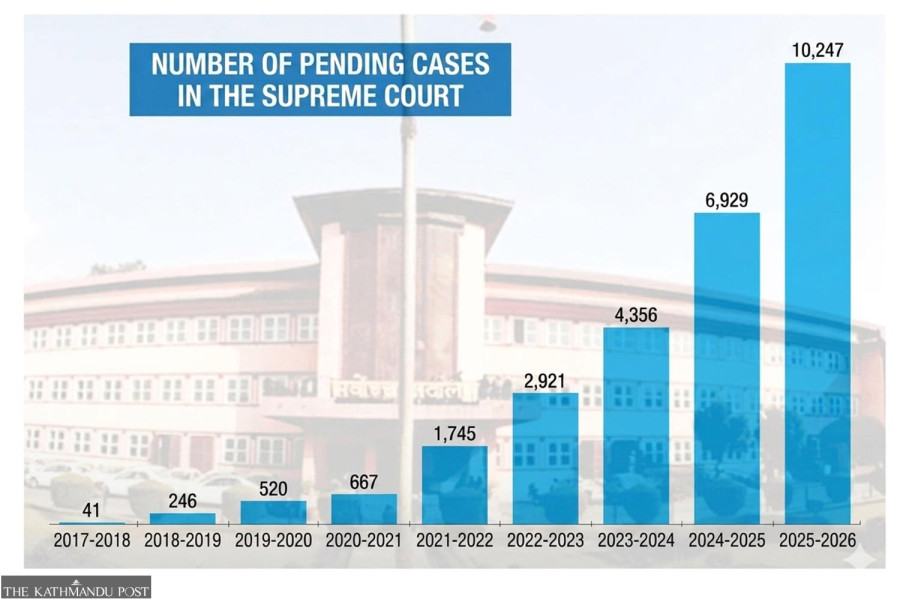
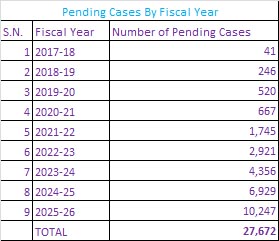
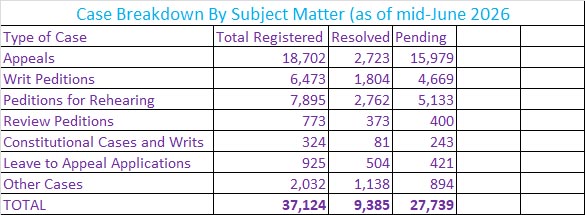
The Supreme Court currently has over 27,000 pending cases. Among them are 41 cases that have remained unresolved for more than seven years, despite the court’s own strategic targets for clearing old cases.
A chronic shortage of justices, repeated hearing postponements requested by advocates, and an overwhelming caseload have left many disputes unresolved for years. In some instances, plaintiffs or defendants die before judgments are delivered.
Under Nepal’s Constitution, the Supreme Court has 21 justices, including the chief justice. Many legal experts now argue that this is no longer sufficient.
The Nepal Bar Association and the Office of the Attorney General have submitted recommendations to the constitutional amendment task force, ranging from increasing the number of Supreme Court justices to making the Constitutional Bench a permanent and regular body. The Bar has gone further, calling for the Supreme Court’s jurisdiction to be redefined. Arguing that the court has been unable to clear its backlog for the past seven years, it has proposed limiting the Supreme Court’s jurisdiction to constitutional cases, fundamental rights petitions, and other matters of a serious nature.
Cases that refuse to end
Few examples better illustrate judicial delay than the Lauda Air corruption case.
The Commission for the Investigation of Abuse of Authority filed the case in 2001 against former Minister for Culture, Tourism and Civil Aviation Tarini Dutta Chataut and nine others over the lease of an aircraft.
After passing through the Special Court, the case reached the Supreme Court on January 27, 2008. Eighteen years later, it remains pending before a full bench.
Another high-profile example involves former Speaker and senior Nepali Communist Party leader Agni Prasad Sapkota.
A writ petition seeking a criminal investigation into his alleged role in an insurgency-era killing was filed on November 12, 2012. The Supreme Court finally delivered a verdict on May 25, 2025, almost 14 years later.
However, because the court has yet to publish the full judgment in writing, the ruling has not been implemented, leaving the victim’s family still waiting for justice.
‘Justice delayed is justice denied’
The legal maxim ‘Justice delayed is justice denied’ has become increasingly relevant in Nepal.
While another saying warns that rushed justice can also undermine fairness, legal experts agree that excessive delay has become the judiciary’s defining problem.
Some cases remain unresolved for so long that parties die before courts issue final rulings.
According to Supreme Court spokesperson Arjun Koirala, many factors contribute to the delays.
Cases often involve numerous litigants and advocates, court files frequently fail to arrive on time, and politically sensitive disputes are sometimes avoided or delayed, critics allege.
“The Supreme Court has significantly reduced pending cases through dedicated backlog clearance campaigns over the past few years,” Koirala said. “Cases pending for five years or more are now being prioritised under the court’s strategic plan.”
But Nepal Bar Association General Secretary and senior advocate Kedar Koirala argues that administrative campaigns alone cannot solve the problem.
“The Supreme Court’s jurisdiction must be redefined if the goal is genuine judicial reform and timely justice. Fewer cases should reach the apex court, and the number of justices must be increased,” he said.
More justices or fewer cases?
The debate has increasingly focused on two competing solutions.
One proposes expanding the number of Supreme Court justices.
The other seeks structural reform by transferring greater authority to lower courts and limiting the categories of cases that may reach the Supreme Court.
Nepal’s 2007 Interim Constitution allowed a maximum of 15 Supreme Court justices and also permitted temporary appointments when necessary. The 2015 Constitution increased the number to 21 permanent justices but abolished the provision for temporary justices.
Supporters of expansion argue that the current bench is too small for the court’s workload.
They point to neighbouring India, where the Supreme Court had more than 92,000 pending cases as of April 2026. The Indian government recently approved an increase in the number of Supreme Court justices from 34 to 38.
Others believe simply appointing more justices would only treat the symptom rather than the cause.
Former Supreme Court Justice Ishwar Prasad Khatiwada argues that the real challenge lies in improving case management and redefining institutional responsibilities.
Former Justice Balaram KC believes high courts should be given authority to issue constitutional remedies, including writs of mandamus, reducing the need for litigants to seek relief directly from the Supreme Court.
Former Nepal Bar Association General Secretary Anjita Khanal agrees.
“Public confidence in the justice system cannot survive if people from Karnali must spend a week travelling, or litigants from Madhesh must walk barefoot to reach Kathmandu for every case,” she said.
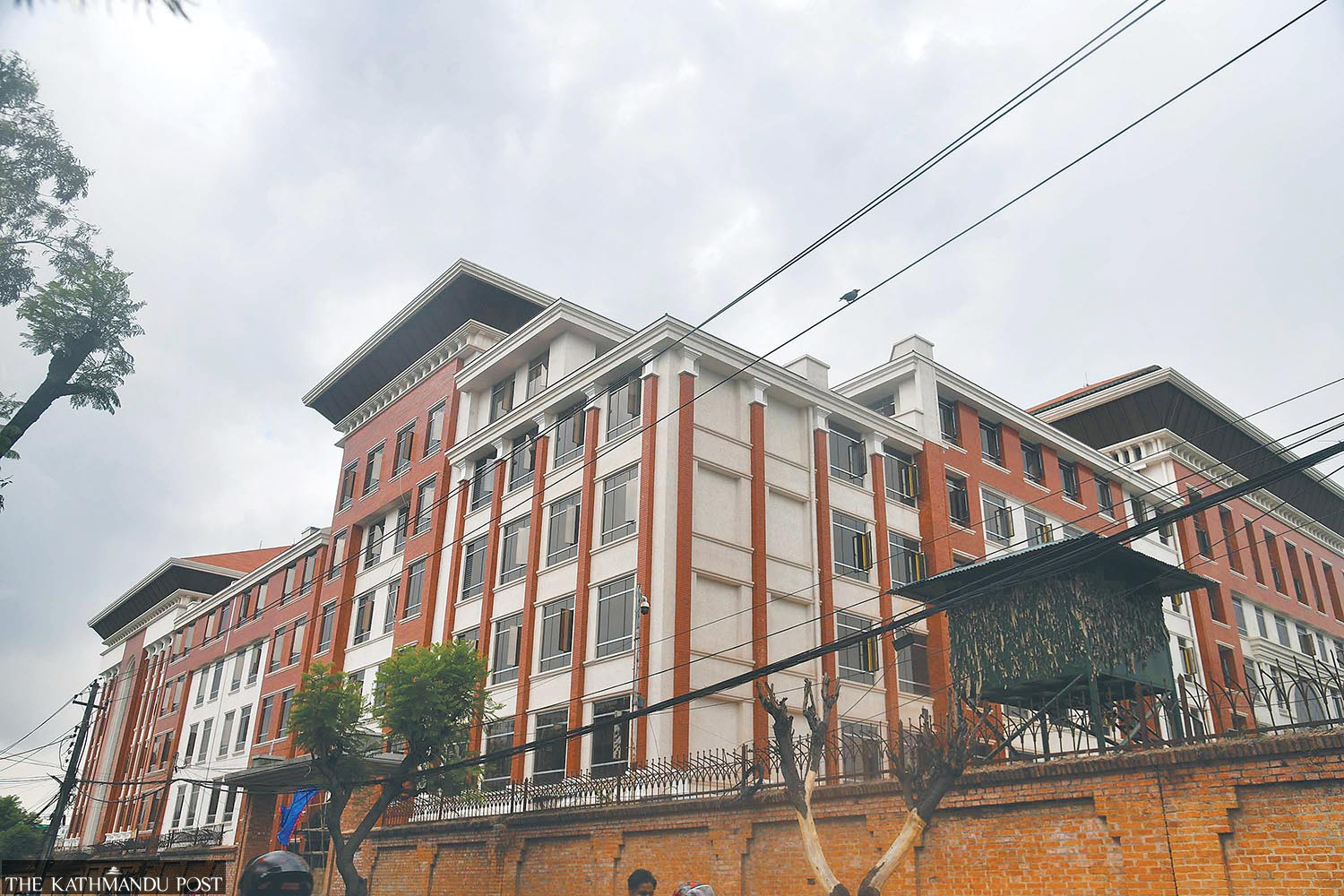
The new Supreme Court building at Ramshahpath, Kathmandu. Post file photo
Reform proposals gathering momentum
Calls for reform are not new.
A judicial reform committee led by then Justice Hari Krishna Karki in 2021 concluded that the Supreme Court’s jurisdiction should be substantially narrowed.
The committee recommended granting district courts broader jurisdiction while allowing high courts to issue final judgments in most appeals.
Page 142 of the Karki Committee report states: “The existing legal provisions governing jurisdiction have excessively increased the Supreme Court’s workload, resulting in delays in the administration of justice. Therefore, except in exceptional circumstances, the law should be amended to vest district courts with jurisdiction to hear all types of cases at first instance, while high courts should be granted the authority to issue final judgments within their appellate jurisdiction.”
Another government task force formed the same year under the then Law Minister Dilendra Prasad Badu proposed amendments to nearly two dozen laws to reduce the Supreme Court’s workload.
Among its recommendations were restricting direct constitutional petitions when alternative legal remedies exist, reforming the ‘petition for review’ system that consumes considerable judicial time, and requiring certain appeals to be screened by larger high court benches before reaching the Supreme Court.
The committee also proposed limiting Supreme Court appeals to cases carrying prison sentences of seven years or more or involving financial claims exceeding Rs5 million.
The bar’s proposal
The Nepal Bar Association has formally urged the constitutional amendment task force to redefine the Supreme Court’s jurisdiction.
Its proposal would limit the apex court to constitutional matters, fundamental rights cases, federal legal disputes and other cases involving serious legal questions.
Bar chief Bijay Kumar Mishra also argues that making the Constitutional Bench a permanent, regularly functioning body would free five Supreme Court justices to hear other cases more consistently.
Bar General Secretary Koirala says meaningful reform requires a combination of measures: appointing more justices, strengthening the Constitutional Bench and expanding the authority of district and high courts.
“The current practice, where almost every case eventually reaches the Supreme Court, has to end,” he said.
Structural reform remains politically difficult
When Nepal’s 2015 Constitution transformed appellate courts into high courts and expanded their writ jurisdiction, policymakers expected the Supreme Court’s caseload to decline.
A decade later, official figures show the opposite.
Appeals, constitutional petitions and review applications continue to flow into the Supreme Court, keeping its docket crowded despite reforms at lower levels.
Some legal experts worry that granting greater final authority to high courts could produce inconsistent interpretations of the law across different provinces.
Former Justice KC dismisses that concern.
“High courts are capable of developing legal precedents. Where conflicting interpretations arise, the Supreme Court can still intervene to ensure consistency,” he said.
The constitutional amendment task force is currently collecting recommendations from government institutions and legal organisations.
While much of the constitutional debate has centred on judicial appointments, parliamentary hearings and the Judicial Council, many legal experts argue that the more pressing question is whether Nepal’s Supreme Court should continue functioning as the country’s court of last resort for almost every dispute.




 22.75°C Kathmandu