Nepal’s pride projects dogged by delays and repeated extensions
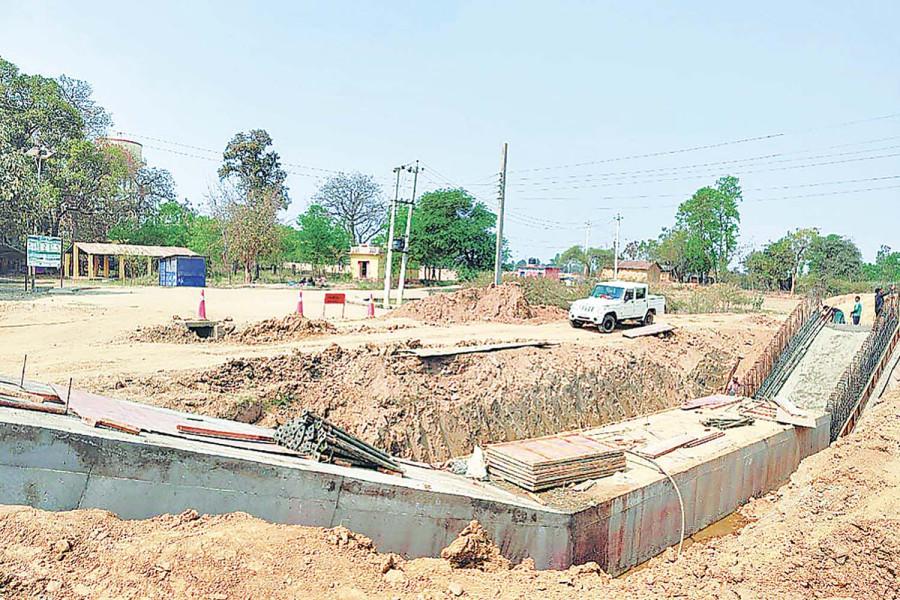
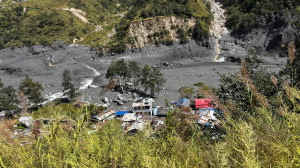
From irrigation projects launched decades ago to highways and transport corridors, many national pride projects remain unfinished after repeated deadline extensions and billions of rupees spent.The site of the under-construction Babai Irrigation Project in Bardiya district in this undated photo. Construction began about four decades ago. Photo: Courtesy of Babai Irrigation project office
Decades after construction began on some of Nepal’s largest infrastructure projects, several national pride and strategically important projects remain unfinished despite repeated deadline extensions, rising costs and billions of rupees already spent.
A review of major irrigation, road and transport projects shows a consistent pattern of delays, revised budgets and implementation challenges. Many projects launched between the late 1980s and 2000s are still far from completion, while others have seen costs multiply several times their original estimates.
Officials cite inadequate budget allocations, land acquisition disputes, environmental clearance delays, contractor performance issues and bureaucratic bottlenecks as key reasons for slow progress. In some cases, cross-border water-sharing issues have further complicated implementation.
The delays have raised concerns over the government’s ability to deliver large-scale infrastructure within planned timelines, even as successive administrations continue to set new deadlines and allocate additional funding.
Among the long-delayed projects are the Babai Irrigation Project, Sikta Irrigation Project, Rani Jamara Kulariya Irrigation Project, Mahakali Irrigation Project, Bheri-Babai Diversion Multipurpose Project, Mid-Hill Highway, Postal Highway and several north–south corridor roads.
The Babai Irrigation Project in Bardiya illustrates the scale of delays. Construction began in fiscal year 1988/89, but the project remains incomplete 38 years later despite multiple deadline extensions and a six-fold rise in estimated cost.
Under the revised schedule, completion was expected by fiscal year 2025-026, but the deadline has now been pushed to fiscal year 2028-29. Officials say even that timeline remains uncertain.
The original estimated cost was Rs2.87 billion, which has now increased to Rs18.96 billion. Once completed, the project is expected to irrigate 36,000 hectares of farmland in Bardiya, including 21,000 hectares in the eastern command area and 15,000 hectares in the western section.
Physical progress has reached 81 percent, according to Shekhar Nath Neupane, information and public relations officer for the Babai Irrigation Project.
The government has already spent around Rs17.5 billion. Neupane said the master plan was last revised in 2025-26.
“The ministry has developed a strategy to complete the project by fiscal year 2027-28,” he said. “Contracts awarded this fiscal year will run for two years, and an additional Rs 2.5 billion worth of contracts will be issued next fiscal year. All remaining contracts should be completed by fiscal year 2028-29, with a plan to wrap up all project operations within the following year.”
Work continues on the main canal in the Gulariya section of the western command area, while branch canals are yet to be completed. Remaining works include access roads, slope protection and river training structures under the irrigated area development programme.
Irrigation has already reached around 28,500 hectares through the Babai system. The next fiscal year budget aims to extend coverage by an additional 1,066 hectares.
Another national pride project, the Sikta Irrigation Project, has also remained incomplete more than two decades after construction began.
Launched in fiscal year 2005-06, it has achieved 46 percent physical progress. The project was initially scheduled for completion in fiscal year 2014-15, later extended to 2021-22 and then to 2027-28. With progress still lagging, the deadline has now been pushed to fiscal year 2032-33.
The original cost of Rs12.8 billion has risen to Rs52.89 billion. So far, the government has spent Rs23.77 billion.
Once completed, the project is expected to irrigate 42,766 hectares in Banke district.
“Progress is improving and there are currently no budget constraints,” said Manoj Kumar Sah, project information officer. “If work proceeds smoothly, the project could be completed within four years.”
He said early delays were due to funding shortages, but financing is no longer the main issue.
“In the beginning, construction focused only on the main canal. The branch canal network has now largely been completed, and remaining branches will be built soon,” he said. “We have received source approval and plan to award those contracts within the current fiscal year.”
He added that most major structures have already been built, with remaining work focused on smaller components and maintenance.
“The main canal is already 20 years old, so maintenance work is also becoming necessary,” Sah said.
The government has allocated Rs2.55 billion for the project in the next fiscal year, aiming to expand irrigation coverage by another 5,000 hectares in eastern and western Banke. The project currently irrigates around 22,300 hectares.
The Rani Jamara Kulariya Irrigation Project has also missed its completion target despite 17 years of construction.
Launched in fiscal year 2009/10, it was initially scheduled for completion in fiscal year 2017-18. It aims to provide year-round irrigation to 38,300 hectares in Kailali district, including areas under the traditional Rani Jamara Kulariya system, the Lamki branch canal extension and river basin command areas.
Physical progress stands at 73 percent after more than 15 years.
The government has spent Rs21.71 billion against an original estimate of Rs12.37 billion.
Project engineer Ankur Subedi said key structures, including the intake, the 14.65-kilometre Lamki extension main canal and related infrastructure, have been completed. A 4.71-megawatt hydropower plant has also been built.
The project is jointly financed by the government and the World Bank, with total estimated investment of Rs27.7 billion. Government funding accounts for Rs17.57 billion, while the World Bank has contributed Rs9.96 billion.
“Construction under the third phase is underway, and the target is to complete the project by fiscal year 2028-29,” Subedi said. “Work continues on a new 13-kilometre section of the main canal.”
The Mahakali Irrigation Project has also struggled to progress.
Work began in fiscal year 2006-07, but overall progress remains at just 30 percent. The estimated cost has reached Rs35.03 billion, with around Rs10 billion already spent.
The project aims to irrigate 28,225 hectares through surface irrigation and 5,265 hectares through groundwater systems in Kanchanpur district, including Brahmadev, Malakheti, Dodhara Chandani and Tribhuvanbasti.
Completion is now targeted for fiscal year 2029-30.
Although 29 kilometres of the main canal have been completed, project information officer Yadav Baral said progress remains constrained as India has not supplied the required water for operation.
The project is located in Mahendranagar, Kanchanpur. According to a National Planning Commission publication on national pride projects, Nepal is entitled under a 1996 agreement with India to receive 300 cusecs of water from the Tanakpur Barrage during winter and 1,000 cusecs during summer.
“We have already built infrastructure capable of irrigating about 7,500 bigha of land (approximately 5,079 hectares) once water is supplied,” Baral said. “The system will benefit around 5,000 hectares in Bhimdatta, Bedkot and Shuklaphanta municipalities.”
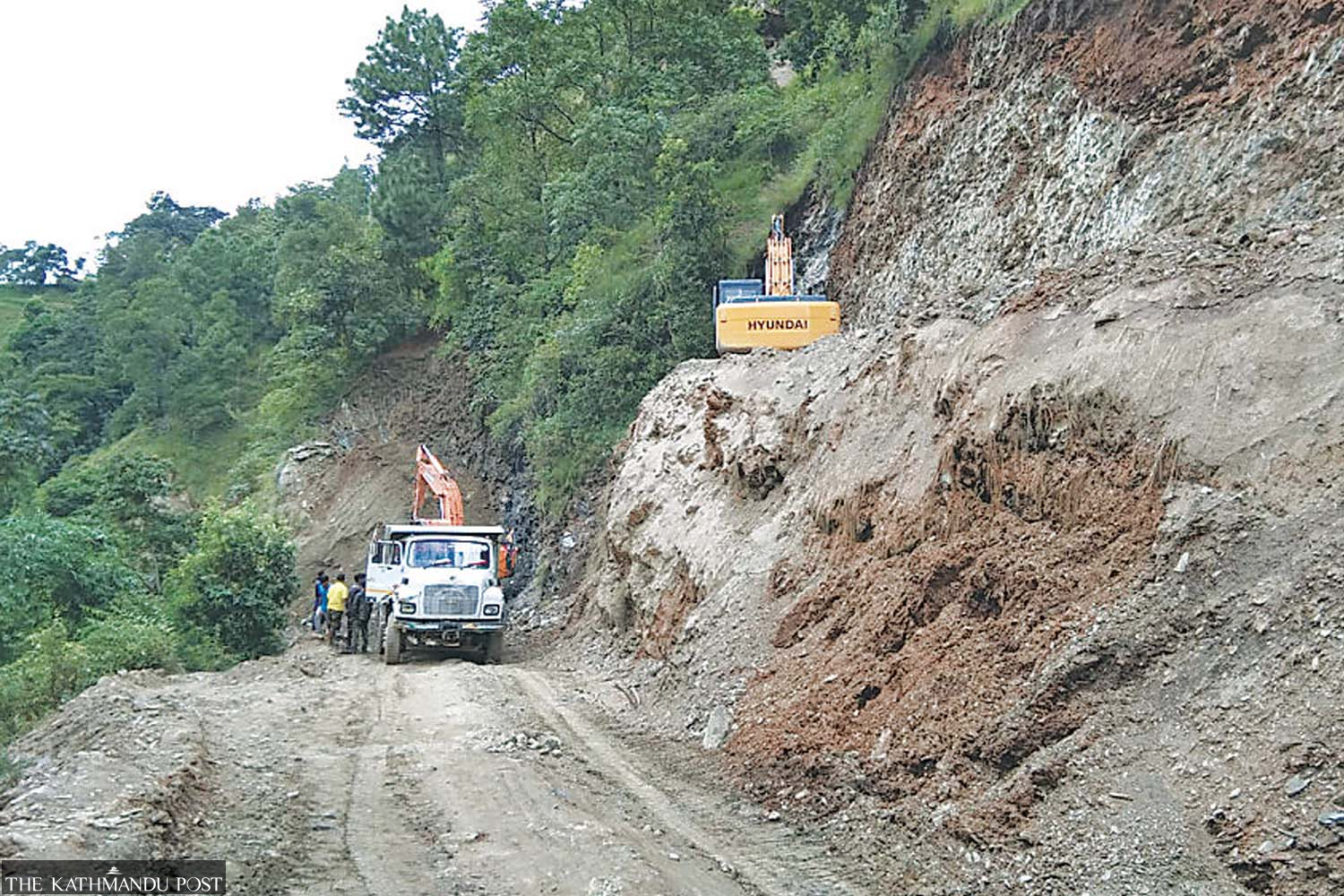
This image shows ongoing road widening work in Khahare of Baglung district along the Mid-Hill Highway. Post Photo
The project schedule has been revised under its third phase, with completion now targeted for fiscal year 2029-30.
Baral said land acquisition remains one of the biggest obstacles. Parts of the proposed canal alignment pass through public land, requiring a government decision on compensation. Other sections run through land allocated to former bonded labourers, which cannot legally be sold, complicating construction. In some cases, land is occupied by one person but registered in another's name, preventing work from moving ahead.
“If the Ministry of Finance provides source approval and there are no funding constraints, the project can be completed,” Baral said. “An allocation of Rs25 billion over the next four fiscal years would significantly accelerate the work, but only Rs2 billion has been allocated for the next fiscal year. If construction proceeds without major obstacles and adequate funding is ensured, completion would not be difficult.”
Another national pride project facing delays is the Bheri-Babai Diversion Multipurpose Project.
Construction began in fiscal year 2011-12 and was originally scheduled for completion by fiscal year 2022-23. Overall progress has reached only 70 percent. Project officials say additional components added to the master plan have pushed the completion target back to fiscal year 2027-28.
The project's original estimated cost was Rs16.43 billion. After the inclusion of a dam, powerhouse, hydromechanical and electromechanical systems, the revised cost has doubled to Rs33.2 billion.
The government has already spent Rs18.92 billion.
Once completed, the project will divert water from the Bheri River into the Babai River, providing year-round irrigation to about 51,000 hectares in Bardiya and Banke districts through the existing Babai headworks system. The project is designed to transfer 40 cumecs of water and generate 46.8 megawatts of electricity.
Hari Bahadur Thapa, senior divisional engineer and information officer for the project, said progress remains slow in key technical components. Electromechanical works are 58 percent complete, while hydromechanical works have reached 60 percent.
The dam contract was awarded jointly to China's Guangdong Yuantian Engineering Co. Ltd. and Nepal's Raman Construction for Rs6.89 billion.
However, Raman Construction's joint venture with India's Patel Engineering was blacklisted for three years by the Public Procurement Monitoring Office after failing to complete the Sunkoshi Marin Diversion Multipurpose Project in Sindhuli on schedule.
“Raman faced financial difficulties after problems at the Sunkoshi Marin project and has been unable to mobilise sufficient resources here,” Thapa said. “We have been trying to create an environment where both joint venture partners can work together, but the Chinese company has yet to respond. Progress would be faster if the ministry made a clear decision.”
Although the government has instructed officials to complete the project within two years, the project office estimates it will take at least three more years.
“We are facing a shortage of manpower,” Thapa said. “Only 11 of our 22 technical positions are currently filled. Even with our best efforts, we have been unable to operate around the clock in three shifts.”
The delays are not confined to irrigation projects. Several major road projects have also fallen years behind schedule.
Among them is the Pushpalal (Mid-Hill) Highway, one of Nepal's largest national pride projects.
Launched in fiscal year 2007-08, the highway is intended to connect 215 settlements across 26 hill districts and is expected to benefit around 10 million people.
The project involves a two-lane blacktopped highway stretching from Chiwabhanjyang in Panchthar district in the east to Jhulaghat in Baitadi district in the far west. The network includes 1,879 kilometres of roadway and 137 bridges.
So far, 1,093.11 kilometres under the main project and another 462 kilometres under related projects have been blacktopped. Of the planned 137 bridges, 114 have been completed.
The original estimated cost of Rs33.36 billion has risen to Rs84.33 billion. Government spending has already reached Rs72.66 billion, while physical progress stands at 83.58 percent.
Initially scheduled for completion by fiscal year 2017-18, the deadline was later extended to fiscal year 2022-23 and subsequently to fiscal year 2027-28.
The government says the highway can be completed within three years, but project officials are sceptical.
“We have only received source approval this fiscal year for contracts covering eight bridges,” said Sachin Shrestha, engineer and information officer at the Pushpalal Highway Project Directorate. “We also requested approval to blacktop 44 kilometres of road during the current fiscal year, but that approval has yet to come.”
The government has allocated Rs2.16 billion for the next fiscal year to upgrade 65 kilometres of road and complete five bridges.
The Postal Highway has also fallen far behind schedule after 17 years of construction.
Physical progress stands at 74.35 percent. Launched in fiscal year 2009-10, the project aims to connect Kechana in Jhapa district with Dodhara Chandani in Kanchanpur district and is expected to benefit nearly 10 million people across 21 Tarai-Madhesh districts.
Funding shortages and policy delays have repeatedly slowed progress.
The highway network covers 1,857 kilometres, including 975 kilometres of east-west roadway and 882 kilometres of north-south connector roads. Of the total network, 1,380 kilometres have been blacktopped.
Only 153 of the planned 300 bridges have been completed.
Contracts have been awarded for another 150.9 kilometres of road and 69 bridges, although construction has yet to begin. Officials say route alignment disputes remain unresolved in several sections.
Originally scheduled for completion in fiscal year 2017-18, the deadline was extended to fiscal year 2022-23, then to 2023-24, later to 2026-27 and most recently to fiscal year 2029-30.
Government spending on the project has reached Rs71.55 billion. The original cost estimate of Rs47 billion was first revised to Rs65.2 billion and later to Rs101.93 billion.
Under the budget for the next fiscal year, road widening is expected to begin in densely populated areas and eight bridges are scheduled for completion. The government has allocated Rs4.65 billion and says it aims to finish the project within three years.
Road sections passing through forest areas along Chitwan National Park, the Kapilvastu-Dang border and other protected zones remain without construction contracts. Contracts have also yet to be awarded for road and bridge works in forest areas along the Dang-Banke border. A shortage of bitumen has further slowed construction, affecting overall progress on the Postal Highway, according to Kuber Nepali, director of the Postal Highway Directorate.
“The government's target is to complete construction within three years, but delays have been caused by route alignment disputes and budget constraints,” he said.
The Koshi Corridor, a national pride project launched in fiscal year 2008/09, is also behind schedule.
The 345-kilometre corridor connects the Rani border point with Kimathanka in Sankhuwasabha via Biratnagar, Dharan, Dhankuta, Hile, Leguwa, Tumlingtar and Khandbari. An alternative 390-kilometre alignment runs through Hile, Chainpur and Tumlingtar.
The Rani-Khandbari section has already been blacktopped, while work continues on the 162-kilometre Khandbari-Kimathanka stretch. Upgrading of the 134-kilometre Khandbari-Chyamtang section is currently under way, according to the North-South Trade Route Improvement Project Directorate.
Designed to strengthen Nepal's connectivity with both India and China, the corridor has achieved only 46 percent physical progress. Initially scheduled for completion in fiscal year 2023/24, the deadline has now been extended to fiscal year 2028/29.
The project's estimated cost has increased from Rs11.93 billion to Rs16.20 billion, while government spending has reached Rs6.85 billion.
The Kaligandaki Corridor, launched in fiscal year 2009/10, has also missed repeated deadlines.
The 495-kilometre road links Gaidakot with Korala via Beni and Jomsom. The entire road track has already been opened, but completion has now been pushed back to fiscal year 2028/29.
The project includes 87 kilometres of gravel road, 408 kilometres of blacktopping and 85 bridges. So far, 87 kilometres of gravel work, 328 kilometres of blacktopping and 51 bridges have been completed.
Overall progress stands at 82.05 percent. Government spending has reached Rs22.88 billion, against a revised project cost of Rs35 billion, up from the original estimate of Rs30.57 billion.
Progress on the Karnali Corridor has been even slower.
Launched in fiscal year 2008/09, the 268-kilometre road linking Khulalu in Kalikot with Hilsa in Humla has achieved only 20.5 percent progress.
The project was originally targeted for completion in fiscal year 2013/14, but repeated extensions have pushed the deadline to fiscal year 2027/28.
Its estimated cost has increased from Rs4.10 billion to Rs18.66 billion, while expenditure has reached Rs3.01 billion.
Dharmendra Kumar Jha, director of the North-South Trade Route Improvement Project Directorate, said inadequate funding remains one of the biggest barriers to completing the projects on time.
The Mahakali Corridor, launched in fiscal year 2007/08, is also unfinished.
Initially conceived as the Darchula-Tinkar road, the project was expanded into a two-lane corridor in fiscal year 2017/18.
According to project officials, 43 kilometres of track had already been opened when responsibility for the 79-kilometre Tinkar-Tusharpani section was handed over to the Nepali Army.
The project was later expanded further to extend road connectivity along the Mahakali riverbank through Chandani-Gaddachauki-Brahmadev-Jhulaghat-Darchula-Tusharpani.
The corridor now covers 413 kilometres from Chandani to Tusharpani. Of that total, the Nepali Army is constructing 79 kilometres, while the Department of Roads is responsible for the remaining 334 kilometres.
The project's estimated cost stands at Rs18 billion, with government spending reaching Rs3 billion. Physical progress is only 17 percent.
Ishwar Karki, acting project chief of the corridor project, said annual budget allocations ranging from Rs500 million to Rs1 billion have slowed construction.
The completion target has now been pushed back to fiscal year 2028/29. Authorities plan to move to blacktopping contracts once track-opening works are completed.
“Budget remains the corridor's biggest challenge,” Karki said. “At present, blacktopping contracts are under implementation for 30 kilometres of road in Darchula district, while 3.2 kilometres have already been blacktopped in the Dadeldhura section.”
Progress on the East-West Electric Railway, another national pride project launched in fiscal year 2008/09, has been limited.
The government has frozen 5,424 land plots for the project, including 2,457 in Jhapa, 1,638 in Morang and 1,329 in Sunsari. Compensation has yet to be finalised, although officials estimate it will cost more than Rs24 billion.
Hari Kumar Pokharel, director general of the Department of Railways, said compensation payments would begin once funding assurances are secured from the Ministry of Finance.
The railway is planned to run from Kakarbhitta in Jhapa to Gaddachauki in Kanchanpur.
Initial studies estimated the route at 945 kilometres, but realignment through protected areas has reduced the length to 925 kilometres.
Trains are currently operating on 52 kilometres of the Jayanagar-Janakpur-Kurtha-Bijalpura section, part of a larger 69-kilometre route extending to Bardibas, which is expected to connect with the proposed East-West Electric Railway.
The government has also constructed railway infrastructure along a 70-kilometre stretch from Bardibas through Sarlahi, Rautahat and Bara.
According to the Department of Railways, around Rs30 billion has already been spent, including compensation payments in the Bardibas section. A feasibility study estimates the total project cost at Rs655 billion.
Arjun Jung Thapa, a member of the National Planning Commission, said irrigation projects should receive priority because of their direct economic impact.
“Such projects have an immediate impact on economic activity,” he said. “The Babai Irrigation Project has already brought significant economic transformation in Bardiya.”
Thapa said inadequate budget allocation remains the main reason many national pride projects have failed to meet their deadlines.
“There is a problem of not allocating sufficient funds, and even when budgets are allocated, disbursement is often delayed,” he said. “The budget appears in the Red Book, but the Ministry of Finance has often been unable to release the funds on time.”
He added that delays in land acquisition and approvals for tree felling have also contributed significantly to project delays.




 26.87°C Kathmandu