Squatter settlements on Bagmati riverbanks razed as residents await an uncertain future
Evicted families taken to Dasharath Stadium and other designated sites for temporary accommodation.A Bagmati riverbank cleared of a squatter settlement in Thapathali, Kathmandu on Saturday. Hemanta Shrestha/TKP
Inside Dasharath Stadium in Kathmandu on Saturday, a municipal police officer told landless squatters evicted from the Thapathali riverbank settlement: “Those going to Kirtipur carry nothing except bedding and clothes. Leave everything else where it is.”
Their homes, built over years of sweat and struggle, had just been reduced to rubble. Holding the hands of family members, they arrived at the stadium in a state of shock.
Leaning against a wall, 58-year-old Hira Hari Dusad asked the officer, “What will happen to the belongings taken out of our house?”
The officer replied, “Are you also going to Kirtipur? Later, hand those things over there [to be sold] as scrap.”
Hira fell silent. A vehicle waiting outside the gate was ready to take people to a temporary shelter in Kirtipur. “How can I leave everything behind?” he said softly.
Hira had lived in the Thapathali settlement since 2004 with his family of nine. Working as a daily-wage labourer, he had slowly built a livable structure on the banks of the Bagmati. Watching bulldozers tear it down before his eyes was painful. “It hurts deeply,” he said, his voice trembling.
The landless man from Bara had come to Kathmandu in search of a livelihood. In desperation, he once erected bamboo poles in a squatter settlement and built a small hut there.
“Everything has been uprooted. We are homeless again,” he said. “Now we depend on the government. I hope they give us a place to stay.” Stories like his, of homes reduced to rubble, began unfolding early Saturday morning.
Even before 6 am, the Thapathali riverside settlement echoed with the metallic clatter of dismantled roofing sheets, mingled with residents’ pleas. Outside stood a heavy deployment of Nepal Police, Armed Police Force, and metropolitan police personnel. As the number of residents thinned, the number of security forces only grew.
By quarter past 6, journalists had also gathered in large numbers. But no one was allowed inside the settlement. A sign pasted on the outer wall read “Media Zone”.
Reporters were filming from outside. But after hearing cries from within, some slipped past security barriers.
Some residents had already left on Friday after the government’s warning. Those who remained had nowhere to go. Some were removing zinc sheets from rooftops, and others were carrying bedding and clothes. Some were packing their belongings; others sat helplessly, unable to move anything.
They all had one question: Where do we go now?
Even in the morning sunlight, their faces darkened with fear.
Among them was 43-year-old Kumari Tamang, who had lived there for 24 years. Around her lay rusted roofing sheets and scattered belongings. She had no idea where to take them. “What can I even do?” she asked.
Her father had died six days ago. Her aunt has a broken back and needs constant care. “I also have small children. Where can I carry them and go?” she cried.
As she spoke, a police team arrived. “Have you moved your belongings? The bulldozer is about to come,” one from the team screamed.
Kumari snapped back: “We’ve taken out what we could. What more do you want us to do?” Tears welled in her eyes.
“We lived here, struggled here, raised our children here. Everything I own is here. How can they suddenly tell us to leave?”
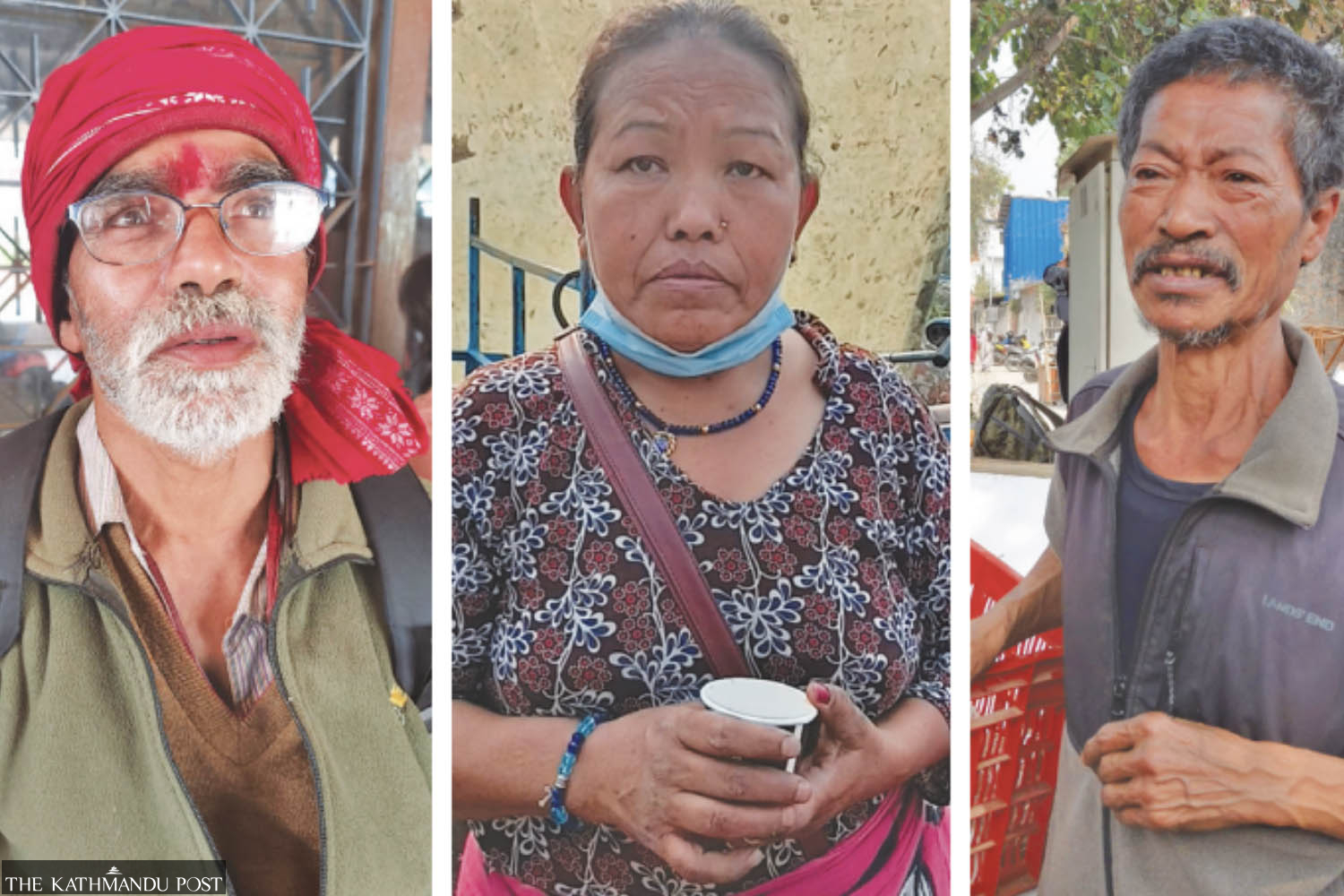
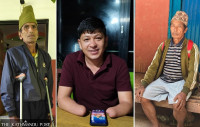
From left, Hira Hari Dusad, Kumari Tamang and Pakcha Tarim Kasai Post Photos
Beside her stood 52-year-old Pakcha Tarim Kasai. He is physically weak and, even by 8 am, had not managed to move his belongings. “I’ve lived here for 20 years. Now they tell me to go. My legs don’t work. Where can I go like this?” he said.
Police helped him carry his belongings out. Then came loudspeaker announcements from municipal police:
“Hurry up! Hurry up! The bulldozer has arrived.”
The message triggered fear among children and the elderly alike.
At 8:15 am, two red bulldozers rolled onto the road outside the settlement. Security personnel crowded around them. Minutes later, demolition began.
As the bulldozer’s bucket smashed into homes visible from the roadside, Kumari could no longer hold back her tears.
A settlement once full of dreams, hopes and aspirations was turned into ruins before the residents’ eyes.
From inside came constant cries of anguish.
Journalists repeatedly tried to enter and document the destruction, but were stopped at the gate.
“Get to the media zone,” the police kept saying.
After the settlement was razed, police posted photos on their official Facebook page showing officers helping residents. But they neither captured the displaced people's cries nor allowed journalists to do so.
From Thapathali, bulldozers moved to Gairigaun in Shantinagar.
Seventy-year-old Bishnu Maya Gurung watched as her house was torn down. Sitting atop scattered belongings, she was asked where she would go. “Who knows where those doing the demolition will take us?” she replied.
Her family had managed to remove some household items. But the question of where to store them remained unanswered.
“We came here from Samakhusi in 2001, the year the king [Birendra] was killed,” she recalled. “We had nothing. My husband, son and I are all disabled. We could neither work nor pay rent, so we stayed here.”
The sound of collapsing houses shook the ground.
Mixed into it were desperate appeals.
“Daughter, the house is gone! We are searching for a room. Maybe someone will let us stay,” one resident told his daughter over the phone.
His wife sobbed beside him. Their younger daughter packed her belongings in tears.
A 10-year-old girl kept asking her father: “Dad, where will we go now?”
He had no answer.
She ran to the neighbours, pointing at an empty space. “Auntie, can we keep our things here?”
“We’re keeping ours there too,” came the reply.
She returned excitedly. “Dad, they said we can keep them there.”
Moments later, she suggested another solution: “Call auntie. Let’s keep our things there for a few days.” She took the phone from her father’s pocket and called a relative herself.
Some children were still in their own little world—packing school bags, carrying books, or simply playing.
At another home in Gairigaun, 70-year-old Krishna Maya Tamang stood outside with more than 10 goats. “These goats fed us,” she muttered. “Now they, too, will suffer. And so will we.”
Her family had migrated from Hokse, Kavrepalchok in 1990. Starting their livelihood with one goat, they had gradually built a herd. Selling goats and manure sustained the family.
There was also a dog in the house. “We first brought it because we feared gas cylinders and cooking utensils would be stolen. It gradually became family,” she said. “Now, where will we take it?”
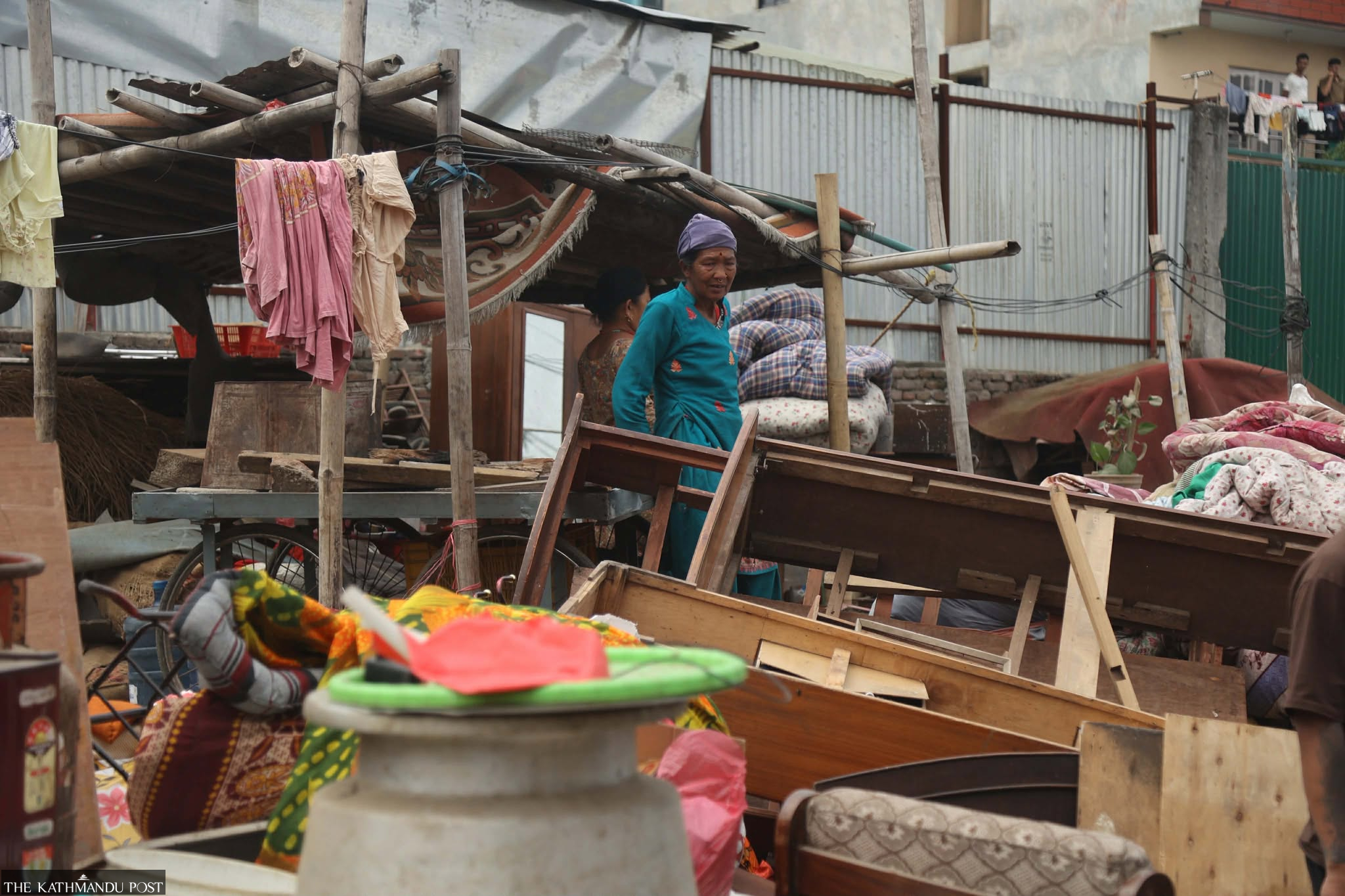
An elderly woman is pictured amid her belongings as city police, Nepal Police and the APF force squatters out from their settlement atThapathali, Kathmandu on Saturday. Suryams Upreti/TKP
Then she added bitterly: “It would have been better if the bulldozer crushed not just the house, but all of us together.” She had lost her appetite the day she heard demolition engines were coming. “Now we cannot save anything,” she cried.
By afternoon, when bulldozers reached her house, the goats were gone. So was Krishna Maya. Only the dog remained in the yard.
Krishna Maya Damai had not yet moved her belongings when police came to help as a bulldozer worked next door. “My husband is sick. We still haven’t found a room. I’m terribly worried,” she had said earlier.
When the bulldozer finally arrived, she broke down. “Now everything is over. We are homeless.”
For 22-year resident Dhadkan Yadav, worries were endless. “Where will we go? Where will our children study? The government has given us pain. Can it also give us happiness?”
Fifty-year-old Sukumaya Pariyar pleaded for her pain to be conveyed. “They won’t hear us. Maybe they’ll hear you.” She suffers from heart disease and feared this ordeal would worsen it.
Her son-in-law had found a room, but the rent was Rs14,000 to Rs15,000. “How can we pay so much?”
Sukumaya had once farmed as a sharecropper on others’ land in Sindhuli. Then an earthquake destroyed her house. “It seems life has only one after another displacement in store for me,” she said.
These scenes from Thapathali and Gairigaun were repeated in Manohara. The government is preparing to clear settlements in Gothatar Buddha Chowk and Manohara Tol as well.
According to data from the Kathmandu Valley Development Authority, 476 families live in Shantinagar, 162 in Gairigaun, 143 in Thapathali, 77 in Gothatar, and 13 in Manohara Tol. This brings the total to 871 families. In Manohara, squatters clashed with police as they approached their settlement to tear down the houses.
The displaced are being housed temporarily at Dasharath Stadium in Tripureshwar.
According to the government, 144 families from Thapathali, Shantinagar and Gairigaun have so far come into contact, with others still arriving. Their details will be collected at the stadium before they are temporarily moved to hotels across Kathmandu. Household goods are being stored at the Radhaswami Satsang Byas Nepal premises in Sundarighat, Kirtipur.
From Sunday, the government says it will begin identifying who among them are “genuine squatters.”
“Those recognised will be moved within two weeks to government apartments in Nagarjun Municipality-1 and other safe locations,” reads a statement from Minister of Education, Sasmit Pokharel, who is also the government spokesperson.
Long-term rehabilitation will follow, the statement further said.
Even as displeasure ran high, there was no retaliation from the evicted squatters, unlike in the past. The government executed the plan in a very coordinated manner.




 14.69°C Kathmandu