Rautahat fears worse monsoon as India strengthens 50-year-old dam
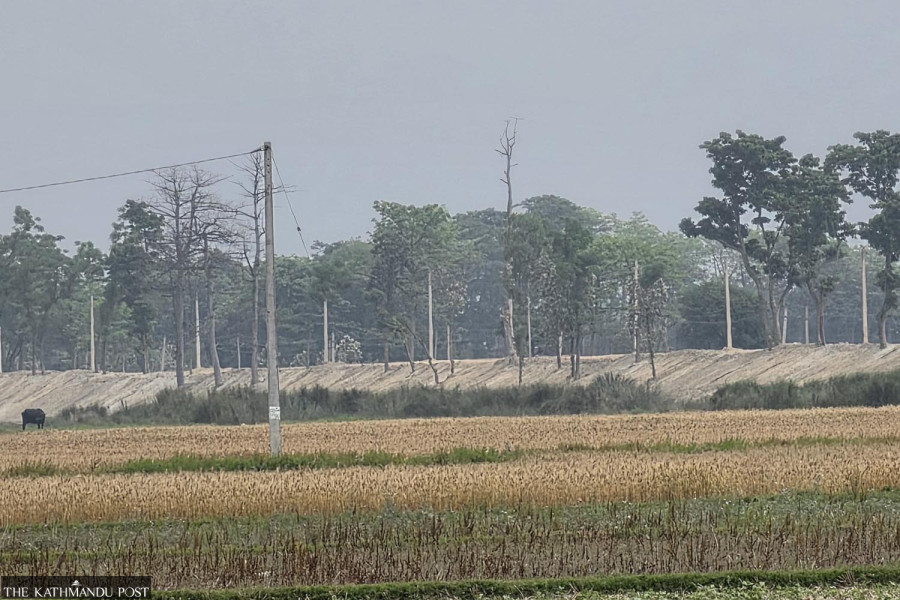
The 5-km Bairgania Ring Dam stretching from Bagmati in the east to Banjaraha in the west, stands nearly 15 feet high. This recent image shows the Bairgania Ring Dam being topped with soil under the pretext of maintenance. Shiva Puri/TKP
Tensions are simmering along the Nepal-India border in Rautahat as the Indian side continues unilateral construction on the Bairgania ring dam, heightening fears of inundation in the district headquarters of Gaur and surrounding areas.
Under the pretext of ‘routine maintenance work’, Indian authorities have been adding layers of soil to the existing embankment that runs parallel to the no-man’s-land. This activity, conducted without coordination with the Nepali administration, violates international norms and bilateral agreements that prohibit the construction or modification of physical structures near the border without mutual consent.
The 5-kilometre-long embankment, stretching from Bagmati in the east to Banjaraha in the west, stands nearly 15 feet high. Built originally in 1975 to protect the Indian town of Bairgania and parts of Bihar from inundation, the structure has long acted as a barrier to the natural southward flow of the Lalbakaiya and Bagmati rivers, causing flooding on Nepali side.
According to local government representatives from Rautahat, the Indian side claims they are only repairing the structure, but the reality is they are increasing its height and strength. “By blocking the natural drainage, they are essentially turning Gaur into a reservoir to protect their land from flooding. This is a direct assault on the spirit of our border treaties,” said a local leader.
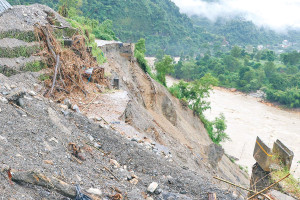
During the monsoon, the dam forces floodwaters to back up into Nepali territory. Residents of Rajdevi Municipality, Ishnath Municipality, and all nine wards of Gaur Municipality live in constant fear of being submerged.
A few days ago, Dinesh Sagar Bhusal, the chief district officer (CDO) of Rautahat, raised the issue with his Indian counterpart, Sitamarhi District Magistrate (DM) Richie Pandey. "I drew the DM's attention to the unilateral soil addition on the embankment," said Bhusal. "DM Pandey responded that the repair work was being directed by their central government. Following that, we sent photographic and video evidence of the construction to the Ministry of Home Affairs when Om Prakash Aryal was the home minister.”
This is not the first time such friction has occurred. Five years ago, under then CDO Kiran Thapa, similar construction was halted after a stiff protest from the local administration and the Armed Police Force (APF). However, the work has now resumed with renewed vigour.
"We had already corresponded regarding this during the tenure of the previous home minister. We are waiting for further instructions from the center, but I will be updating them on the current situation immediately,” said Bhusal.
A critical flashpoint in this ‘embankment politics’ is the operation of the sluice gates. Historically, three gates located in the eastern part of the Bairgania dam were opened during peak floods to allow water to drain.
In the session of the National Assembly, lawmaker Puja Chaudhary representing Rautahat raised the issue of these sluice gates. She argued that whenever the water level rises in Gaur, the Indian side keeps the gates shut. “We face an immense disaster because the water has nowhere to go. I have urged the government to initiate diplomatic dialogue to ensure these gates are opened during emergencies,” she said.
Locals recall that until the 1990s, there was a functional understanding to open the gates. Today, however, the Indian Sashastra Seema Bal (SSB) maintains a 24-hour armed presence on the dam to prevent any attempts to open the gates or breach the structure during floods.
Following the devastating floods of 2019, a high-level delegation—including former prime minister Madhav Kumar Nepal, former home minister Ram Bahadur Thapa, then chief minister of Madhesh province Lalbabu Raut and then Chairperson of the National Assembly Ganesh Prasad Timilsina—conducted a field inspection of the border embankments. Accompanied by parliamentarians Khim Lal Bhattarai, Sarita Prasai, Brijesh Chandra Lal, and Pramila Kumari, the leaders observed the site firsthand before concluding that urgent diplomatic intervention was required.
The delegation noted that the local population continues to endure the hardships of inundation primarily due to the presence of these embankments, reinforcing the necessity for a coordinated diplomatic resolution. Under bilateral norms, any construction activity along the border that directly impacts the neighbouring country requires mandatory prior consent.
Despite these visits, the ground reality remains unchanged. The central government’s response remains sluggish. Ananda Kafle, spokesperson for the Ministry of Home Affairs, stated that while they are aware of the district’s reports, the matter falls largely under the jurisdiction of the Ministry of Foreign Affairs. "We need to verify the receipt of the latest letters from the district administration," said Kafle, adding, "Since this involves international border treaties, the Foreign Ministry must take the lead."
Similarly, Foreign Ministry spokesperson Lok Bahadur Poudel Chhetri said the foreign ministry would look into whether the home ministry formally forwarded the grievance. “Once we understand the specifics of the current activities on the ground, we can determine the diplomatic course of action,” said Chhetri.
The dam has a long history of sparking protests. When construction first began during the Panchayat era, residents of Gaur took to the streets in massive demonstrations. Then CDO Chandrikananda Kharel reported the unrest to Kathmandu, leading to a visit by then home minister Jog Mehar Shrestha for talks with Indian officials.
"At that time, Indian authorities gave a verbal commitment that they would cooperate and open the gates if Nepali land faced submergence," a local elder recalled. "That promise has been buried under layers of soil." As the monsoon season approaches, the residents of Rautahat are worried about the possible inundation.




 20.62°C Kathmandu