Cabinet appoints Bhatta planning commission vice-chair, makes other decisions
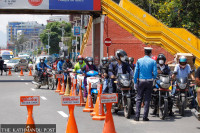
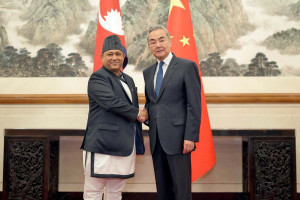
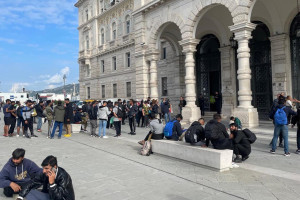
The government could impose odd and even number rules for vehicles if the fuel price continues to soar. Courtesy of Educatoin Minister Sasmit Pokharel's Secretariat
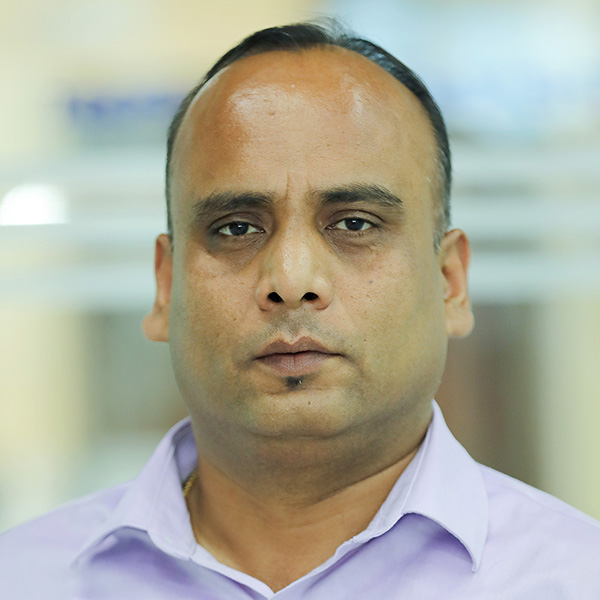
The government has appointed former Executive Director of Nepal Rastra Bank Gunakar Bhatta as vice chairman of the National Planning Commission. Bhatta was also the frontrunner for the post of Nepal Rastra Bank governor and had resigned from the post in April last year.
However, the government appointed Biswo Nath Poudel as the chief of the central bank.
Bhatta, who holds a PhD in economics and has over two decades of experience working in the central bank.
In another decision, the Balendra Shah Cabinet appointed Kiran Pandit as deputy governor of Nepal Rastra Bank. After weeks of speculation, the government has promoted Pandit, an executive director at the central bank, to the Post. The Nepal Rastra Bank had two deputy governor positions vacant after Neelam Dhungana Timsina and Bambahadur Mishra retired. One of those positions has now been filled with Pandit's appointment.
Likewise, the government has decided to grant a 50 percent discount on the customs duties and infrastructure development taxes imposed on the import of petroleum products.
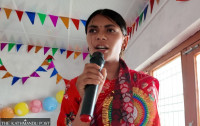
Minister for Federal Affairs and General Administration, Pratibha Rawal, said that the Cabinet meeting decided to provide a 50 percent discount on the customs duty and infrastructure development tax applied to the import of petrol, diesel, and kerosene. According to her, the Cabinet meeting also decided to publish the decision information in the Nepal Gazette for its immediate enforcement.
She also mentioned that adjusting the price of petroleum products has become practically necessary. "There is nothing to hide. Adjusting the price of petroleum products has become practically necessary," Minister Rawal said.
Due to the recent rise in fuel prices, the government has incurred losses of almost Rs 11. 72 billion in two weeks, so that the government has promoted the policy of using electric vehicles, declared Saturday and Sunday public holidays, announced the possibility of imposing odd- and even-numbered vehicle movement, and encouraged the use of ethanol.
The government also urged promoting the use of electric vehicles, working from home and assembling petroleum-based vehicles into electric vehicles, among others. To reduce the burden of petroleum products, the government has already declared every Saturday and Sunday a public holiday, with government offices and educational institutions closed. Minister Rawal also stated that, considering the issues observed in the supply of petroleum products, the odd-even system could be implemented if necessary. She mentioned that measures such as controlling wholesale sales and reducing fuel allocations for high-ranking officials have already been implemented.
"The control on wholesale sales and the reduction of fuel for high-ranking officials have already been done. If necessary, the government will implement the odd-even system," Minister Rawal said. "The government is calling on the public to increase the use of work from home and electronic tools."
She also mentioned that legal provisions for long-term vehicle conversion are progressing. The government is preparing an ethanol policy for this purpose.
"The legal provisions for long-term vehicle conversion are moving forward. Preparation for an ethanol policy is underway. The government is also committed to expanding EV infrastructure development," she added.
Additionally, Minister Rawal stated that the government understands the people's suffering and assured transparency. "The government is transparent; it does not hide the truth. But it also understands the people's suffering. Let’s save energy, be disciplined, and thank you," she said. The meeting also decided to accept a concessional loan of 85 million US dollars from the World Bank to develop the Greater Lumbini Area Project.
Anil Giri is a Chief Sub Editor covering diplomacy, international relations and national politics for The Kathmandu Post. Giri has been working as a journalist for more than two decades, contributing to numerous national and international media outlets.




 24.95°C Kathmandu