State-owned Hetauda Cement industry nears closure amid deepening financial crisis
Shortage of raw materials, ageing equipment and mounting liabilities push the industry to the brink, with operations likely to halt within days. File Photo
After the closure of Hetauda Textile Industry over two decades ago, another state-owned enterprise, Hetauda Cement Industry, is on the verge of shutting down. The textile factory had closed due to management weaknesses and the inability to compete with imports from China and India. The cement industry now faces a similar fate as it fails to compete with private sector producers.
Currently, the plant is operating only for a few days with limited stock. The factory has 1,400 metric tonnes of coal and a small quantity of gypsum stone. Shiva Narayan Sah, the general manager, said operations would continue only until existing stocks last, as the company lacks funds to purchase additional raw materials.
“Now the factory will run for only three to four days,” he said. “In the current fiscal year [which started in mid-July 2025], it has operated for only 11 days.” In the 2024-25 fiscal year, it operated for just 40 days. Sah said the plant could not run regularly due to shortages of raw materials. “We don’t have funds to purchase coal,” he said. “Employees have not received salaries and allowances for nine months.”
Also, more than 65 employees who retired due to age limits have not received gratuity payments. The factory has been operating at a loss for seven consecutive years. It recorded a profit of Rs163.6 million in fiscal year 2017-18 but has since suffered continuous losses. Over the past four years, the plant has struggled to operate for even four months. The factory, which started commercial production in 1986, has now fallen into crisis due to its inability to compete with private sector production.
According to the management, the factory has liabilities totalling Rs 1.26 billion payable to suppliers and employees. Besides this, it owes Rs488.7 million to the government, according to Sah.
Management attributes the crisis to outdated equipment, which has reduced production and increased costs, making it difficult to compete with private cement producers. Rising prices of raw materials and the compulsion to sell cement below production cost have further worsened the financial situation.
The plant has a daily production capacity of 750 tonnes, but it has not operated at full capacity for seven years. A senior technician said the plant would be difficult to run unless old machinery is replaced. “The factory has sought Rs1.6 billion from the government to install new equipment,” he said. “But there has been no response.”
The management had proposed a three-phase plant audit plan six years ago, including improving existing equipment, cutting unnecessary expenses and introducing long-term reforms, but no progress has been made.
The factory, now in a deteriorating condition, has already sold its ropeway system. The 21-kilometre ropeway from Hetauda to Bhainsekhani in Bhimphedi, once used to transport limestone, had remained unused for years and was sold for around Rs40 million.
The company owns four limestone mines. The Jogimara mine in Dhading, which produces high-quality limestone with 50 percent suitability for cement production, has remained closed due to a lack of renewal. Of the remaining three mines in Makawanpur—Okhare, Majuwa and Bhainse—limestone is currently being sourced from Okhare and Majuwa.
To offset losses, management plans to sell government-owned land under the factory and increase production by installing new technology. However, the Ministry of Industry has not approved the land sale. The plant at Lamsure in ward 9 of Hetauda Sub-metropolitan City, has around 12 bigha (approximately 8.13 hectares) of unused land.
The factory recorded profits in fiscal years 2009-10 and 2010-11 but incurred losses from 2011-12 to 2013-14. It returned to profit between 2014-15 and 2017-18 before slipping back into continuous losses. Established in 1976 with investment from the Government of Nepal and the Asian Development Bank, the factory currently operates with only 126 employees against a sanctioned strength of 655, further affecting operations.
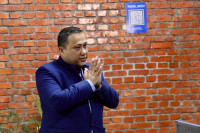
Narendra Bhandari, chairman of the board of directors of the industry, resigned on Monday, expressing dissatisfaction with the Ministry of Industry. He said repeated requests for loans and grants to manage capital and operational costs had not received policy or financial support. In his resignation letter, he said he had made continuous efforts to strengthen the industry during his tenure.
He stated that the industry is collapsing due to old machinery, technological limitations and severe financial constraints. Appointed for a three-year term by a Cabinet decision on May 27, 2024, Bhandari stepped down before completing his tenure. He said that with investment in new equipment, the industry could compete with private producers.
“To maintain quality and regulate pricing in the private sector, Hetauda Cement Industry must be in operation,” he said.




 21.68°C Kathmandu