Sudan Gurung’s first week as home minister has been marked by high-stakes arrests, unconventional administrative moves, and a public-facing style that has drawn both praise and professional scrutiny.
It came as a surprise to many when Gurung’s name was proposed to lead the powerful Ministry of Home Affairs in the Balendra Shah-led government. This scepticism stemmed from his past public persona—from controversial remarks suggesting that parliamentarians should not receive salaries to a press conference where he famously had to ask his aides, “What is our agenda?” These widely circulated instances led many to question his suitability for the role.
However, in the week following his appointment, Gurung has sought to respond to these concerns through his actions. His actions have not been without controversy and citizens, supporters, and experts in administration and security are divided on them.
“Investigation files that were stalled during the previous governments are being rapidly reopened, which is positive,” said Hemanta Malla Thakuri, former deputy inspector general (DIG) of Nepal Police. “However, the home minister himself releasing arrest warrants and posting updates on social media suggests political leadership stepping into police work.” He expressed concern that such a trend could cast doubt on the impartiality of investigations.
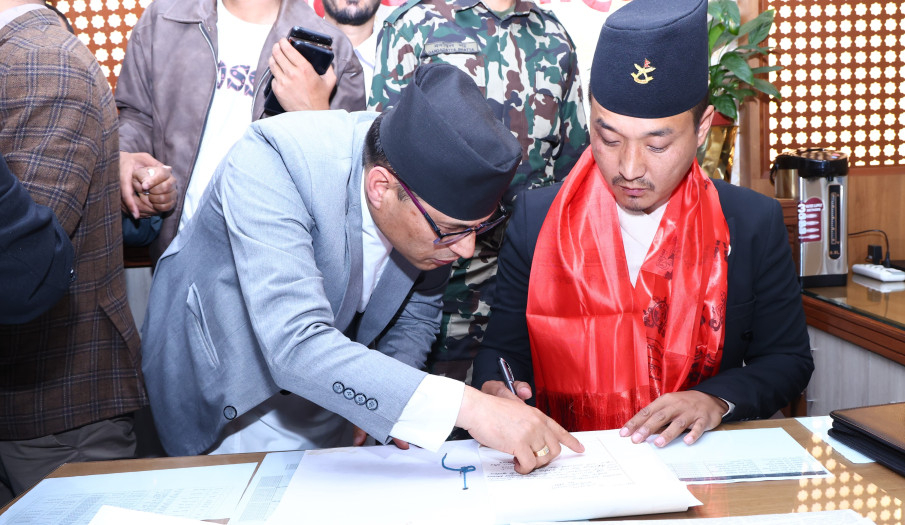
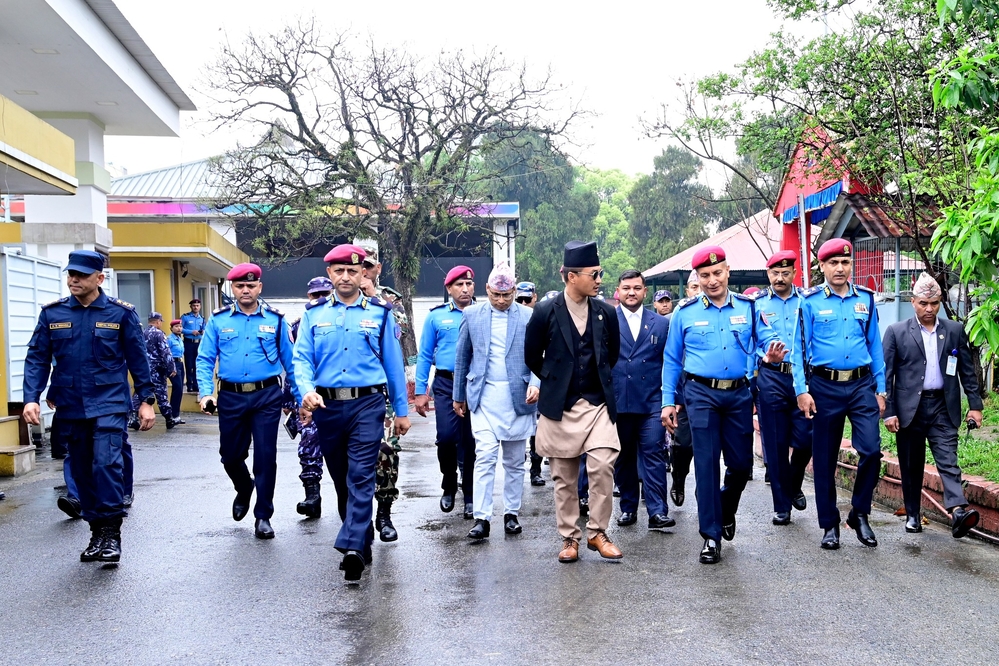
Home Minister Sudan Gurung assuming office at Singha Durbar, Kathmandu, on March 27. Photo: Courtesy of Ministry of Home Affairs
On the evening of his appointment, Gurung directed Nepal Police Inspector General Dan Bahadur Karki to immediately arrest former prime minister KP Sharma Oli and former home minister Ramesh Lekhak, both of whom have been implicated by the Gauri Bahadur Karki-led commission formed to probe the suppression of Gen Z-led protests in September. Following a security briefing advising restraint, he also held discussions with the Armed Police Force (APF) IGP Raju Aryal. Notably, Aryal had also been recommended for prosecution by the commission. Gurung was advised to proceed cautiously, as the legal arrest of leaders from the two old parties could trigger unexpected reactions.
Gurung, however, stood firm.
He personally visited the Nepal Police Headquarters in Naxal. According to security officials, after Gurung threatened to “stay at the headquarters” until the arrests were made, the secretary at the Ministry of Law and Justice was summoned late at night for consultations on legal procedures. After the minister stood his ground, police arrested Oli and Lekhak the next morning. Since then, Gurung has been among the busiest ministers in the government.
Home Minister Sudan Gurung visiting Nepal Police Headquarters in Naxal Photo: Courtesy of Nepal Police
His activities have extended beyond security matters. The day after his appointment, he visited Pulchowk in Lalitpur to select his ministerial residence. Since Sunday, Gurung has been staying in a building previously designated for Supreme Court Justice Nahakul Subedi. The building, along with another in the complex, had since March 3, 2023 been used only by Supreme Court justices and the chief registrar. The judiciary was reportedly not informed of Gurung moving in.
“The government has provided no formal information regarding placing other individuals in the residence of a justice,” said Bimal Paudel, chief registrar of the apex court.
Former justice Balaram KC criticised the arrangement. “The Constitution of Nepal provides the judiciary with the power of judicial review over executive actions under the principle of separation of powers. In such a context, ministers and judges should not live within the same premises. Living in the same compound is inappropriate,” he said.
On Saturday, March 28, a public holiday, staff from the Ministry of Urban Development were not on duty. Nevertheless, Gurung arrived at the Pulchowk-based residence complex. According to an aide to one of the justices, he entered the premises, asked about the justices, inspected vacant units, selected one, ordered it cleaned, and moved in by Sunday.
A day-by-day timeline of the home minister’s first week
Friday, March 27
Gurung unexpectedly secured the Home Ministry portfolio, even as Sunil Lamsal, an associate of Balendra Shah, and DP Aryal, vice-chair of the RSP and a close aide of Rabi Lamichhane, were also contenders. Although Gurung had expressed a preference for an “action-oriented” ministry, few expected him to be assigned national security responsibilities.
Shah reportedly chose him based on his advocacy for action against those responsible for the loss of lives and property during the Gen Z protests, particularly against then prime minister Oli and former home minister Lekhak. Upon taking the oath, Gurung announced that the recommendations of the Karki-led inquiry report would be implemented immediately.
“Once the Cabinet makes a decision, it must be implemented as per the prime minister’s direction; no one is exempted,” he said. Home ministry officials and police leadership did not anticipate such immediate pressure. After announcing a “one-door system” for ministerial work, Gurung began discussions on the arrests of Oli and Lekhak. “I haven’t seen such a persistent minister,” a ministry official said.
Saturday, March 28
Gurung remained at Police Headquarters until Oli and Lekhak were taken into custody, directing officers on handling possible consequences. Both the Nepal Police and the APF leadership instructed personnel to be on standby from 6 am. Senior Superintendent of Police (SSP) Ramesh Thapa said Oli was served an arrest warrant at his residence in Gundu at 6:10 am after a brief scuffle with UML cadres. Lekhak cooperated with the police.
Following the arrests, Gurung posted “Aayo Gorkhali” on Facebook. He then drove himself to Lalitpur Police Range in Jawalakhel, where SSP Hobindra Bogati briefed him. Gurung directed to adopt a policy of ‘zero tolerance’ against corruption and irregularities, claiming no one involved would be spared. Later, he visited Satdobato Police Circle, which had arrested Karna Bahadur Malla, a UML leader from Karnali province, on a rape complaint that afternoon.
Sunday, March 29
Gurung, who has criticised VVIP motorcades, visited the Singha Durbar, had lunch in the canteen, interacted with some people and took selfies.
Monday, March 30
During an address at Police Headquarters, IGP Karki highlighted the hardships faced by lower-ranking personnel, including issues with food allowances and uniform. “I call this uniform black rather than blue. We want it to be better than the one worn by guards at paddy warehouses,” he said, referring to the poor quality. Gurung stood up and applauded.
In his speech, Gurung discussed operational issues. “A plate of momos costs more than Rs201 [daily food ration amount for lower ranking police personnel]; how can a policeman’s nutrition be met with that amount?” he said. He invited officers to share grievances but warned against seeking transfers or promotions through him. “Don’t come to me asking for a transfer or promotion,” he said, adding that he intends to institutionalise such things.
Tuesday, March 31
Gurung visited the residence of an elderly man reportedly mistreated by UML cadres protesting their leader Oli’s arrest. A video of the incident had gone viral. Gurung said he was disturbed by the incident. Ram Sharan Sharma Bajgain, accused in the case, was arrested. The victim thanked the minister.
Wednesday, April 1
The new home minister visited Kathmandu Police Range at Bhadrakali, where investigations into Oli and Lekhak are ongoing. SSP Thapa said the minister instructed officers to work independently and transparently. Police also briefed him on damage suffered during the Gen Z protests. Gurung had earlier visited the same office to press for arrests during Sushila Karki’s premiership, even accompanying victims’ families. Police had then reported his “unnecessary pressure”.
Photo: Courtesy of Minister Sudan Gurung's Facebook.
Thursday, April 2
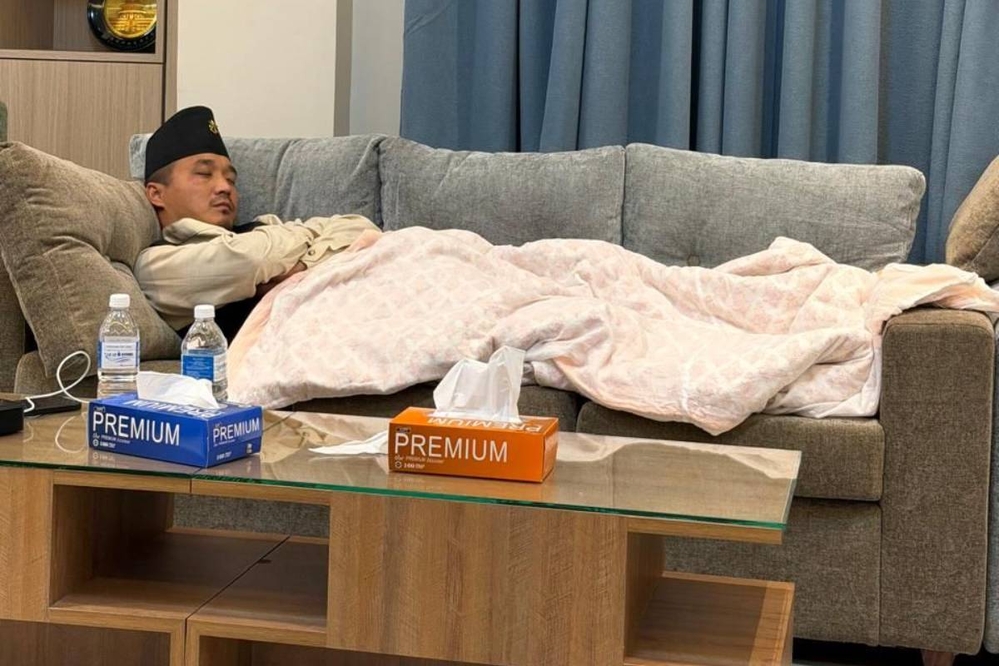
Before Parliament’s first meeting, Gurung visited Pashupatinath Temple. Despite heavy security, he stepped out of his vehicle to help ease traffic congestion. In Parliament, he tabled ordinances to amend laws related to the voters’ list, House of Representatives elections, and the Nepal Special Service Act. That evening, he slept on a sofa at the Home Ministry.
Friday, April 3
Early in the morning, Gurung visited Kathmandu Medical College in Sinamangal to meet those injured in the Gen Z protests. On the tour, he was accompanied by Nepali Congress leader and former lawmaker Sunil Sharma, the hospital’s proprietor. Doctors briefed him on the patients’ conditions, including one who was transferred from the National Trauma Centre.
Later that morning, Gurung posted a photo of himself sleeping on a sofa on Facebook, writing: “The creation cannot be greater than the creator; the government is not above the people.” While the message did not specify a context, it appeared to underscore his active and demanding first week in office.




 19.98°C Kathmandu