This transgender candidate found home and hope in Dharan
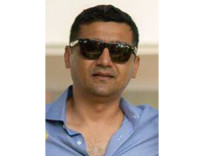
Shram Sanskriti Party chair Harka Sampang beat her by a margin of about 8,000 votes but that’s the closest an LGBTQ+ candidate has got to victory in direct contest. Photo: Courtesy of Sarin Tamang/Facebook
Vote counting at the Dharan City Hall commenced on the afternoon of March 7, two days after polling. In the tallies for wards 1, 2, and 3 of the Dharan Sub-metropolitan City, Sarin Tamang, the Rastriya Swatantra Party (RSP) candidate, held a steady lead.
“That initial lead gave me hope, but I wasn’t overconfident,” Sarin recalled. “There were still 24 wards [whose votes were] left to count.”
By the time the final results for Sunsari-1—which encompasses the sub-metropolitan city and surrounding areas—were announced, Sarin had secured 27,249 votes. While a remarkable figure for a transgender candidate, it was not enough for victory.
Harka Sampang, the former mayor and chairman of the Shram Sanskriti Party, defeated her by a margin of approximately 8,000 votes. Sarin came close, but ultimately fell short of winning the seat.
Sarin had secured 16,606 votes in the previous election, meaning her tally increased by around 11,000 votes in this election, reflecting a significant rise in her support base within a short period.
Sarin was one of the few LGBTQ+ candidates in this election. While candidates from the community in other constituencies struggled to gain votes, her performance stood out. Advocate Sagar Chemjong claimed that the level of support Sarin received demonstrates Dharan’s distinct social outlook. “The fact that a candidate from a sexual minority received such a massive support defines Dharan’s unique identity,” he said.
Political representation for the LGBTQ+ community in Nepal remains limited. In 2008, Sunil Babu Pant became the first openly gay member of Parliament through the proportional representation (PR) system. Pant had also filed a writ petition that led to a landmark Supreme Court directive recognising same-sex marriage in Nepal, marking a significant legal milestone for the community. Despite that early breakthrough, representation has remained sparse.
Following a gap of 18 years, Bhumika Shrestha recently entered the federal parliament, also through the PR system, becoming the first trans woman to do so. However, no member of the LGBTQ+ community has ever been elected through the first-past-the-post system. Although candidates from the community contested in constituencies such as Kathmandu-1, Rupandehi-2, Morang-4, Okhaldhunga-1, and Kavre-1 in this election, they failed to secure significant votes. Against this backdrop, Sarin’s performance in Dharan stands as the closest the community has come to achieving a direct electoral victory.
A life of resilience
The challenges faced by the LGBTQ+ community in Nepal extend far beyond political representation. Many continue to experience discrimination, exclusion, and violence in their daily lives. A study conducted two years ago by the Blue Diamond Society and UN Women found that 81 percent of individuals from sexual and gender minorities in Nepal have experienced some form of violence—physical, mental, sexual, or economic—at least once in their lifetime.
Various studies also show that such discrimination often begins within the family and extends to schools, workplaces, healthcare institutions, and even law enforcement agencies.
The experience of Namaste Shrestha (name changed) illustrates this reality. A teacher at a private school, she was forced to leave her job after facing continuous harassment from colleagues and the school administration due to her gender identity. With limited employment opportunities available, she eventually turned to sex work. However, even there, she was not free from abuse.
She recounted that during a police detention last September, officers made derogatory comments about her physical appearance and asked sexually suggestive questions, highlighting the extent of mistreatment faced even from authorities.
Sarin herself has not been immune to such experiences. Born in Motipur, Sarlahi, in 1973, she was previously known as Goma and lived as a daughter-in-law within a traditional household. She is also a mother of two children.
After spending 14 years in Israel as a migrant worker, she returned to Nepal. Her personal life underwent major changes following disagreements in her marital relationship, which eventually led to divorce. She later married Devika Karki and began living openly according to her gender identity as Sarin.
She said that embracing her gender identity allowed her to feel a deeper sense of freedom and authenticity, something she had long been denied.
However, this transition also brought significant risks. She began receiving death threats, forcing her to prioritise her safety. In 2018, she moved to Dharan, where her parents and brothers were already residing, seeking a safer environment.
During the Covid-19 pandemic, Sarin became actively involved in social work, participating in various community initiatives and volunteer efforts. It was through these grassroots engagements that she built connections with local residents and gradually entered the political sphere.
In the 2022 general elections, she contested from Sunsari-1 as an RSP candidate. She lost to Ashok Rai, the joint candidate of the CPN-UML and Janata Samajbadi Party alliance, by a narrow margin of 453 votes, despite securing 16,606 votes.
Although the loss was disappointing, Sarin drew encouragement from the level of support she received. “The voters didn’t reject me based on my identity; they embraced my plans,” she said. “That love from the people motivated me to stay in politics.”
She admitted that she had not expected to receive such acceptance in Dharan, especially given the discrimination she had faced elsewhere. Prior to contesting the election, she feared that people might attempt to defame her character or reject her because of her identity, which at times left her feeling discouraged. However, the response from voters proved otherwise.
As the election approached, she faced a wave of online abuse, including character assassination attempts and insensitive remarks targeting her gender identity.
She said that despite such attacks, often carried out through fake social media accounts, voters did not reflect that negativity in their behaviour and instead judged her based on her work and proposals.
During her campaign, Sarin focused on local issues such as development, education, employment, and social inclusion. She visited households, engaged directly with voters, and listened to their concerns.
“People asked me about my plans rather than my identity,” she said. “They shared their problems and expectations. That made me realise how strong the desire for change is among the voters.”
The ‘Dharan factor’
Sarin’s vote count increased by over 11,000 compared to the previous election. Asked whether this surge was due to a broader national wave in favour of the RSP, she dismissed the idea. “If it were just a wave, I would have won. This was a vote for Sarin,” she said.
Chandra Rai, chief of the Mahendra Multiple Campus, Dharan, attributes the city’s relatively liberal outlook to its historical and social context. He explained that the establishment of the British Gorkha Recruitment Centre around 1960 played a key role in shaping Dharan’s development.
The recruitment centre transformed Dharan into a hub of economic activity, migration, and cultural exchange. Over time, the city evolved into a transit point connecting the eastern hills and the Tarai.
Rai noted that Dharan’s demographic diversity, expanding educational institutions, and exposure to international cultures through foreign employment have contributed to a more open and inclusive mindset among its residents.
He added that returning “Lahures”—Nepali soldiers who served abroad—introduced new lifestyles, fashion, language, and social values, further influencing the city’s culture.
This openness, he said, has fostered greater acceptance of gender and sexual diversity compared to many other parts of the country, and such attitudes have been reflected in electoral outcomes.
Local voters echoed similar sentiments. Punam Rai, 54, of Dharan-12, said development and transparency matter more than a candidate’s identity. “We need development, jobs, and accountability. Who the candidate is or what their gender is does not matter,” she said.
Raghu Limbu, 40, also said many voters supported Sarin based on her ability and dedication rather than her identity. “She may not have won, but we voted for her because we saw her commitment to development,” he said. “Everyone has the right to live freely, so her gender identity is not the issue.”
Lila Bhujel, a social activist, believes Dharan’s voters have sent a clear message through their support for Sarin.
She said the number of votes Sarin received reflects the city’s rejection of the marginalisation faced by sexual and gender minorities elsewhere in the country and signals a more inclusive approach among Dharan’s electorate.
For Sarin, the journey continues. Despite the loss, the growing support she received has strengthened her resolve.
Having once faced threats to her life, she now finds acceptance in a city that values her work and vision. Although she fell short of victory, her performance marks one of the most significant milestones for LGBTQ+ representation in Nepal’s electoral politics through direct voting.
In Dharan, at least, her story reflects not just personal resilience, but a broader shift in public attitudes—one that may shape the future of inclusive politics in Nepal.




 12.97°C Kathmandu