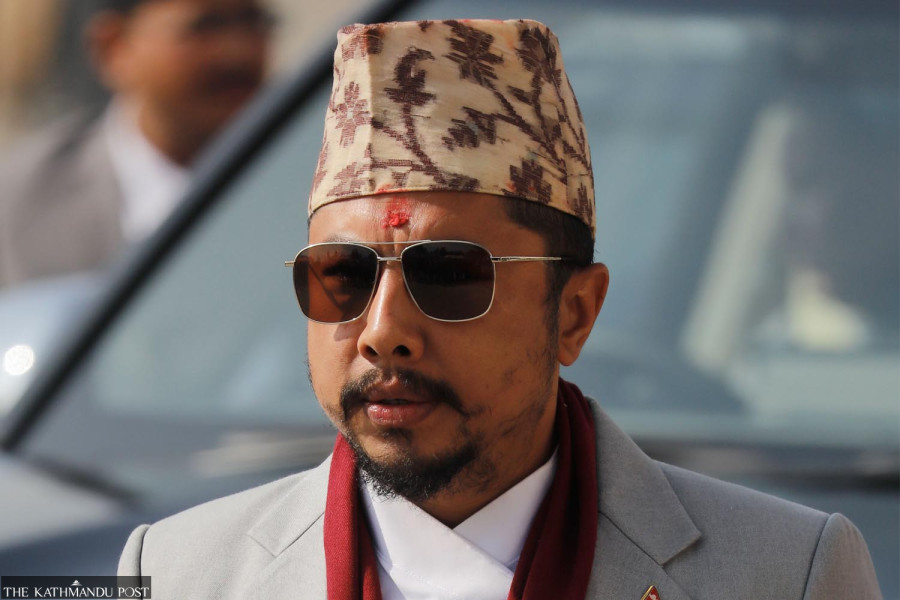
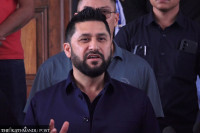
Newly appointed Energy Minister Biraj Bhakta Shrestha faces a host of longstanding challenges, including pressure from the private sector to open up electricity trade and power purchase agreements (PPAs). Biraj Bhakta Shrestha, energy minister Post Photo
Amid a host of challenges—such as reopening PPAs, signing agreements for run-of-the-river projects whose PPAs have been stalled, advancing reservoir-based hydropower projects, securing funding approvals for irrigation schemes, and ensuring reliable electricity supply for electronics—Shrestha has taken charge as Minister for Energy, Water Resources and Irrigation. He was elected from Kathmandu constituency 8 in the House of Representatives election held in February, securing 24,592 votes.
He had briefly served as minister for youth and sports in the Pushpa Kamal Dahal government in 2024.
Shrestha was previously a leader of the Bibeksheel Sajha Party before contesting on a Rastriya Swatantra Party (RSP) ticket. He had also served as a Bagmati Province assembly member representing Bibeksheel Sajha.
Inspired by the late Bibeksheel founder Ujjwal Thapa, Shrestha entered politics as part of a reform-oriented movement. Following the devastating 2015 earthquake, he was actively involved in relief and rescue efforts. He later parted ways with Bibeksheel Sajha after its then-chair Rabindra Mishra published a document advocating the restoration of the monarchy.
During his tenure as Minister for Youth and Sports, Shrestha sought to bring transparency and professionalism to the sports sector. He made the Anti-Doping Agency fully functional by appointing office-bearers, prioritised the development of e-sports, and introduced an integrated annual calendar of sporting events organised by the National Sports Council and various sports federations.
Coming from a business background, Shrestha now faces the critical decision of whether to open the long-awaited electricity trading sector to private participation or maintain the status quo. In Nepal, the Nepal Electricity Authority (NEA) has traditionally held a monopoly over electricity transmission and distribution. There have been persistent calls to liberalise electricity trade and allow private-sector participation, but the NEA has been reluctant to move in that direction. Experts say Shrestha is likely to face significant pressure from the private sector on this issue, making it a challenging task to navigate.
PPAs have been stalled following the introduction of the “take-and-pay” concept in the current fiscal year’s budget. The Ministry of Finance has already written to the Ministry of Energy and the Nepal Electricity Authority stating that PPAs can proceed in accordance with prevailing laws, based on analyses of demand, exports, and previously signed agreements.
His party, in its manifesto, has pledged to achieve 30,000 megawatts of installed electricity capacity within the next decade. To reach that goal, reopening PPAs will be an essential first step. According to Ganesh Karki, president of the Independent Power Producers’ Association of Nepal (IPPAN), the government must immediately resume PPAs to meet its energy targets. He adds that the new energy minister must demonstrate political, managerial and diplomatic competence.
One key challenge for the new energy minister will be resolving the dispute over dedicated and trunk line electricity dues. Although load-shedding ended several years ago, various manufacturing firms and factories continue to refuse payment of dedicated and trunk line tariffs from the load-shedding era.
Per capita electricity consumption reached 465 kilowatt-hours in 2025. The ruling party has set a target of increasing annual per capita electricity consumption to 1,500 kilowatt-hours by 2035. Achieving this target would require adding 1,035 kilowatt-hours within the next decade—an ambitious goal that experts say will pose a significant challenge for Minister Shrestha if he is to meet his party’s commitments.
The Cabinet has recently approved the investment modality for the 1,200-megawatt Budhigandaki Hydropower Project, which was designated a national pride project in the fiscal year 2012-13. The government also needs to advance major reservoir and semi-reservoir projects, including the 1,902-megawatt Mugu Karnali and the 454-megawatt Kimathanka Arun projects. Since such large-scale projects require billions in investment and have not attracted strong interest from the private sector, securing both financing and market access will be another test for the energy minister.




 14.81°C Kathmandu