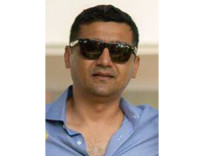
Newly appointed Minister for Health and Population, Mehta faces a formidable challenge: overhauling a health system weighed down by funding shortages, administrative inefficiencies, and persistent governance problems. Nisha Mehata, health minister Post photo
Nisha Mehta, who entered politics from the nursing profession, was appointed health minister on Friday after becoming a proportional representation lawmaker from the Rastriya Swatantra Party (RSP). Even while active in healthcare, she had been associated with the party since its early days as an ordinary member.
During the 2022 general elections, the RSP had also included her on its proportional representation list, though she did not secure a parliamentary seat at that time. This year, however, she entered the federal parliament as part of a new generation of political leaders and was entrusted with the health portfolio in the government led by Prime Minister Balendra Shah.
After completing a master’s degree in nursing from a university in Gwalior, India, Mehta returned to Nepal and worked at Birat Teaching Hospital in Biratnagar. She also served as administrative secretary of the Nepal Police Wives Association in Koshi province, where she played a key role in organising health camps, women’s and children’s welfare programmes, and community-focused initiatives.
Her leadership in energising the organisation and expanding its community outreach has been widely recognised. Supporters say the experience demonstrated her management abilities as well as her capacity to connect with local communities.
As the Health Ministry welcomes its new minister, Nepal’s flagship health insurance programme, designed to provide affordable, quality healthcare to citizens, is facing a severe financial crisis.
Former health secretary Tanka Barakoti says reforming the insurance scheme should be Mehta’s top priority. “The programme requires major restructuring,” Barakoti said.
The government allocated Rs10 billion for the programme in the current fiscal year. However, about Rs11 billion was required just to clear outstanding payments from the previous year. The government provided an additional Rs1 billion grant, but the entire amount was used to settle old dues, according to the Health Insurance Board.
Premium collections have reached only around Rs3.5 billion, while the program’s expenditures stand at roughly Rs2 billion per month, or Rs24 billion annually. Without a sustainable funding source, officials warn the program may not continue.
Barakoti suggests expanding the program by mandating participation from workers in the organised sector—including civil servants, teachers, security forces, and private-sector employees—an arrangement already envisioned in the law but never implemented.
“Health insurance cannot survive solely on government subsidies,” he said.
The Rastriya Swatantra Party’s election manifesto also pledges reforms to strengthen the health insurance system.
Staffing shortages and systemic gaps
Another major challenge is the shortage of doctors and health workers in public hospitals. According to Barakoti, staffing levels in government health institutions have not been expanded since 1991, despite dramatic population growth and increased demand for services.
“The health sector is operating with the same workforce it had decades ago,” he said. “Hiring staff on temporary contracts cannot ensure quality healthcare.”
Provincial hospitals, he said, face overwhelming patient loads but lack adequate medical personnel.
Nepal’s constitution guarantees free basic healthcare services to citizens, but many people still struggle to access affordable treatment. The rising cost of medicines and medical care has placed additional burdens on households.
Barakoti also stressed the need to strengthen local health systems so that basic services can be delivered effectively at the municipal level while ensuring that specialist care reaches remote areas.
Although the government has pledged to establish basic health services in every ward [subdivision of a local unit], around 130 wards still lack such facilities.
Limited funding remains another obstacle. Experts say at least 10 percent of the national budget should be allocated to health, but Nepal currently spends only about 4 percent.
Meanwhile, deaths from non-communicable diseases such as cancer, heart attacks, and strokes are increasing and require greater investment in prevention and treatment.
“Only sustained investment in health will yield results,” Barakoti said.
Governance and transparency issues
Irregularities in the procurement of medicines, equipment, and medical supplies represent another persistent problem in Nepal’s health sector.
Experts say curbing corruption and ensuring transparency in procurement will be one of the most critical responsibilities of the new minister. In the past, procurement scandals have even implicated health ministers themselves.
Former health minister Dr Sudha Sharma, during her tenure, had pledged to make procurement fully transparent and to strengthen the distribution system for free medicines.
Experts also say Nepal urgently needs a law on informed consent in healthcare, which would shift the system from being doctor-centred to more patient-centred.
Dr Arun Upreti of the Karnali Academy of Health Sciences in Jumla argues that mandatory social audits in hospitals could improve transparency, accountability, and service quality.
He also emphasises the need for targeted investment in infrastructure, human resources, equipment, and supply systems in remote and underserved areas.
“Health workers serving in remote regions must be given special incentives, security, and career development opportunities,” he said.
Political interference and institutional reform
Political patronage in appointments at health academies and major hospitals has also weakened governance in the sector.
Officials say the practice of dividing key posts along party lines has led to mismanagement and arbitrary decision-making within health institutions.
Introducing open and competitive recruitment systems could help address the problem, they say.
Nepal has also yet to enact a comprehensive Health Service Act in line with the federal constitution. Such legislation would integrate health systems and personnel across federal, provincial, and local levels.
Adding to the ministry’s difficulties, its main building was severely damaged during the Gen Z protest last September. This forced officials to shift operations to a prefab facility built by the World Health Organisation inside Singha Durbar.
Restoring the ministry building will be another responsibility awaiting Mehta.
In its election manifesto, the Rastriya Swatantra Party pledged to strengthen the health insurance programme and expand access to quality healthcare.
The party also committed to integrating all social protection health programmes into a single-window system, while expanding insurance coverage to include medicines, treatment services, and mental health care.
It proposes shifting the health system’s focus from treatment to disease prevention, particularly for non-communicable diseases such as cancer.
The party also plans to establish at least one advanced disability rehabilitation centre in each province, improve early screening for autism and other neurodevelopmental disorders, and expand mental health services nationwide.
For Mehta, translating these ambitious pledges into concrete policies will be the true test of her leadership—and of whether Nepal’s health system can finally deliver affordable, quality care for all citizens.




 12.67°C Kathmandu