Central figure of Gen Z movement helms home ministry
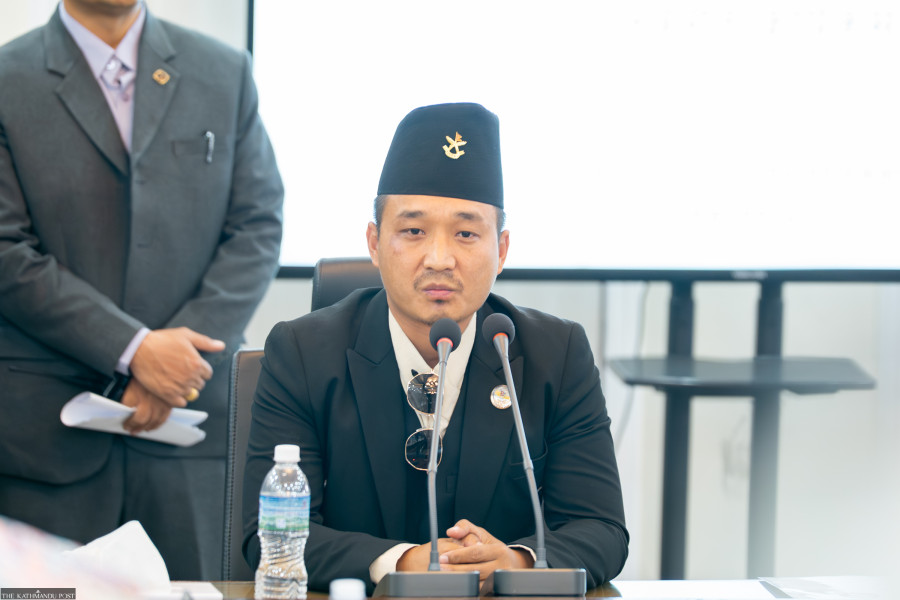
The 37-year-old Gen Z movement figure faces reform demands and major institutional challenges while tasked with restoring law and order and implementing the Karki Commission report. Sudan Gurung, home minister Post photo
Sudan Gurung has assumed the powerful position of Minister of Home Affairs in a government led by Balendra Shah, marking a significant political development. Gurung, 37, rose to prominence during the Gen Z protests, which reshaped Nepal’s political landscape.
However, his rise has not been without controversy. Gurung faces allegations of inciting youth and contributing to the escalation of the protests. His name has also surfaced in connection with the violence that followed, as the Gauri Bahadur Karki-led inquiry commission recommended investigations into those involved in the September 9 incidents. Despite these concerns, he has now been entrusted with the leadership of the ministry responsible for enforcing law and order.
His appointment came after prolonged internal discussions within the RSP. Party chair Rabi Lamichhane and senior leader Balendra Shah reportedly disagreed over the choice of home minister, with Shah insisting on Gurung. Other contenders, including vice-chair DP Aryal and General Secretary Sunil Lamsal, were also considered, but the party ultimately reached a consensus in Gurung’s favour.
Gurung’s political journey is relatively recent. He joined the RSP only shortly before filing his candidacy and successfully won a seat in the House of Representatives from Gorkha-1. According to sources, his appointment as home minister was a direct choice of Prime Minister Shah. After taking the oath of office from President Ramchandra Paudel, Gurung immediately assumed responsibility at the Ministry of Home Affairs.
During his campaign, Gurung pledged to address the difficulties faced by families of Gen Z martyrs and injured individuals, promising that they would no longer have to approach multiple government offices for assistance. He also committed to ensuring that findings from the inquiry into the September incidents would be used as a basis for prosecution and accountability. Ironically, he now leads the ministry tasked with implementing those very recommendations.
The Ministry of Home Affairs is one of the most powerful institutions in Nepal’s government structure. It oversees internal security, law enforcement, crime prevention, disaster management, and administrative coordination across the country. Under its jurisdiction fall key institutions such as the Nepal Police, the Armed Police Force, the National Investigation Department, and the Department of Immigration. It also supervises all 77 District Administration Offices.
Because of its extensive authority, the ministry is often considered the centre of power within the government. Political leaders frequently lobby for control of this ministry, as it plays a decisive role in shaping internal governance and security policy. In coalition governments, control of the Home Ministry is often allocated strategically among major political parties.
In the current context, Gurung faces a wide range of challenges. His leadership comes at a time when the country is still dealing with the aftermath of the Gen Z protests and subsequent violence. The commission formed to investigate the incidents has already recommended actions against several high-level political and security officials. Managing the implications of these recommendations while maintaining institutional stability will be a major test.
Another significant challenge is reforming the country’s security and administrative systems. Nepal’s security agencies, including police and intelligence services, have long been criticised for being influenced by political interests rather than operating strictly under the rule of law. Transfers, promotions, and decisions within these institutions are often alleged to be driven by connections rather than merit.
The Police Act and other outdated legal frameworks governing security forces are widely seen as inadequate for modern needs. Gurung is expected to initiate legal reforms to ensure that recruitment, promotion, and operational decisions are based on competence and professionalism.
Similarly, the Armed Police Force, established in 2001, still operates under outdated legislation that has not been significantly updated to match evolving security challenges. This limits its operational efficiency and adaptability in addressing border security and internal threats. Reforming its legal framework is another priority.
The National Investigation Department, Nepal’s intelligence agency, also faces criticism for its limited effectiveness. Established under an old legal structure, it has struggled to detect and respond to major security developments. Strengthening its intelligence-gathering capacity and restructuring its operational units are seen as urgent needs.
The report of the Karki Commission has highlighted several structural weaknesses. These include a lack of coordination between security agencies, insufficient intelligence sharing, inadequate non-lethal equipment, and weak command structures at the district level. The commission has recommended establishing integrated systems such as a centralised intelligence fusion centre and coordinated security operations mechanisms.
Political interference in the Home Ministry and its subordinate agencies remains a long-standing issue. Administrative officials, including Chief District Officers, are often appointed based on political influence rather than professional expertise. Gurung is expected to shift this practice toward a merit-based system, ensuring that experienced and qualified officials are assigned key roles.
Border security is another critical concern. Nepal’s open borders, especially with India, create vulnerabilities related to smuggling, illegal movement, and security risks. Strengthening surveillance, improving coordination, and deploying resources effectively are necessary to address these challenges.
Gurung also faces the task of restoring public trust in law enforcement. Past controversies involving misuse of power, corruption, and political interference have damaged the credibility of security institutions. Cases such as the Bhutanese refugee scam and visit visa-related corruption have involved senior officials, further eroding public confidence.
At the same time, the government faces the challenge of balancing accountability with stability. While the commission has recommended action against top political and security figures, the Home Minister must ensure that investigations proceed fairly without undermining morale within security institutions.
Federalism adds another layer of complexity. Although Nepal adopted a federal system eight years ago, key laws related to security coordination and civil service adjustment remain incomplete. Provinces have expressed dissatisfaction over the lack of legal frameworks governing police and administrative integration. Addressing these gaps will require coordination between federal and provincial governments.
Another important area is disaster management. Nepal is highly vulnerable to natural disasters such as earthquakes, floods, and landslides. Ensuring efficient response systems, preparedness, and resource allocation is part of the ministry’s responsibilities.
Gurung’s lack of prior experience in high-level governance is also seen as a challenge. Having not previously held a major public office, he must rely on collaboration with bureaucrats and security officials to effectively manage the ministry. Building trust within the system will be essential for effective governance.
Finally, Gurung’s leadership will be judged by how he handles accountability, reform, and security in a politically sensitive environment. He must navigate competing pressures from political actors, security institutions, and public expectations while ensuring transparency and the rule of law.
In this context, his performance in the coming months will be closely watched, as it will determine both his political credibility and the effectiveness of the ministry he now leads.




 14.81°C Kathmandu