



 17.57°C Kathmandu
.jpg)


Fri, Oct 16, 2026
National
Nepali migrant workers face uncertainty as West Asia conflict disrupts jobs
Flights cancelled, visas delayed as Gulf-bound youths remain stuck amid escalating tensions.
bookmark![]()
Post photo
Prakash Baral, Menuka Dhungana, Ram Prasad Chauhan & Nawaraj Shrestha
Published at : March 22, 2026
Updated at : March 22, 2026 10:35
Ramechhap/bardiya/baglung/achham,
Devendra Kumar Shrestha, 38, from ward 9 of Manthali Municipality in Ramechhap, worked at a five-star hotel in Dubai’s Jumeirah Village Circle, earning over Rs80,000 a month. When the US-Israel–Iran conflict escalated, and Iran launched missile and drone strikes near Dubai, his family grew concerned. On the 12th day of the hostilities, Shrestha took leave and returned home.
Though he was not directly affected, Shrestha said repeated explosions made his neighbourhood shake “like an earthquake”. He added that the situation in Dubai was not as dangerous as portrayed on social media. “Misleading videos are circulating online. Families of Nepali workers in the Gulf are getting scared after watching fake content. The reality on the ground was not that frightening while I was there,” he said.
His wife, Kalpana, said she could not sleep properly until he returned home. “There were constant reports of the war. I was worried only about my husband. We insisted he come back, and now we feel relieved,” she said. “The income was good, but I do not want to send him abroad again until the situation returns to normal.”
Shrestha is on leave until April 20, but remains uncertain about returning to Dubai. He is in regular contact with friends there, including his younger brother, who also works in the city. “Friends say hotel rooms are emptying and business is slowing down. I am being advised not to return immediately,” he said.
Gyanu Kumar Shrestha, 29, from ward 9 of Manthali Municipality, is still in Dubai. He works at a five-star hotel, earning around Rs200,000 a month. He said the war has begun to affect Dubai’s tourism sector, with a decline in hotel occupancy. He is currently on leave.
“Hotels are almost shut. There are no customers. I have not worked for 15 days,” he said. “There are occasional sounds of explosions outside, but the situation here is not as frightening as it seems.”
According to Gyanu, despite 20 to 25 missiles being launched each day, daily life has not been significantly affected. “Missiles are often intercepted in the air, so there is no direct risk. The government sends security alerts on mobile phones,” he said. “Once, a fragment of a bomb fell near the hotel.” However, he said the psychological impact of insecurity has hit the tourism sector hard. With fewer tourists arriving, large hotels are facing operational difficulties.
About 500 employees have been affected after the hotel where Gyanu works was temporarily shut down. “The company pays salary during official leave, but there is no income beyond that. We do not know when the situation will improve,” he said. He added that he may return home if the situation continues for long. “Exaggerated videos on social media are creating tension at home. My parents keep asking me to return. Because of family concerns, I am also thinking of coming back,” he said.
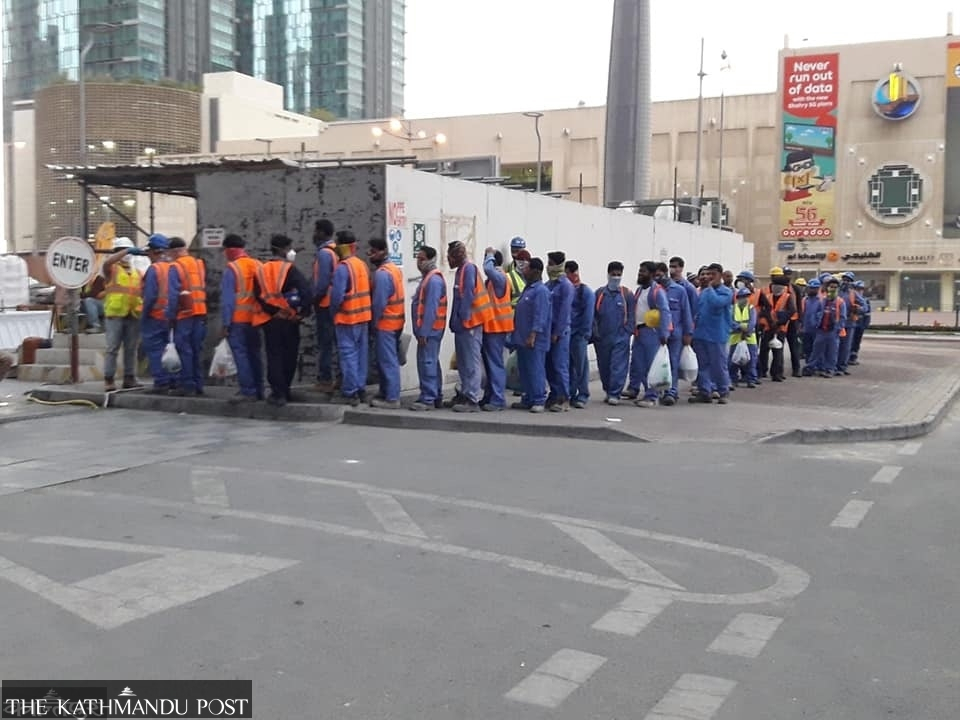
“Although the war has affected tourism, other sectors are operating normally,” he said. The US-Israel alliance launched strikes on Iran on February 28, after which Iran began retaliatory attacks. Iran has been firing missiles and drones towards countries, including the UAE and Qatar. As the conflict drags on, families of Nepalis working in West Asia have become increasingly anxious. Youths who had returned on leave or were preparing to travel to Gulf countries with new labour approvals have also had their plans disrupted due to the war.
In Bardiya, Krishna Bahadur Saru Magar, 34, from ward 3 of Gulariya Municipality, returned nine months ago after working in Saudi Arabia for two years. Despite working hard abroad, he did not earn enough and had planned to go to Dubai.
He had taken a loan of Rs200,000 from a cooperative for the trip. All formalities, including labour approval and medical tests, were completed, and his visa had arrived. Only the flight ticket remained to be booked. But the war has now made his departure uncertain.
“I was preparing to fly after the elections. When I contacted the manpower agency in Kathmandu, they asked me to wait. Due to tensions in the Gulf, I am now stuck at home,” he said.
Sahanur Alam Sai, from ward 12 of Gulariya Municipality, who was preparing to go to Saudi Arabia, has also been forced to stay home. “I returned home three months ago after working in Malaysia for three years,” he said. “It has been a month since I passed the interview to go to Saudi Arabia, but the visa has been delayed due to the war there.”
In Baglung, Jhakendra Gharti, from ward 7 of Badigad Rural Municipality, had been working in Saudi Arabia for two years. When he returned home on a two-month leave in mid-January, the situation there was normal. Now, the conflict between the US-Israel alliance and Iran has affected his employment. He had a ticket to return to Saudi Arabia on March 13, but the flight was cancelled, forcing him to return from Kathmandu.
With uncertainty over when he can travel again, he has begun to worry about repaying his loans.
His neighbour, Om Bahadur Gharti, is also facing difficulties. He had planned to return abroad in the second week of March after coming home on leave.
“I did not get much education. I worked as a labourer in Saudi Arabia,” he said. “There is nothing here. No jobs are available.” He said he went to Saudi Arabia two years ago after farming no longer supported his household. He still needs to work to repay loans taken for migration and to support his family.
Even as the conflict continues in West Asia, there has been no decline in the number of passport applications at the District Administration Office in Baglung. However, most youths are uncertain about what lies ahead, said Janak Gaire, information and counselling officer at the Migrant Resource Centre. “Most young people are asking whether they will still be able to go to Gulf countries,” he said. “We do not have answers ourselves. We are advising them to wait and travel only after the situation improves.”
Prakash Baral
Prakash Baral is the Baglung correspondent for Kantipur Publications.
Menuka Dhungana
Menuka Dhungana is the Achham correspondent for Kantipur Publications.




Most Read from National

Flood sweeps away houses, bridges in Gorkha
Torrent of black mud and rocks engulfs settlements along Budhigandaki

From blankets to handmade dolls, two foreign women bring comfort to flood survivors
British Gurkha veterans issue ultimatum to Nepal government over long-standing grievances

Budhi Gandaki flood washes away three bridges in Gorkha
Editor's Picks

Constitutional Bench caught in seniority, ‘pick and choose’ dispute

A Dom boy’s long road to becoming a doctor
From blankets to handmade dolls, two foreign women bring comfort to flood survivors

News Analysis: When institutional defence exposes institutional fault lines

It’s a bird … it’s a plane … it’s the Indian ambassador’s farewell tweets
E-PAPER | October 16, 2026

×