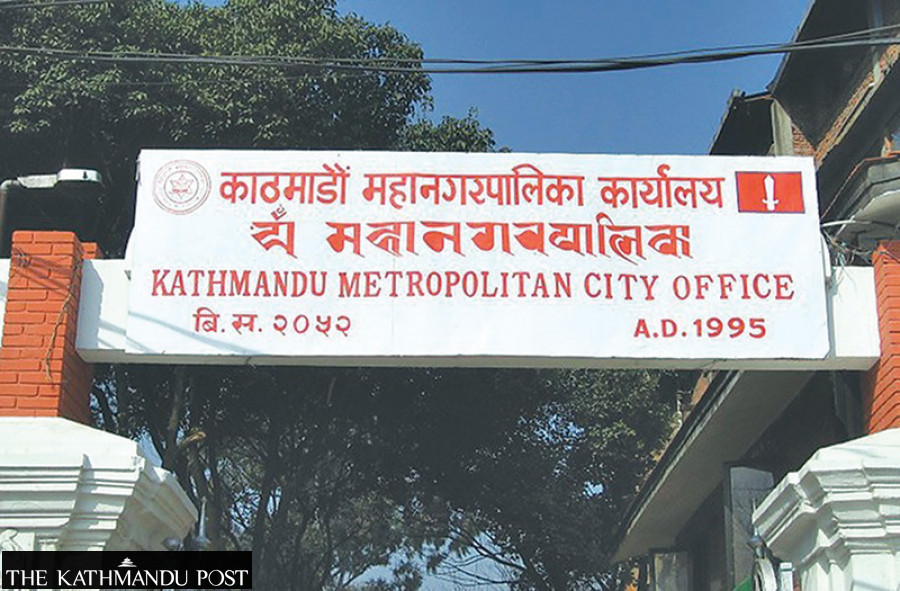
The Environment Department of the Kathmandu Metropolitan City (KMC) has decided to task private companies with collecting, segregating, and disposing of household waste generated in the metropolis.
For this, the department has signed agreements with multiple private companies.
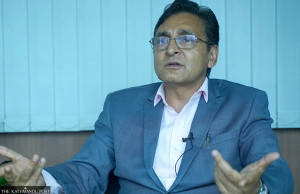
“All legal procedures to hand over the responsibility of household waste collection have been completed, and agreement papers have been signed,” said Sarita Rai, chief of the department. “Private companies have yet to start collecting waste due to our inability to set up all the required waste transfer stations.”
Under the agreement, the city office will construct six additional waste transfer stations in various locations of the metropolis and hand them over to the private companies. The metropolis has its own waste transfer station at Teku and another such station is being constructed in the Thapathali area, which is expected to be completed soon.
“Once the Thapathali station is ready, private companies will start collecting household garbage,” said Rai. “We have identified five additional sites for waste transfer stations, but have not been able to acquire the land. We hope this will not be a problem now, as the person [former mayor Balendra Shah] who envisaged proper waste management for the city is set to lead the federal government.”
The metropolis’ 32 wards have been divided into seven blocks for the purpose of waste collection. Thapathali area falls under cluster no 2, which includes the metropolis’ wards 1, 11, 28 and 29, covering areas like Thapathali, Singha Durbar, Bagbazar, New Baneshwar, and Ghattekulo, among others.
Earlier the department had planned to hand over only six of the seven blocks to private companies, but later decided to include all seven. Rai said that the department itself will continue waste collection from core areas, including wards 12, 18, 19, 20, 21, 22, 23, 24, 25 and 26, and hand it over to private companies.
Metropolis officials say that the decision is in line with the waste management vision of former mayor Shah, whose party secured a landslide in the March 5 parliamentary elections and Shah is set to become the country’s new prime minister.
Private companies will take only degradable waste to landfill sites. Officials hope the new decision will help reduce the quantity of waste and make landfill management more efficient.
Since 2024, KMC has been collecting segregated household waste from 10 wards—5, 6, 7, 10, 12,20, 22, 23, 24 and 27. For this, KMC has outfitted some of its garbage trucks with separate compartments to keep waste sorted.
Degradable waste materials are being turned into compost at the KMC’s waste transfer station at Teku. Reagents are used to speed up the composting process.
The compost is used in KMC-managed gardens and parks, and distributed to local residents. KMC also generates revenue by selling non-degradable but reusable waste.
Waste segregation at the source was one of the solutions promoted by former mayor Shah to address Kathmandu’s chronic garbage problem. The Kathmandu Valley produces over 1,200 tonnes of solid waste daily, with nearly 60 percent originating from the KMC alone. Experts estimate that 60 percent of the organic waste originating in the Valley can be converted into compost, while the remaining 30 percent of non-degradable waste can be recycled.
All 18 local units in the Kathmandu Valley—Kathmandu, Lalitpur, and Bhaktapur, among others—along with some local units from Kavrepalanchok, dump household waste at the landfill site in Bancharedanda.
KMC plans to charge Rs300 per household for waste collection per month. Charges will increase based on the number of kitchens in a household or the volume of waste produced.




 25.92°C Kathmandu