If there are no unexpected developments, the Rastriya Swatantra Party (RSP) will form the government on March 27.
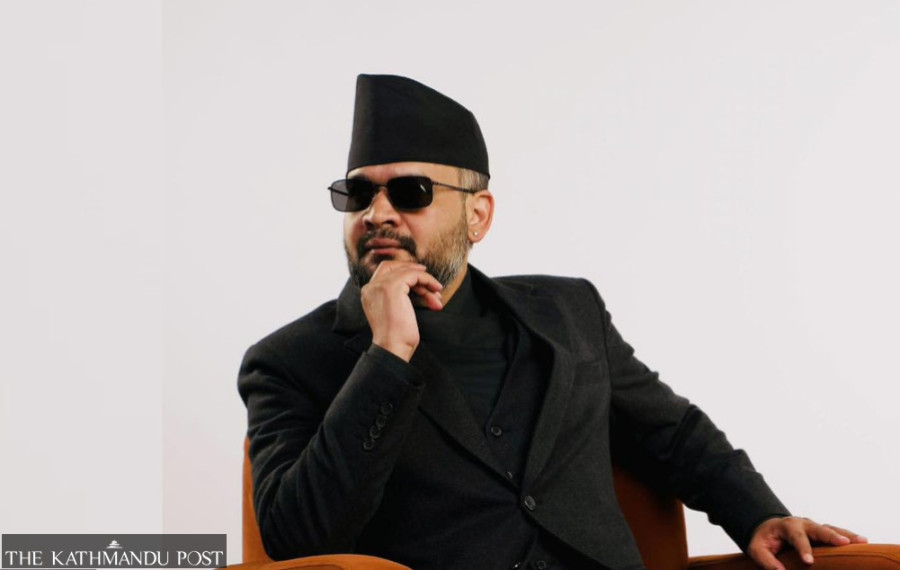
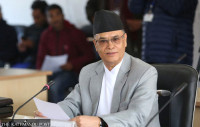
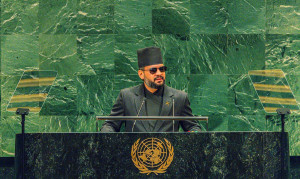
The party, which emerged as the largest force in the House of Representatives, commanding nearly a two-thirds majority, had contested the March 5 polls projecting Balendra Shah, the immediate past mayor of Kathmandu, as its prime ministerial candidate. He is a senior leader of the party.
“Our senior leader will be sworn in as the prime minister on March 27,” said an RSP leader. The decision follows a seven-point agreement reached on December 28 between RSP chairperson Rabi Lamichhane and Shah.
As per the agreement, Lamichhane would lead the party, while Shah would head the government if the party secured the mandate to form one after the elections.
The party’s electoral manifesto has stated that its Cabinet would not exceed 18 members, even though the country’s constitution allows up to 25 members.
In the March 5 snap parliamentary elections, the four-year-old party secured 182 seats, of which 125 were through the first-past-the-post (FPTP) and the remaining 57 came from proportional representation (PR) system.
Even though there is no barrier for the party to form the government before the lawmakers are sworn in, the RSP is preparing to wait until the swearing-in.
The Parliament Secretariat, on Thursday, held discussions with all the parties represented in the federal parliament to get their consent to hold the oath-taking ceremony for newly elected members. Ekram Giri, spokesperson at the secretariat, said there has been an agreement to hold an oath-taking ceremony at 2 pm on March 26.
A meeting of the RSP senior leaders on Thursday evening agreed to start the government formation process immediately after the new lawmakers are sworn in.
The meeting was attended by party chair Lamichhane, senior leader Shah, and vice-chairs Dol Prasad Aryal and Swarnim Wagle.
“Basically, the meeting on Thursday was focused on election review and the formation of the government,” party General Secretary Kabindra Burlakoti said.
Addressing the closing session of the party’s two-day orientation for its lawmakers on Wednesday, party chair Lamichhane claimed that there was yet to be formal discussions on government formation within the party.
He also instructed the newly elected MPs not to speculate in the media about Cabinet formation. Talking to the Post on Wednesday, the party’s deputy general secretary, Bipin Acharya, had said the party, on Thursday, would decide whether to stake claim for the government before the lawmakers’ oath—or after that.
President Ramchandra Paudel will appoint Shah as prime minister under Article 76 (1) of the Constitution of Nepal. It authorises the President to appoint the leader of a parliamentary party that commands a majority in the House of Representatives as the prime minister. The RSP will first have to elect Shah as the parliamentary party leader before putting forward the claim for the government.
RSP senior leaders say the formality of electing Shah as the parliamentary party leader would be completed immediately after the swearing-in of lawmakers.
With President Paudel receiving the final election report on Thursday, he is open to appointing the RSP’s parliamentary party leader as the prime minister at any time the party chooses. Yet, the party has decided to wait until the lawmakers’ swearing-in.
In 2017, CPN-UML leader KP Sharma Oli was appointed prime minister before being sworn in as a lawmaker, and this had met with controversy. The Supreme Court later ruled that it was not mandatory to take the oath as a lawmaker to become prime minister.
“The President is open to appointing RSP parliamentary party leader as a prime minister any time it stakes a claim by fulfilling due process,” said Baburam Kunwar, Paudel’s legal advisor.




 15.26°C Kathmandu