In a dramatic reversal of decade-long political dominance, the Rastriya Janamorcha has lost its traditional stronghold of Baglung, a hill district in Gandaki Province, in the March 5 vote.
Despite having an electoral alliance with the Nepali Communist Party, its candidate failed to garner enough votes to even retain the security deposit (Rs10,000).
As per the poll alliance, Janamorcha leader Krishna Prasad Sharma Adhikari contested from Baglung constituency 1 with the party’s traditional ‘glass’ election symbol, while NCP candidate Gyamnath Gaire ran in Baglung-2 with the ‘star’ election symbol.
However, the alliance failed to translate into votes. Adhikari finished fourth and lost his deposit, while Gaire came third. Candidates of the Rastriya Swatantra Party won both seats.
The election law requires a candidate to secure at least 10 percent of the total valid votes to retain the deposit. In constituency 1, where 47,061 votes were deemed valid, Adhikari needed 4,706 votes but secured only 4,521. Sushil Khadka of the RSP won the seat with 20,927 votes. Nepali Congress candidate Bhim Bahadur Shrees Rana received 11,944 votes, while CPN-UML’s Hira Bahadur Khatri secured 8,640.
In Baglung-2, RSP candidate Som Sharma won with 12,647 votes, defeating Nepali Congress’s Tek Raj Paudel, who secured 11,868. NCP’s Gaire finished third with 10,709 votes.
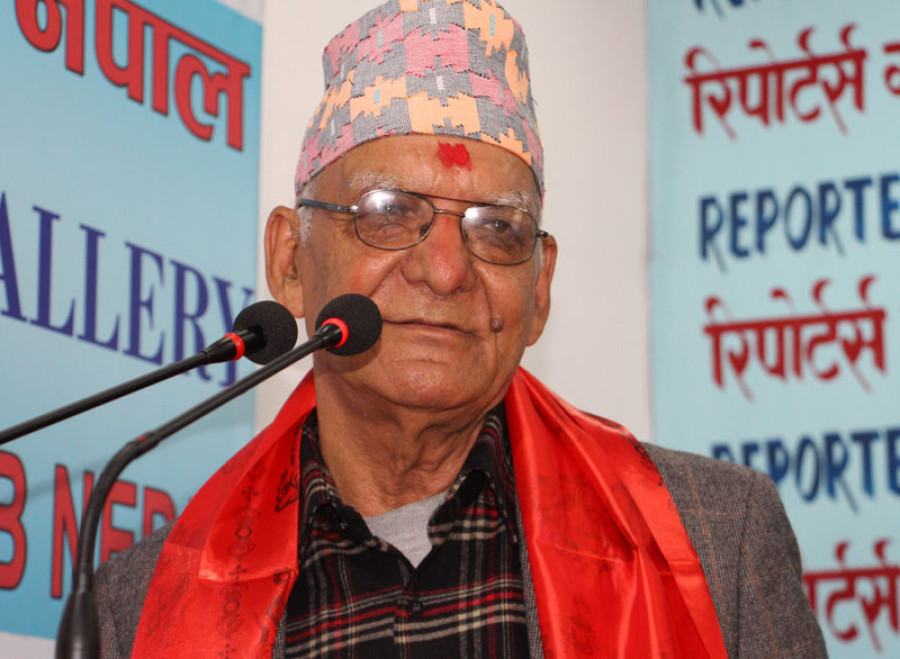
Baglung has long been associated with veteran leftist leader and chairman of the Rastriya Janamorcha, Chitra Bahadur KC, whose influence once made the district a bastion of the leftist party. Elections here traditionally revolved around the party and its rivals.
KC, known for his blunt political commentary and staunch opposition to federalism, built a loyal base of support in the hills of Baglung. He has consistently argued that Nepal cannot sustain a federal system. This time, however, KC did not contest the first-past-the-post race, citing family reasons, and instead stood as a proportional representation candidate.
To enter the parliament through proportional representation, the Rastriya Janamorcha must secure at least three percent of the nationwide vote, a threshold analysts say increasingly unlikely for the party to reach given its poor performance across the country. Although the party fielded around 70 candidates nationwide, the poll results show disappointing outcomes in most constituencies.
According to voters in Baglung, the political landscape changed during the March 5 elections. Younger voters looked for new faces and different ideas, they said. The left candidates’ defeat in the Baglung election signals the end of an era.
KC, however, blamed the results partly on what he called growing foreign influence. He alleged that youth trained through non-governmental organisations and international NGOs had shaped public opinion during the campaign.
When such forces influence institutions, media and experts, the outcome cannot be different, KC alleged, saying that the broader national environment has turned unfavourable for his party. He insisted Baglung alone could not resist a nationwide political shift.
“There is an attempt to turn Nepal into a [foreign] military base to pit China and the United States against each other through the [exiled Tibetan spiritual leader] Dalai Lama,” KC said. “When the political environment across the country, from east to west, has been shaped according to American interests, it was unrealistic to expect that we alone could win in Baglung.”




 19.47°C Kathmandu