Following the Gen Z movement in September last year, the government led by KP Sharma Oli was displaced, Parliament was dissolved, and new elections were scheduled for March 5. Since then, a shift had been brewing in the mind of Amresh Kumar Singh.
Internal conflict over leadership was peaking within the Nepali Congress. Singh’s relationship with former party president Sher Bahadur Deuba and current president Gagan Thapa was strained, while he was closer to leader Shekhar Koirala. At the time, Singh said, “If Shekhar Koirala becomes Congress president, I will take a ticket from Congress. If not, I will contest under the bell symbol of the Rastriya Swatantra Party (RSP).”
Sceptical about winning as an independent for a second time, he weighed his options between the Congress and the RSP. When Koirala did not push for a special general convention, and Thapa became president, Singh decided to join the RSP, having already maintained contact with RSP chairman Rabi Lamichhane.
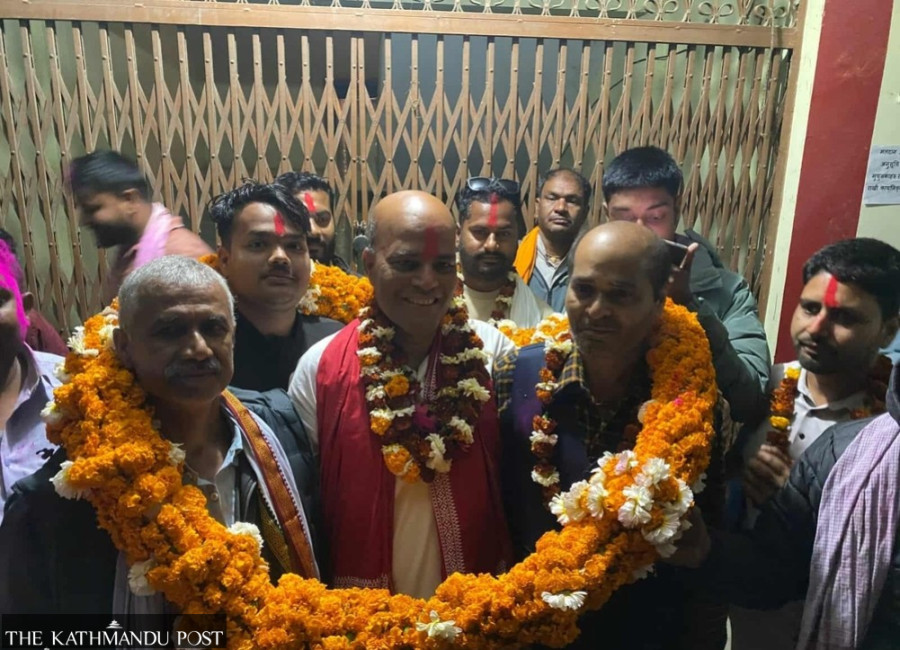
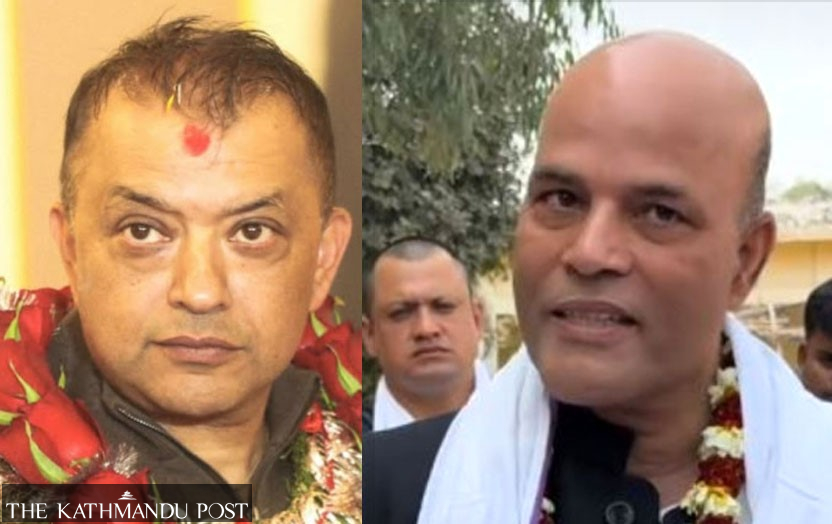
Confident of securing an RSP ticket, he bypassed any attempt to negotiate with Thapa and contested under the RSP banner. By defeating the Congress president, he has firmly reclaimed his place at the centre of national politics.
Singh is known for analysing almost every political development through the lens of conspiracy theories. When Thapa moved from Kathmandu-4 to Singh’s home constituency in Sarlahi-4, Singh dismissed him, saying, “Every outsider who came here to contest has lost. Now it’s Gagan’s turn.”
During the campaign, Singh predicted he would win by a margin of 10,000 votes. The final result exceeded his expectations as he scored 35,688 votes, maintaining the margin of victory by 12,857 votes. Thapa got 22,831 votes from the constituency.
This marks Singh’s fifth parliamentary journey. Since 2008, he has won four direct elections (2013–2026), with 2008 being his only defeat. Before that, he served as a nominated member of the Interim Parliament.
The rift between Thapa and Singh is long-standing. After rebelling in 2022 when Deuba denied him a ticket, Singh never returned to Congress. That year, he ran as an independent and defeated the official Congress candidate, Nagendra Kumar, by 1,764 votes.
For this election, his confidence was bolstered. “This time I have the RSP, the popular Bell symbol, the power of the Gen Z uprising, and leaders like Balen and Rabi by my side,” he frequently claimed.
While Thapa campaigned with a detailed manifesto and expert-led studies on education, health and infrastructure, Singh relied more on imagery and slogans. He used the popular image of Balen Shah, whom the RSP had declared as its future prime ministerial candidate.
At a large Madhesh gathering in Janakpur on January 19, Singh formally joined the RSP and sensationally declared he would self-immolate if Balen Shah did not become prime minister. His campaign relied less on development plans and more on slogans such as: “This time, Balen’s government; quietly mark the Bell. The Bell is in every house.”
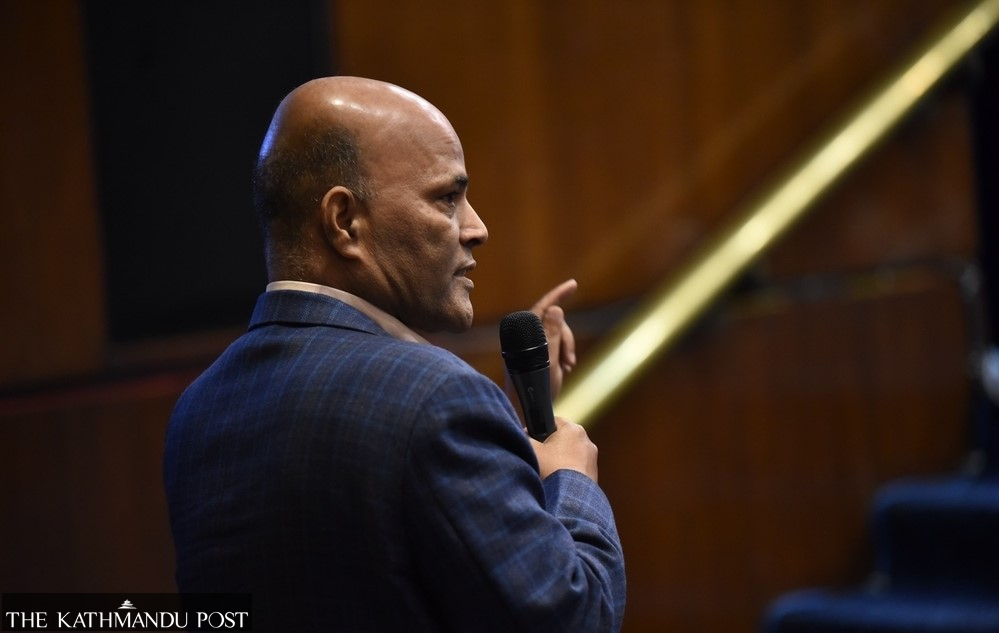
Singh is as controversial as he is well known. His aggressive style and conspiracy-based analysis often spark debate. In Parliament, he created a distinct identity—usually supporting the government during votes of confidence but fiercely opposing it thereafter. Notably, on February 13, 2022, he removed his shirt and undershirt in the middle of a session after the Speaker refused to let him speak.
Singh has a PhD in International Relations from Jawaharlal Nehru University, Delhi, and before entering politics full-time, he taught at Amrit Science Campus and other institutions.
Long known for his close ties with figures in the Indian political establishment, he once enjoyed what observers described as “kitchen access” to top leaders across Nepali parties. However, his influence waned following the rise of the Bharatiya Janata Party in India.
Born in Balara in Sarlahi, Singh knows the geography and local power structures of the region intimately.
To him, Thapa was an outsider. Singh often taunted, “Gagan doesn’t know the names of five villages here. He can’t speak five lines of the local language. He doesn’t know five local plants. How can he win?”
The results appeared to echo his claim. Singh continues his parliamentary career for a fourth term as an elected member, while Thapa’s fifth consecutive bid was halted after shifting constituencies.
As Singh predicted, he is back in the spotlight for his victory, while Thapa faces mounting moral pressure within his party following the defeat.




 14.82°C Kathmandu