Voter arrivals create ‘Dashain atmosphere’ in villages
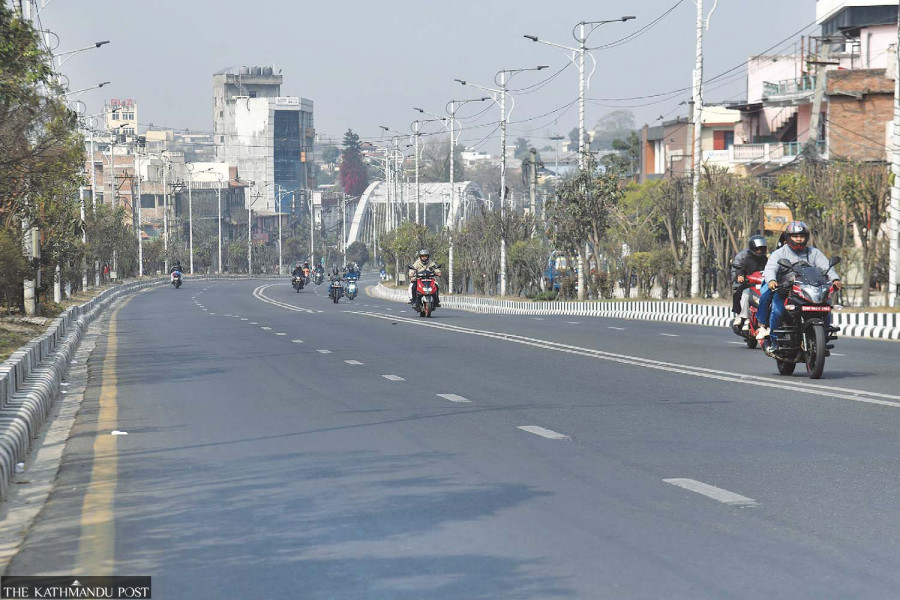
By Wednesday evening, over 900,000 residents had left the Valley to cast their votes in parliamentary election. Fewer vehicles were on Kathmandu’s roads, Wednesday. Photo above shows the Araniko Highway section at New Baneshwar. Police data show around 900,000 people had left the Valley for elections by Wednesday evening. Deepak KC/TKP
Dinesh Shrestha, originally from Bidur of Nuwakot and now living in Kathmandu, is returning to his hometown on Wednesday evening with his wife to cast their votes in Thursday's parliamentary elections.
Shrestha, who runs a dealership of pharmaceutical products, said that he has already sent his elder daughter ahead for the elections.
“I don’t have much inclination towards any particular political party, nor do I expect substantial change after the election,” said Shrestha. “However, I believe voting is our constitutional right, and elections help to renew bonds with the village and villagers.”
Like Shrestha, over the past few days, hundreds of thousands of people residing in Nepal’s big cities and urban centres have returned to their home villages to vote and reconnect with relatives and neighbours.
According to the Metropolitan Traffic Police Division, around 800,000 people from the Kathmandu Valley had left by Wednesday morning.
“More people are expected to head back to their home districts for the elections,” said Sunil Jung Shah, deputy superintendent of police. “Seeing so many people return home with their families feels like a major festival.”
Such a mass return of people usually happens only during Dashain, Nepal’s biggest festival, when over a million people leave the Valley.
Major political parties—the CPN-UML and the Nepali Congress—have arranged free buses from Machhapokhari on Wednesday to help voters reach their villages. Those who had initially decided not to return were also encouraged to go after being offered free bus tickets.
“I had decided not to return to the village to vote this time,” said Thuli Maya Tamang, who is originally from Saugaun in ward 7 of Bidur and lives in Kathmandu. “But I changed my mind when my children and neighbours called me yesterday [Tuesday] evening and informed me about the free vehicle.”
Tamang, 71, is an asthma patient and had been living in Kathmandu for the past few months for treatment.
Dil Kumari Tamang, 70, Thuli Maya’s sister-in-law, was also returning to her village for the election. She said that she lives with her children at Jarankhu [in northwestern Kathmandu] and visits her village only during major festivals.
“When I came to the Balaju Buspark, I saw many people returning home to cast their votes,” said Tamang. “It felt like Dashain all over again.”
Dawa Tamang, a resident of Thulo Hakku of Parbatikunda Rural Municipality, Rasuwa, said returning home for the election is about more than just voting.
“Neither the candidates know us, nor do we believe they will do anything for us,” said Tamang, 56. “Still, a festival-like atmosphere has been created. My seven-member family is returning to our village, and this trip reconnects us with our village and fellow villagers.”
Tamang added that more than 30 people from Thulo Hakku are travelling home with him from Kathmandu.
“We are assured that we will be brought back to Kathmandu free of cost after the election,” said Tamang.
The government has declared public holidays on March 4, 5 and 6 to allow voters to return home and cast their ballots. According to the Election Commission, 18,903,689 citizens are eligible to vote on March 5. The updated tally shows an increase of 915,119 voters compared to the 2022 elections. Data from past elections, however, show that, on average, around 35 percent of registered voters do not vote.
Nepal is holding snap parliamentary elections under a civilian government, following the anti-corruption Gen Z uprising in September that toppled the then coalition government of the CPN-UML and Nepali Congress.
Arjun Poudel is a health reporter for The Kathmandu Post. Before joining the Post, he worked for Sagarmatha Television, Naya Patrika, Republica and The Himalayan Times.




 24.12°C Kathmandu