Raute community stays aloof from March 5 elections
The nomadic group in Karnali shows no interest in voting as candidates skip their settlement; the community continues its traditional lifestyle, relying on woodcraft and forest produce for livelihood. Post photo
As villages across Nepal gear up for the March 5 House of Representatives elections, there is little sign of political activity in the Raute settlement.
The Raute, a nomadic indigenous community living in Karnali and nearby districts, remain largely disconnected from government institutions. Community members say they are unfamiliar with political parties, leaders, and how elections are conducted. Even though campaign vehicles travel along the Madan Bhandari Highway, candidates do not enter the Raute settlement. Community members say they have never voted and do not intend to. Their issues are also missing from party manifestos.
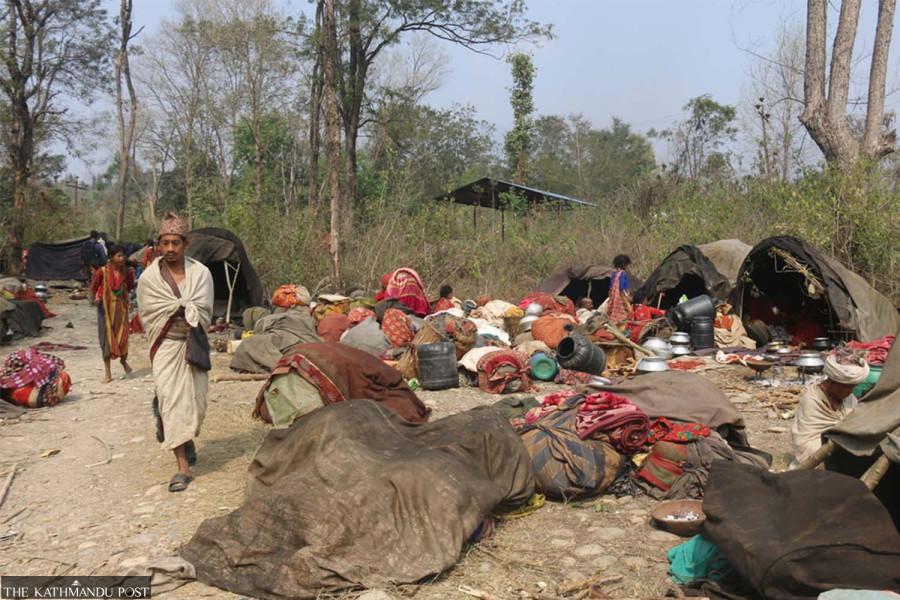
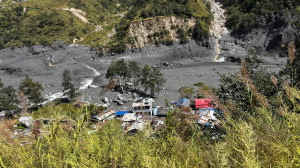
The group recently relocated from Lamana forest in ward 7 of Lekbeshi Municipality, Surkhet, after an eight-year-old girl died in a fire on February 9. They are now settled near the Khahare stream, on the border of ward 2 of Lekbeshi Municipality and ward 14 of Gurbhakot Municipality. The Raute traditionally bury their dead and move their settlement afterward.
Balal Shahi, 30, said he had no idea what voting meant. “What is voting? I don’t know,” he said, showing the wooden crafts he had made. “Buy this instead. I’m in a hurry to sell.”
Seventy-year-old Mahamukhiya Bir Bahadur Shahi said he has never voted and does not intend to. He recently passed the role of mukhiya to Prakash Shahi, citing his old age. In the Raute system, the mahamukhiya is an honorary position, while the mukhiya holds executive authority.
The community has three clans—Raskoti, Swabanshi, and Kalyal. Each clan selects a mukhiya through internal consensus and tradition, with only married men who have children eligible for the role. Teacher Lal Bahadur Khatri said Prakash Shahi was chosen after phased discussions with men, women, and youths, and formally assumed the role on December 9.
The Raute settlement comprises 40 households with 133 members. Of these, 81 would be eligible to vote. Forty-two-year-old Mukhiya Shahi said he was aware of some political figures. “Some say Balen Shah will win, while others say KP Oli will be victorious,” he said. “I also know Rabi Lamichhane has contested. But we do not vote, no matter who runs.”
The Raute sustain themselves by crafting wooden utensils and trading them for food and clothing in nearby markets. They also hunt monkeys and gather forest produce, rarely interacting with the outside community. Despite their isolation, the community has maintained strict internal rules and customs, with each household expected to contribute to shared tasks and follow the guidance of the mukhiya and mahamukhiya. Children are taught traditional skills from a young age, ensuring the continuity of their unique nomadic lifestyle.
In 2008, they travelled to Kathmandu and met then-President Ram Baran Yadav, then-Prime Minister Pushpa Kamal Dahal, and then-Finance Minister Baburam Bhattarai. Their main demand in those meetings was an increase in social security allowances, highlighting the community’s focus on survival and welfare over politics.




 14.81°C Kathmandu