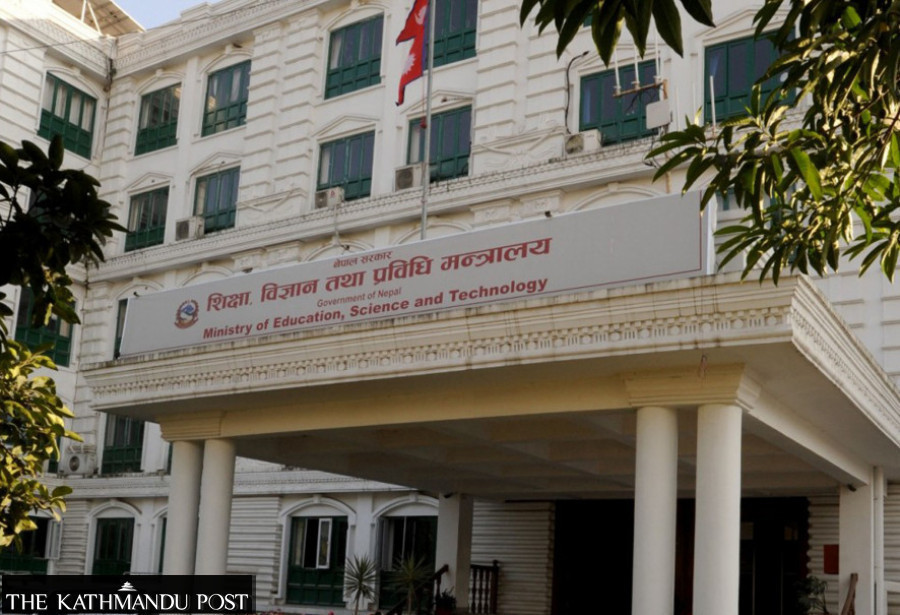
Amid delays by the education ministry in advancing an investigation into education consultancies accused of sending students to unauthorised institutions in the United Arab Emirates, victimised students have submitted a fresh plea to the ministry.
Thirty-two students who were placed in 11 different colleges and universities not recognised by the UAE’s Commission of Academic Accreditation (CAA) have filed complaints against 13 education consultancies.
The students, who have returned from the Gulf nation after finding they were cheated, have been protesting regularly under the banner “Scan the Scammers” demanding justice.
“We lodged a fresh complaint as per the education minister’s suggestion. He has pledged to take concrete steps towards investigation within a week,” said Biswajeet Kumar Yadav, coordinator of the campaign. It was in early November that the students submitted a written complaint to the education ministry.
Other than halting the issuance of No Objection Certificates for non-accredited institutions, the government has taken no initiative to provide justice to the students, according to the victims.
Starting on November 14, the education ministry has been issuing No Objection Certificates only for institutions accredited by the CAA.
In their joint complaint, the victimised students have demanded a high-level committee with their representation to investigate the matter. Immediate arrest of the education consultancy owners who misled the student and action against the government officials who decided to grant No Objection Certificates for the unauthorised institutions are the other demands the students have forwarded.
They have also demanded compensation for the affected students, and action against the UAE-based institution in coordination with the UAE government.
After the complaints of duping, the Nepali Embassy in Abu Dhabi noted that several education consultancies in Nepal have been sending students to universities, colleges, and training centres based in UAE’s free zones.
According to complaints received, many of these institutions fail to meet academic standards, falsely claim affiliations with foreign universities, lack proper infrastructure, and operate temporarily from rented apartments before shifting students to online classes. Students also allege that promised facilities, education quality, and employment opportunities were never delivered.
Those affected include Nepali students currently living in the UAE as well as many who have already returned home without completing their studies. A significant number came back after classes were irregular or nonexistent, promised jobs not given, and discovery that the institutions were little more than training centres.
Students claim that Nepal-based education consultancies acted as agents for these unaccredited institutions, promoting them as international universities and promising part-time employment sufficient to cover living and education costs.
Many of these institutions are registered in free zones such as Ajman, Sharjah, and Dubai, where business setup is relatively easy and academic oversight limited. Students allege that this loophole allows fake universities to operate with minimal scrutiny.
Promotional materials and websites often depict large campuses and modern facilities, but in reality, several institutions function from just a few rooms, with most classes conducted online.
As per international media reports, the UAE government itself is preparing to overhaul the country’s education sector with an enforcement of stern legal provisions. According to a Tuesday report in the Gulf News, the UAE government has issued a federal decree on higher education and scientific research, introducing a comprehensive legislative framework designed to strengthen governance across the sector, enhance quality and competitiveness, and better align educational outcomes with the evolving needs of the labour market.
“The decree prohibits the establishment or operation of any higher education institution, or the promotion or provision of higher education programmes and services, without obtaining institutional licensure from the education ministry. This requirement applies equally to institutions operating within free zones, which must also secure local permits and programme accreditation, alongside clearly defined coordination and oversight mechanisms between federal and local authorities,” reads the report.
The institutions that duped the Nepali students were only registered with the Knowledge and Human Development Authority but not with the education ministry. All the higher education institutions in the UAE’s mainland are approved by the ministry and registered with the ACC.




 14.7°C Kathmandu