Two years after Jajarkot quake, Salyan begins damage assessment
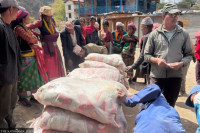
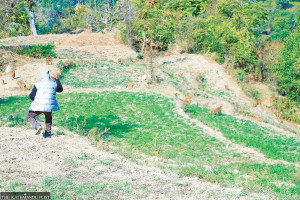
Over 2,000 displaced families yet to be distributed first instalment of the Rs50,000 emergency relief announced immediately after the quake. A team of technicians collecting details of the damage caused by the earthquake in Darma Rural Municipality, Salyan. Post Photo
More than two years after the November 3, 2023 earthquake devastated large parts of Jajarkot, Rukum and Salyan districts, authorities in Salyan have only now begun collecting detailed damage assessments needed for housing reconstruction.
The process, long delayed due to the government’s decision to prioritise Jajarkot and Rukum while leaving Salyan largely unattended, has started after the National Disaster Risk Reduction and Management Authority (NDRRMA) trained municipal technicians earlier this week. Officials say field teams have now been mobilised across affected areas to document structural damage.
According to district authorities, the quake destroyed 4,374 structures in Salyan—4,081 in Darma, 129 in Kumakh, and 152 in Tribeni Rural Municipality and Bagchaur Municipality combined.
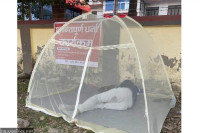
More than 2,000 displaced families have not received even the first instalment of the Rs50,000 emergency relief announced immediately after the quake. Many continue to live in patched-up houses and temporary shelters.
Chief District Officer Netra Prasad Subedi said the failure to prioritise Salyan meant detailed assessments could not begin earlier. “We will now collect data from all 4,374 registered beneficiaries. Damage will be classified into five categories—habitable, repairable, partially damaged, fully damaged, and requiring new construction—and reconstruction grants will be allocated accordingly,” he said. The process is expected to be completed within a month.
Engineer Pushkar Karki of Darma Rural Municipality said that assessment teams have already begun work in ward 2, visiting every household and using mobile devices to record data on the spot. “We aim to complete assessments in all wards within a month,” he said.
Local representatives say the start of assessments has raised hope among families who have waited years for reconstruction support. Darma chair Nim Bahadur KC stated that many victims were forced to remain in unsafe houses due to the government’s delayed response.
“Now that assessments are underway, we will provide all possible assistance to ensure timely reconstruction,” he said.
Bagchaur Municipality has also deployed technical teams to inspect damaged homes. Acting chief administrative officer of the municipality Hari Bahadur Kathayat said affected families would receive government relief once assessments confirm their eligibility for the support.
The slow progress in Salyan mirrors long-standing systemic issues in Nepal’s disaster governance highlighted repeatedly after major earthquakes.
Fragmented mandates, ineffective coordination and delays in operational decisions often leave local governments and victims waiting for basic support—fault lines that resurfaced once again in the aftermath of the 2023 quake.




 27.97°C Kathmandu