National Human Rights Commission draws government’s attention to control dengue spread
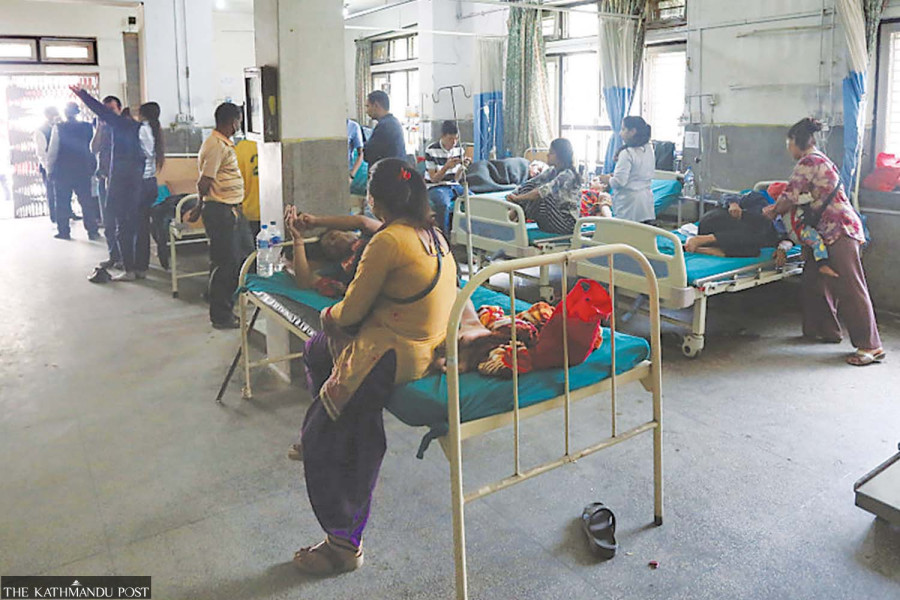
The constitutional human rights watchdog says it is concerned over the impact on the health and right to live of people due to the nationwide outbreak of the disease. Dengue patients at Sukraraj Tropical and Infectious Disease Hospital at Teku in 2019. Post File Photo
The National Human Rights Commission has drawn the attention of the government to make efforts to control the spread of dengue with priority.
Issuing a statement on Wednesday, Tikaram Pokharel, spokesperson for the commission, cautioned the government that the outbreak can take the form of an epidemic if preventive measures are not taken immediately.
“The commission urges all three tiers of the government to coordinate and mobilise enough manpower for mosquito search and destroy drive, ensure cleanliness, raise public awareness and conduct other activities for the control and prevention of dengue for safeguarding the right to health and the right to live with dignity,” reads the statement.
The constitutional human rights watchdog said it is concerned over the impact on the health and right to live due to the nationwide outbreak of dengue.
Of the 77 districts of the country, 74 have reported cases of infection from the dengue virus. At least 10 persons have succumbed to the disease and over 13,000 people have been infected since the start of 2023, according to the Epidemiology and Disease Control Division. But the number of deaths and infections reported in the official figures are far less than real numbers as all cases of infection and deaths are not reported to the division.
Officials say a majority of the cases were reported in July. Sunsari, Morang and Dhading are the three districts mostly affected by the virus. Sunsari, which is the epicentre of the virus outbreak, recorded 5,041 cases of infection.




 9.89°C Kathmandu