Minister says Education Act a priority. Others too said so, did nothing
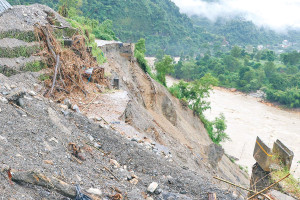
Local officials say the primary reason behind the delay in issuing the law is federal government’s reluctance to delegate authority to local governments. Post File Photo
Minister for Education, Science and Technology Ashok Rai on Wednesday claimed that promulgation of the Federal Education Act was the present government’s top priority.
This was hardly an original claim as his predecessors had asserted the same. Speaking before the Education and Health Committee of the House of Representatives, Rai said the Cabinet was in final discussions to endorse the bill before presenting it in Parliament.
“It would be registered in the House if the secretary and joint-secretary were not on leave,” he said. “Promulgation of the bill is one of the top priorities of the government.”
Rai said the Cabinet will endorse the bill once the education secretary and a joint-secretary who are abroad to attend a conference return home.
Education Secretary Ram Krishna Subedi also claimed at a function on Friday that the bill was being discussed in the Cabinet, which will give it a final shape. Rai is the sixth education minister since the promulgation of the Constitution of Nepal. Like him, all his predecessors had listed formulation of the law as their top-most priority.
However, none of them could promulgate the Act, which is one of the laws crucial for a full-fledged implementation of federalism institutionalised by the constitution.
The constitution has delegated all the authority to manage school education to the local units. An Act and regulations are prerequisites to the implementation of the constitutional provision. In the absence of the law, local governments have not been able to exercise their constitutional authority.
“It has been eight years since the constitution authorised the local government to manage entire school education but because there is no law, we haven’t been able to exercise the authority fully,” said Bhim Prasad Dhungana, president of the Municipal Association Nepal who is also the mayor of Neelkantha Municipality in Dhading.
The constitution empowers local governments to make laws. However, the charter also says such laws will be void to the extent they contradict the federal law. On several occasions in the past, the federal government has issued circulars to the local governments ordering them not to make laws until related federal Acts are formulated. A writ petition challenging the circular is sub judice in the Supreme Court.
Local representatives say the primary reason behind the delay in issuing the law is the federal government’s reluctance to delegate authority to local governments. The bureaucracy is also complicit in the delay, they say. They claim lack of a constitutional deadline for the promulgation of the laws like the one related to the fundamental rights is also responsible.
The constitution made it mandatory to have the laws related to the fundamental rights in place within three years since its promulgation. It also said the laws that contradict the constitution must be revised within a year since the first meeting of the federal parliament. The government prepared the laws within the deadline. However, since there is no such timeline for the promulgation of federal laws, successive governments have become negligent in having them in place.
As with the education Act, successive governments have also been reluctant to promulgate the Federal Civil Service Act, the absence of which has created problems for provincial governments to hire civil servants.




 21.69°C Kathmandu