Political parties agree to transfer unsettled impeachment motions to new Parliament
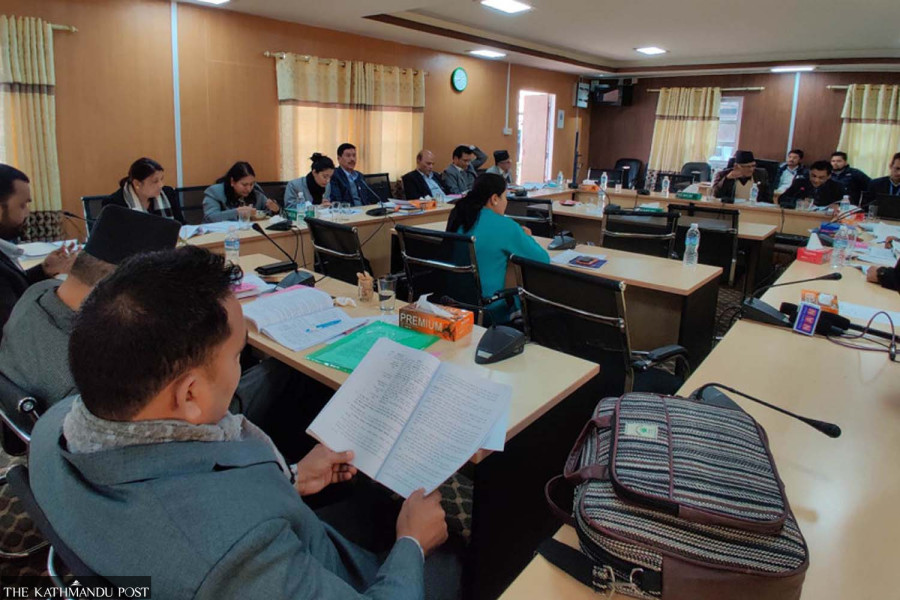
Consensus reached on a new provision to conclude impeachment motions against President and Vice-president within three months and those against chief justice and others within five months. Post Photo
Political parties on Tuesday agreed to transfer impeachment motions to the new House of Representatives if the term of the House expires without concluding the motions. The decision has to be approved by the lower house.
The regulation drafting committee of the lower house last week reached a consensus to conclude impeachment motions against the President and Vice-President within three months, and within five months if the motions are against the chief justice, justices, members of the judicial council and constitutional commissions.
However, the parties were earlier undecided as to what should be done if an impeachment motion is brought when the term of the lower house is less than five months.
“The impeachment motion shouldn’t be kept indecisive. It needs to be concluded from the new House if the previous one doesn’t have adequate time,” said Chitra Bahadur KC, who is chairing the drafting committee as the eldest member.
The provision, however, will not be applicable to the impeachment motion against former Chief Justice Cholendra Shumsher Rana. On February 13 last year, the then ruling party lawmakers had registered the impeachment motion against Rana in the lower house. However, the term of the House expired without concluding the motion. As there is no legal clarity on whether the motion gets transferred to the House elected from November 20 polls, the motion hasn’t been presented in the lower house.
In addition to the impeachment motion, the parties were earlier divided over whether or not lawmakers be suspended if they are arrested or remanded in custody for criminal offences. However, cross-party lawmakers have reached a conclusion to have a provision in the regulation to not suspend lawmakers even if they are arrested or remanded in custody for criminal offences. There has been an agreement that lawmakers would be suspended only after they are convicted.
Lawmakers from the Nepali Congress, the CPN (Maoist Centre), and the CPN (Unified Socialist) were for suspending lawmakers once they were arrested. The Rastriya Prajatantra Party, Janata Samajbadi Party, and other Madhesh-based parties, however, opposed suspending lawmakers until they were convicted by the Supreme Court.
After rounds of discussions big parties agreed to the demands of the fringe parties that a lawmaker shouldn’t be suspended until convicted by the court. Accused lawmakers, however, will not be allowed to perform the duties as members of the House and won’t receive their pay and perks. “Sometimes cases are lodged against lawmakers with the intention of defaming them. They, therefore, shouldn’t be suspended as long as the court doesn’t convict them,” said Pradip Yadav, a member of the Lower House from the Janata Samajbadi Party.
In 2018, it took months for the regulation drafting committee to finalise the regulation of the lower house following sharp differences among parties over whether or not to suspend lawmakers accused of crimes. However, they reached an agreement not to suspend such lawmakers but strip them of their benefits and privileges as lower house members. Nepal Congress lawmaker Mohmmad Aftab Alam and CPN (Maoist Centre) lawmaker and then Speaker Krishna Bahadur Mahara were not suspended as lawmakers even though police had lodged murder and rape cases, respectively, against them. While Mahara got a clean chit, Alam’s case is still sub judice.
The same provision will continue in the present House.
“All issues on the regulations have been sorted out. Our committee will endorse it on Wednesday if the parties don’t bring new issues at the meeting,” said KC, who also is a lawmaker of Rastriya Janamorcha.




 19.79°C Kathmandu