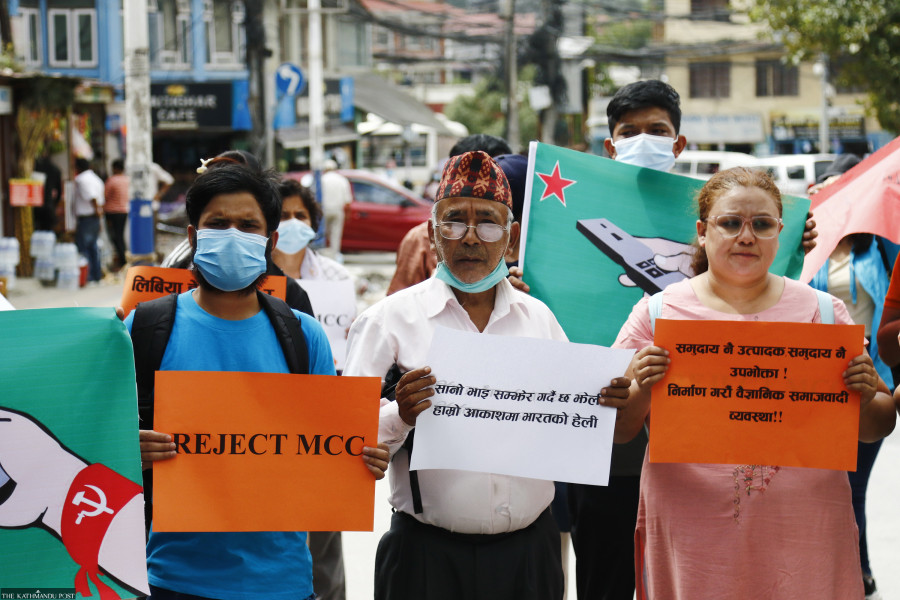
The National Human Rights Commission has taken exception to the government's statements regarding protests against India and the Millenium Challenge Corporation Nepal Compact, saying barring people from protesting and debating issues amounts to curtailing the people’s right to freedom of expression.
Issuing a statement on Tuesday, the national rights body said that freedom of expression is the fundamental right guaranteed by the constitution.
“Article 17 of the Constitution of Nepal, Article 19 of the Universal Declaration of Human Rights 1948 and Article 19 of the International Convention on Civil and Political Rights, of which Nepal is party, have guaranteed freedom of expression to every individual,” said the commission. “Even the right to participate in peaceful demonstrations seems to be curtailed by the government.”
On Sunday, the Home Ministry in a statement said that its attention had been drawn to some activities like protests and sloganeering against the prime minister of a neighbouring country and burning him in the effigy.
“The ministry has taken serious objection to such activities,” reads the statement.
The ministry though did not mention the name of the prime minister, it was apparent that it was referring to Indian Prime Minister Narendra Modi.
The Sher Bahadur Deuba government’s failure to demonstrate urgency to take up the July 30 Darchula incident in which a youth had fallen into the Mahakali river had created quite an uproar in Kathmandu and elsewhere.
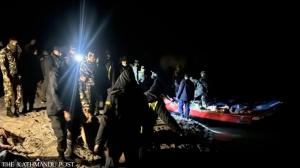
Jaya Singh Dhami, 33, from Khangdang Mal of Byas Rural Municipality-2 in Darchula fell into Mahakali while crossing the river using an improvised cable crossing, locally known as tuin. Media reports based on eyewitness accounts suggested that a member of India’s Sashastra Seema Bal (SSB) had untangled the cable just when Dhami was about to reach the Indian side, across the river.
A probe team formed by the government suggested that the incident took place “in the presence of” the Indian security personnel.
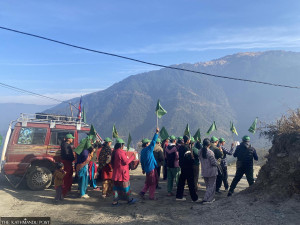
On Friday, All Nepal National Free Student Union, a sister organisation of the CPN (Unified Socialist), a coalition partner in the Deuba government, burnt the Indian prime minister in effigy during a protest against Nepal government’s silence over Dhami’s disappearance and flying of Indian helicopters in Nepali skies.
In its statement, the Home Ministry said that Nepal wants to further strengthen the country’s relationship with friendly countries and is committed not to allow any activities against any of the countries.
“We request everyone not to carry out any activities that could affect the dignity and independence of our friendly nations,” states the statement.
The ministry said that the government had been resolving the bilateral issues through dialogue and diplomatic channels and that a similar process would be followed in the future as well.
“We would like to inform that all the activities against our friendly nations would be controlled and action would be taken to anyone involved in such activities of taking the law into one’s hands,” the ministry warned.
Sunday’s statement followed an earlier statement by the ministry on Friday warning people not to make any negative comments against development projects running with the support of friendly nations, employees working on such projects, foreign nationals and their properties.
The MCC is an American programme, which was signed by Nepal and the United States in 2017, under which Nepal would receive $500 million in grants to be used in the electricity transmission and road projects.
In recent months, the US grant, however, has become a lightning rod for criticism, with many questioning the American intent for providing it to Nepal and the need for the parliamentary ratification of the programme. Those opposing the MCC say this is part of Washington’s Indo-Pacific Strategy and signing to the programme would push Nepal under the US security umbrella. Detractors also argue that some of the points in the MCC undermine Nepal’s sovereignty.
“Nepal government’s serious attention has been drawn to the direct and indirect comments and threatening statements, through different media and social media, against development projects run with the support of friendly nations, their employees, foreign nationals and their properties in recent days,” stated the statement signed by Phanindra Mani Pokharel, spokesperson for the Home Ministry.
The ministry requested everyone not to indulge in any activities that would threaten implementation of development projects and affect relationships with friendly nations.
“The ministry is monitoring such activities and statements and analysing them minutely,” said the ministry. “Stern action will be taken as per the existing law against those carrying out such activities.”
The national human rights body in through its statement has called on the government of Nepal not to make any attempts to curb the fundamental rights guaranteed by the constitution and honours the people’s right to freedom of expression.
"The commission also urges all to be sensitive towards the country’s relations with friendly nations and make their demonstrations and protests peaceful,” reads the statement.




 9.7°C Kathmandu